
Preparing for Portland
Housing
We’re so excited that you will be joining us in Portland! Since PCC does not provide housing for students, we have worked with students and staff to create this resource for you. It is not complete, but meant to be a useful tool or starting place. As a reminder, it is each student’s responsibility find their own housing.
Basic Needs Virtual Housing Board!
The steps below can help you with your search.
1. Make your budget
This section will help you understand monthly costs associated with housing in Portland and the difference in housing options.
Here are common living arrangements:
- Alone in an apartment
- A room in a shared apartment
- A room in a shared house
- Homestay programs offer the opportunity to live with an American family. PCC currently suggests American Cultural Exchange Services (ACES). You may find additional homestay options in your own research.
Rent
Average monthly rental prices in the Portland/Vancouver Metro Area are*:
- Studio Apartment: $1,339
- 1 bedroom, 1 bathroom: $1,541
- 2 bedrooms, 1 bathroom: $1,539
- 2 bedrooms, 2 bathrooms: $1,928
- 3 bedrooms, 1 bathroom: $1,804
- 3 bedrooms, 2 bathrooms: $2,093
*Apartment Report, Spring 2024, Multifamily NW
Utilities
When you share an apartment or house with roommates your costs are lower than if you live alone. In addition to monthly rent, you should be prepared to pay for utilities (like internet and electricity). Average monthly utility costs in the Portland/Vancouver Metro Area are:
- Electricity, heating/cooling, garbage, water: $150 – $200
- Internet: $60 – $80
Move-In Costs
When you first move into an apartment, you may be required to pay first month’s rent, last month’s rent, and a security deposit. For example, for an apartment with $1,500 monthly rent, you may need to pay $4,000 before you move in.
You may get your security deposit back when you move out.
Sometimes apartments or rooms are furnished while others are not, and you will need to buy furniture and kitchen supplies.
Transportation
Your transportation costs will vary depending how far you live from a PCC campus. See more in the transportation section below.
2. Start searching now!
Before you arrive in Portland, spend some time researching locations and types of housing that fit in your budget. You can arrange apartment viewings ahead of time for when you arrive (not during Orientation Week).
Here are some helpful websites with general information about Portland and housing:
- PCC Campus locations and information
- PCC Transportation and Parking
- PCC Shuttles (free shuttle transportation for PCC students)
- Google Maps (for bike, bus, walking, and driving routes)
- TriMet Trip Planner (for public transportation routes)
- Portland Bridges (neighborhood guide/blog)
- Portland Neighborhood Guide
Here are some places you can look for apartment listings and/or roommates:
- Nonprofit Housing for College Students:
- College Housing Northwest
CHNW is a nonprofit organization focused on student success offering affordable apartments in student-centered communities. We work to minimize barriers to renting with just a $500 deposit, and no income verification or rental history requirement. Students must be enrolled at least ½ time and can live with dependents and significant others at locations convenient to PCC and PSU. Utilities and wifi are included at some locations. - The Village and The Outpost
Portland owned and operated coliving communities close to Cascade Campus that are supportive to student life, affordability, inclusivity, and sustainability. High-speed internet, AC, and utilities are included in the rent. - Koz Development
Affordable living options in urban neighborhoods near college campuses that offer low security deposits, flat rate utility fees, and flexibility for students with no previous rental history.
- College Housing Northwest
- Real Estate Websites: Zillow, Apartments.com, Apartment List
- PCC OISS International Student Newsletter
- Facebook housing groups
**Caution! Anytime you invest time and money and share personal information, it’s important to be cautious of fraud and scams. Learn some ways to identify and avoid rental scams here.
3. Give yourself time in Portland & consider short-term housing while you search
When making travel plans, you will need free time to search for an apartment, open a bank account, obtain a cell phone, and become comfortable in Portland.
Some PCC international students have found short term options using the following:
While in short-term housing:
- Look for a roommate if you want to live with another student
- Look for apartment buildings with ‘vacancy’ or ‘openings available’ signs
- Learn which campus you will take classes at your first term at PCC and decide if you want to find housing close to this campus
4. Visit apartments and make a decision
Narrow down your housing options and schedule tours. When you visit:
- Check out the neighborhood and think about whether you can live there (how close is the grocery store, places of worship, transportation costs and bus stops)
- Use this list for ideas of what to look at and what questions to ask on your tour: Apartment Tour Checklist
Apply for Apartments
- Fill out the application to rent the apartment.
- They may require a background check on your criminal history and/or credit score. If you are unable to do a background check, ask if there is other documentation you can provide instead.
- If you like an apartment, apply as soon as you can. You may be competing with other applicants.
- You may apply for more than one apartment, in case you do not get your first choice.
5. Sign a lease
If you are approved for the apartment, review the landlord-tenant agreement (this is sometimes called a contract, rental agreement, or lease) and ask the leasing office if you have any questions.
Negotiating and signing a housing contract can be confusing or difficult – especially if English is not your first language. We strongly recommend that you carefully read and understand housing agreements before you sign or make any formal commitment.
- Watch out for additional fees, for example: for the use of parking spaces, laundry facilities, or concierge services at some apartment complexes.
- Additionally, there are certain legal protections for renters. You can learn more about these rights from the Oregon Community Alliance of Tenants
- Renters insurance is a good idea to purchase and may be required by your landlord or property manager. Renters insurance is designed to cover the cost of your personal possessions in the event of fire, theft, vandalism, flood, or other damaging event.
- Learn more about what you can expect to find in a lease here.
Neighborhoods
Portland has many vibrant neighborhoods, each with its own unique character and feel. If you will be starting a specialized program at PCC with most of your classes offered at one campus, you may choose to prioritize being near that campus. However, many students choose to live in other areas of the city for various reasons.
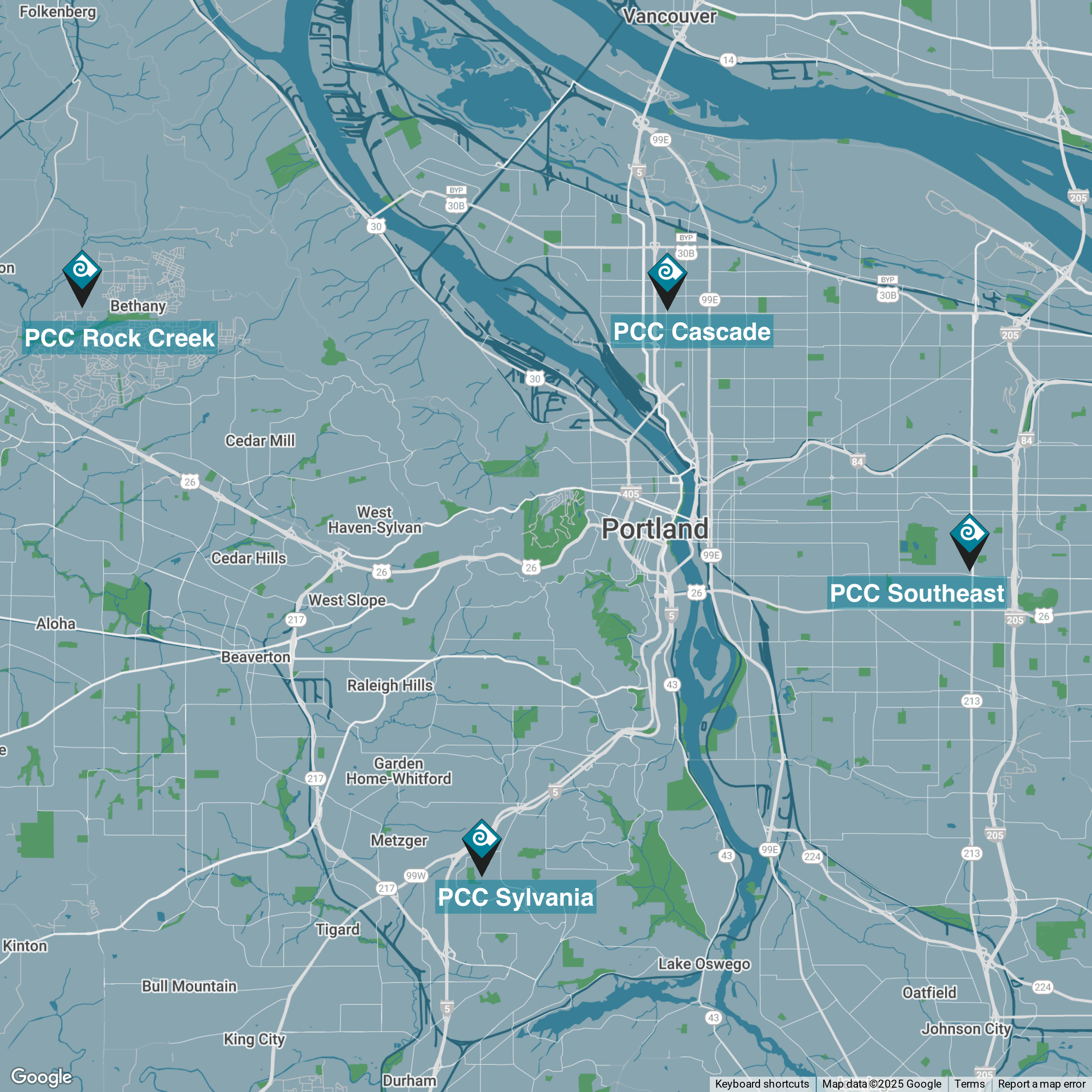
If you find an apartment you are interested in, we recommend using its specific address, and searching how you would get from there to your classes, a grocery store, a park or natural area, and any other amenities that are important to you (for example: shops, restaurants, cafes, bars, music, dancing, art galleries/studios, exercise gyms, schools for your children to attend, etc.). Below, we have listed some neighborhoods near each of PCC’s main campuses, as well as the downtown/Portland State University (PSU) area.
All PCC shuttles go to the Sylvania campus when operating. Shuttles do not operate on weekends, holidays, or during Summer term.
Sylvania Campus
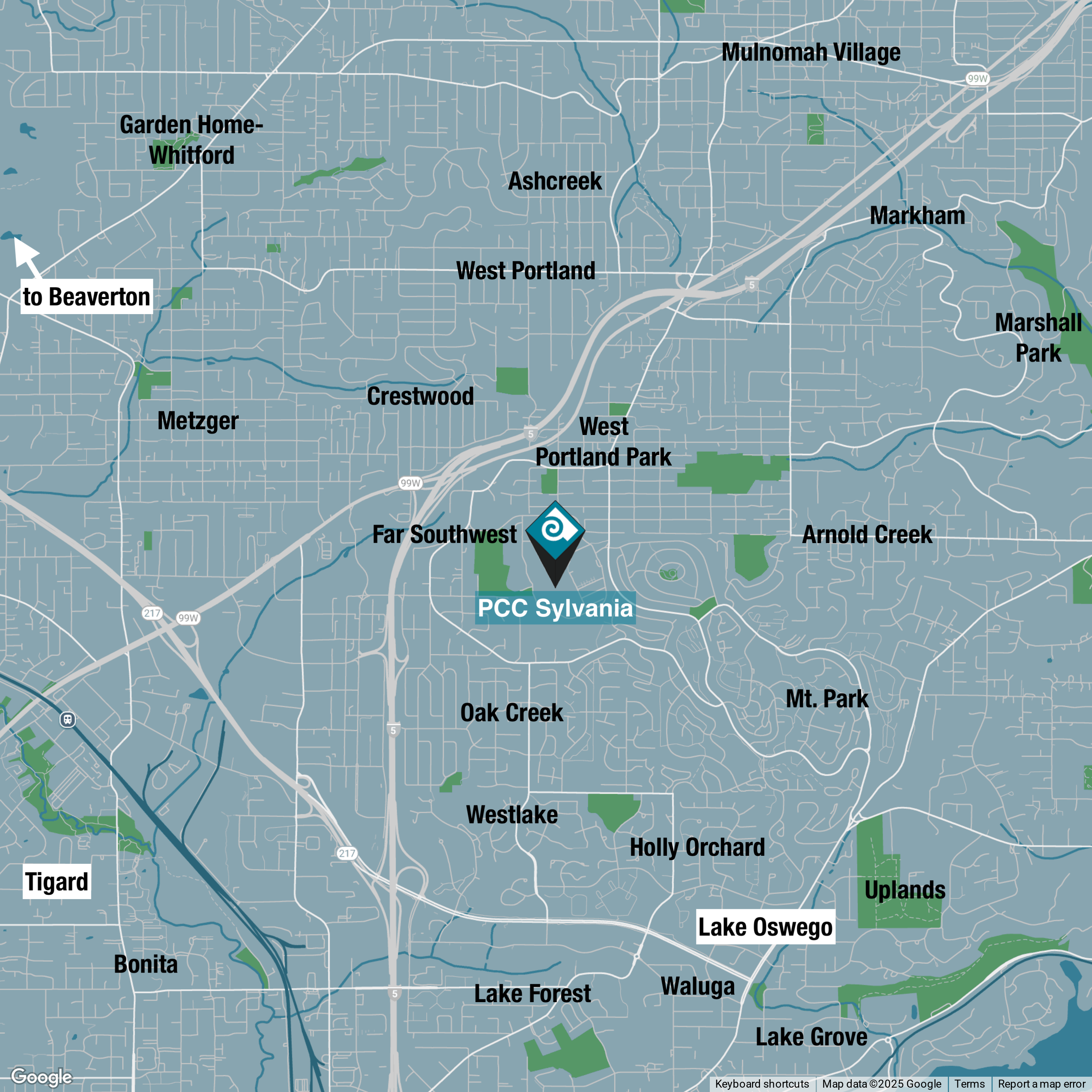
The Sylvania Campus is located in southwest Portland between Tigard and Lake Oswego. As the oldest and largest of the PCC campuses, Sylvania has many unique features and specialized programs. An impressive fitness venue, a state-of-the-art theater facility (the Performing Arts Center), and an innovative MakerLab for students to create anything their minds can envision are just a few of the many amazing places to visit while on campus. Sylvania is the place for innovation, community collaboration, and individual growth. Stores and restaurants are accessible, but it is not as urban as Cascade and Southeast campuses. All PCC shuttles go to the Sylvania campus when operating. Shuttles do not operate on weekends, holidays, or during Summer term.
- West Portland Park (closest)
- Far Southwest
- Arnold Creek
- Crestwood
Downtown/Portland State University
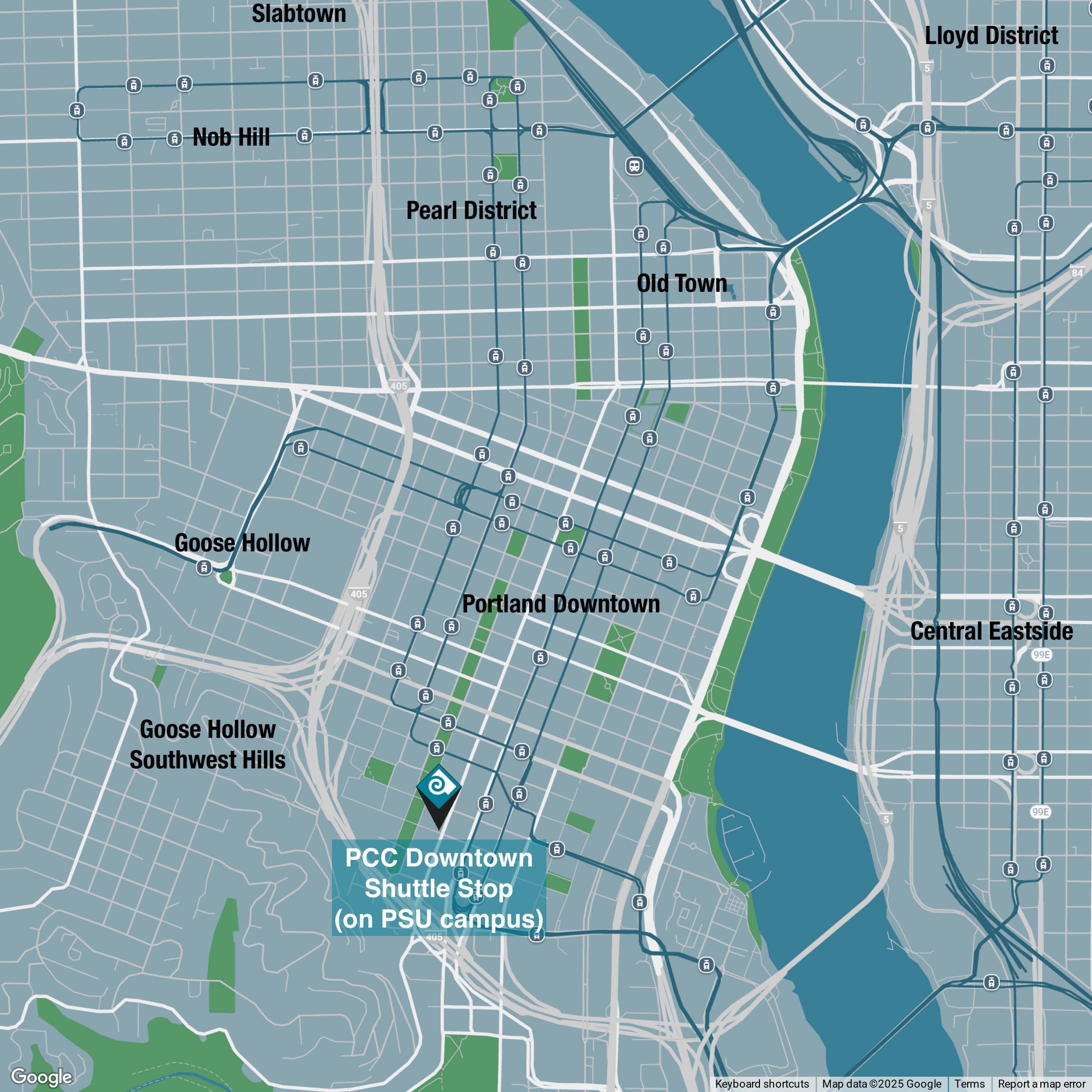
Downtown is a central hub for public transportation, theatres, museums, shopping, and dining. The waterfront area along the Willamette River offers a wide range of outdoor recreation, along with beautiful sunsets and views of the bridges. It is extremely walkable and bike friendly, and a car is not needed or recommended because parking is difficult and expensive. This area includes PCC’s Vanport Building, which houses our Dental Hygiene and Assisting programs, but most students will still need to travel to the other campuses for classes. From Downtown (PSU stop), you can take the PCC shuttle to Sylvania. Apartments are in taller buildings and might be more expensive than in other parts of Portland. Many international students choose to live Downtown. Portland does have a visible population of houseless people, and you will notice this more Downtown.
- Downtown (closest)
- Northwest District
- Pearl
- Goose Hollow
Cascade Campus
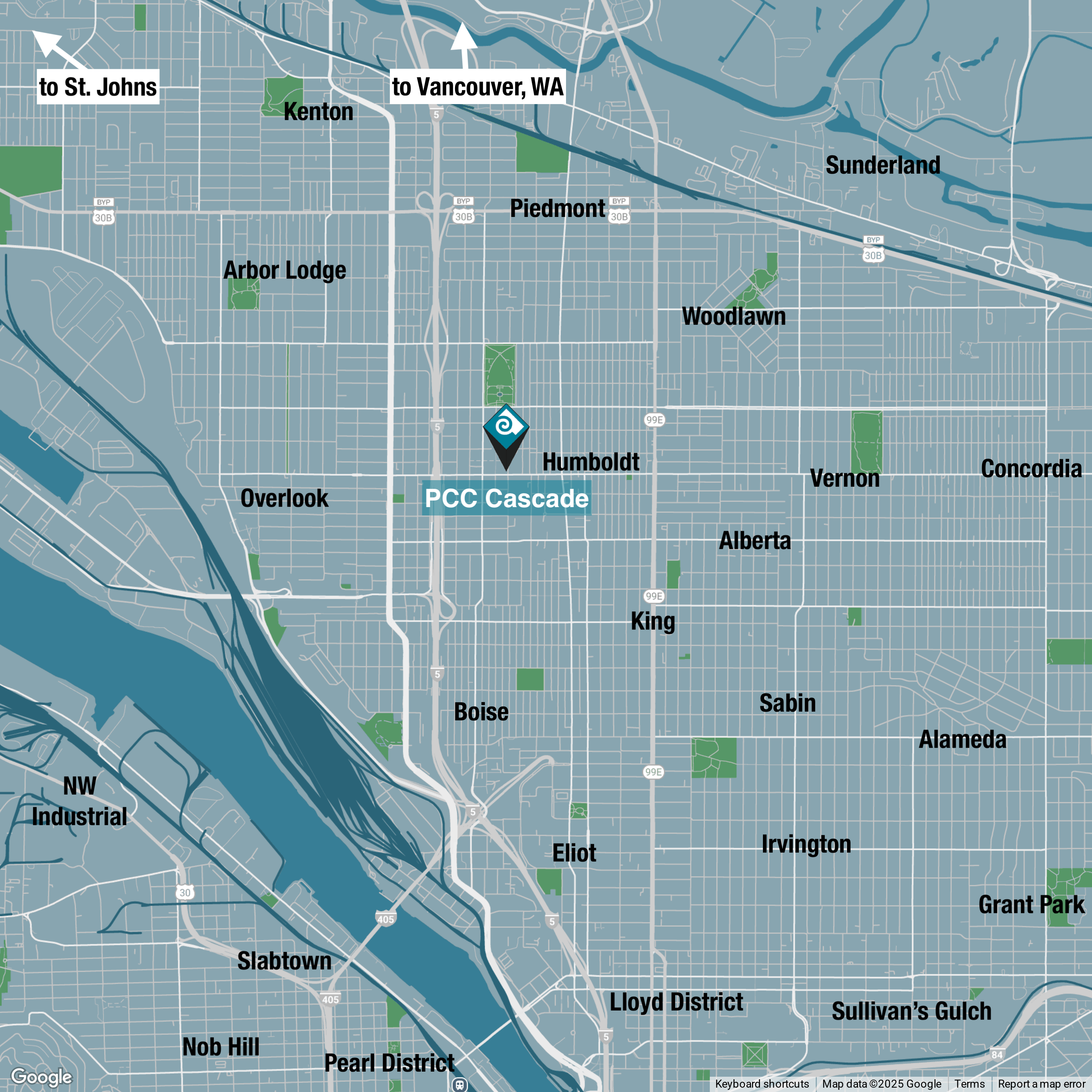
The Cascade Campus is situated in the heart of the revitalized North Portland area, offering students a centralized location and ties to the many cultures represented in the surrounding community. Peninsula Park has a beautiful rose garden and is just steps from the campus. The most urban of PCC’s four campuses, Cascade has many shops, cafes, and restaurants within walking distance of campus and is good for biking. There are 3 bus routes to campus. From Cascade campus, you can take the PCC shuttle to Sylvania.
- Humboldt (closest)
- King
- Boise
- Piedmont
- Overlook
Southeast Campus
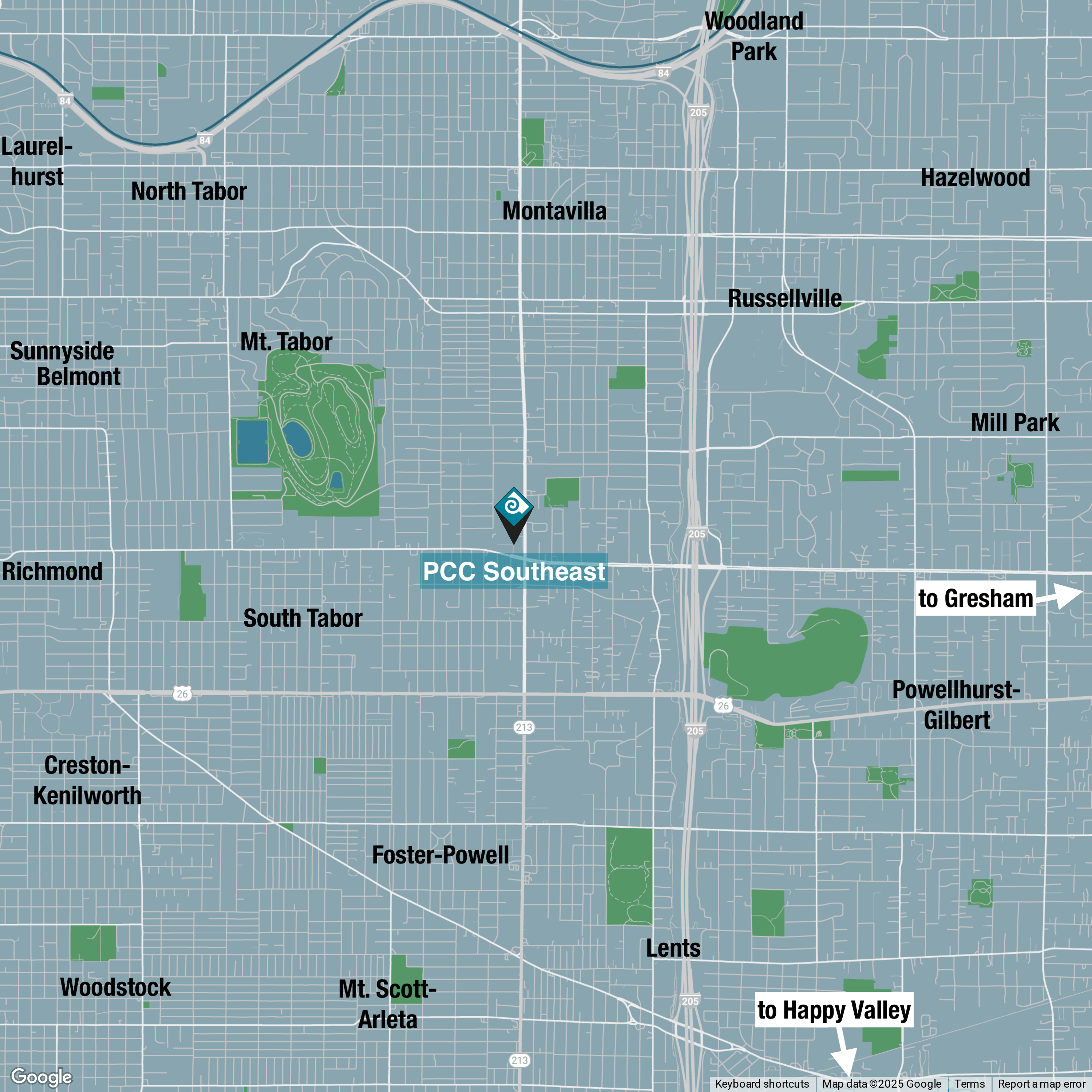
The neighborhoods near the Southeast Campus are the most affordable of PCC’s four campuses. There is a strong Asian American and Pacific Islander (AAPI) community, and many Asian grocery stores, restaurants, and businesses are just off campus. Mt Tabor Park offers a taste of the forest and beautiful views of the city. While there are some streets with heavy car traffic, the Southeast neighborhoods are walkable and bikeable. The landscape is mostly flat, although it is a large and spread out area. There are 2 bus routes to campus. From Southeast campus, you can take the PCC shuttle to Sylvania.
- Mt. Tabor (closest)
- South Tabor (closest)
- Hazelwood
- Mill Park
- Montavilla
Rock Creek Campus
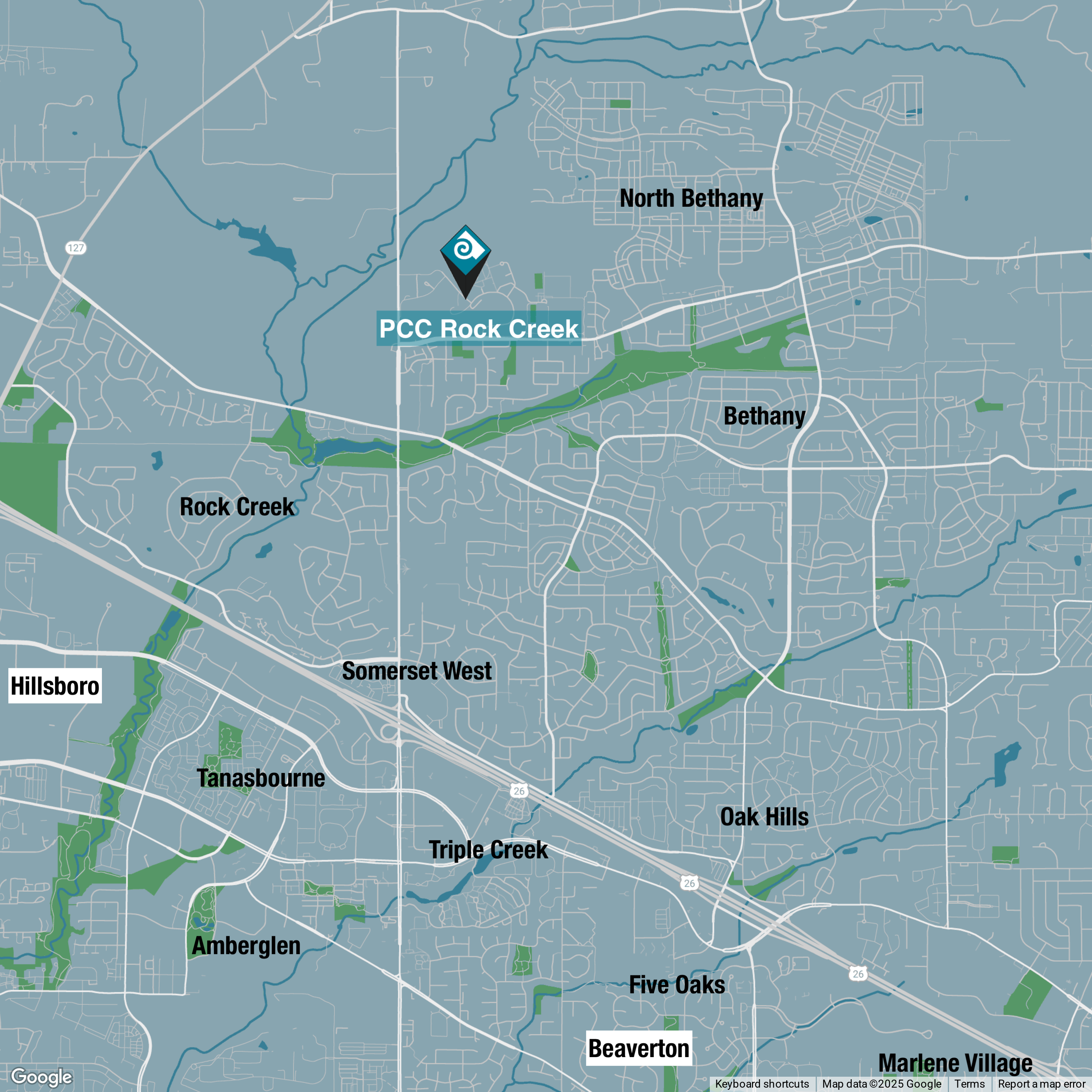
The neighborhoods near the Rock Creek Campus are good for people who want to be near the country, but also not far from the city. Washington County has farms and fields, but also developed areas with shopping, restaurants, and groceries. PCC’s 260-acre campus includes woodlands, wetlands and grassland, a diverse collection of farm animals, 14 career technical programs and a 3.6 acre Learning Garden. The Rock Creek Campus is not within walking distance of shopping, restaurants, and groceries. A car is recommended, but there are 3 bus routes to campus. From Rock Creek campus, you can take the PCC shuttle to Sylvania.
- North Bethany (closest)
- Bethany
- Rock Creek
Transportation
Approximate travel time to Sylvania campus:
| Cascade to SY | Rock Creek to SY | Southeast to SY | Downtown (PSU) to SY |
| Via Shuttle: 25-30 min // Cost: Free
Via Public Transit: 55-80 min // Cost: $2.80 each way (Maximum charge $100 a month) Driving: 15-45 min // Cost*: varies Biking: 85 min |
Via Shuttle: 45-55 min // Cost: Free
Via Public Transit: 95-115 min // Cost: $2.80 each way (Maximum charge $100 a month) Driving: 25-60 min // Cost*: varies Biking: 95 min |
Via Shuttle: 30-55 min // Cost: Free
Via Public Transit: 70-80 min // Cost: $2.80 each way (Maximum charge $100 a month) Driving: 20-30 min // Cost*: varies Biking: 90 min |
Via Shuttle: 15-25 min // Cost: Free
Via Public Transit: 30-35 min // Cost: $2.80 each way (Maximum charge $100 a month) Driving: 15-20 min // Cost*: varies Biking: 60 min |
Travel Factors
- Students’ first term at PCC is often the hardest term to choose convenient classes, and to know at which campus most of their classes will be. After the first term, if there are no holds on your account, you can sign up for classes sooner, and will likely be able to take more classes at one campus.
- Depending on your major field of study, some classes will be available only at certain campuses. When you read about each campus through the PCC website, you can see the unique programs held at each one.
- Traffic can change travel times and is important to consider when planning transportation. If you are required to attend a class at a certain time, pay attention to morning and evening traffic patterns with highest traffic expected between 7-9 am and 4-6 pm.
- Public transit, including buses and the Max, is available to everyone in the city and can be used not only for getting around but also as a space to spend time for various reasons. While using public transit, it’s important to stay aware of your surroundings. If you ever feel unsafe or need help – on public transportation or anywhere else – you can call 911, the U.S. emergency number. Your phone will connect to 911 even if you don’t have service or data.
Resources
Google Maps and other platforms:
- Give real time public transit updates, can customize routes, and give timing estimates for dates and times in the future
- Provide information about services and shops in an area. When selecting an apartment, it is helpful to look for where the nearest grocery store is and other other important places for you and plan whether you will be able to walk or need to take transportation.
Shuttle Details: Shuttles do not operate on weekends, holidays, or during the Summer term.
TriMet: Portland Public Transportation includes busses, MAX Light Rail, Streetcar, and the WES Commuter Rail – one TriMet pass can be used for all forms of public transportation
*Driving costs include: Cost of vehicle, monthly insurance, gas (petrol), and vehicle maintenance. These costs are highly variable and require research. For 2023, the Bureau of Transportation Statistics estimated an average of more than $12,000 a year to own and drive a car 15,000 miles / 24,000 kilometers. It is also important to work with the Department of Motor Vehicles (DMV) to get an Oregon Driver’s license.
Disclaimer: The information on this page is meant to provide assistance in locating off-campus housing. Inclusion of any property, rental unit, or other housing options in this guide does not constitute, and shall not be construed or reported as an endorsement or approval by Portland Community College of the housing option, landlord, its properties, or its business practices. Portland Community College expressly disclaims any and all responsibility for any problems that may arise with regard to such housing options, property or rental units or with regard to disputes between landlords and tenants concerning such property or rental units. All prospective tenants are encouraged to exercise their own good judgment when evaluating housing options, a prospective rental unit or landlord.