
Flamenco performer Elena Villa shares dance and culture with Humanities 100 students
Posted by karah.kemmerly
In Humanities 100, students travel through time from Mesopotamia to Greece and Europe and across the Americas, exploring the academic disciplines collectively known as the humanities. These subjects include art history, literature, history, film, music, philosophy, religion, and theater. As we travel, we consider the age-old question: “What does it mean to live a good and meaningful life?”
We read the Epic of Gilgamesh and talk about the quest for immortality. We read Plato’s “Allegory of the Cave,” considering the “cave” that each of us lives in as well as our potential for getting out. We read Antigone and discuss the role of social protest in living a meaningful life. We visit the Portland Art Museum and observe the way artists give shape to their experiences in the world.
On November 25, 2025, our class of 18 students had the pleasure of hosting Elena Villa, professional Flamenco dancer and PCC English instructor, who helped us dive more deeply into our exploration. Villa shared the rich and varied cultural history of Flamenco, a UNESCO Intangible Cultural Heritage, and the ways this art form has helped people document their lives, preserve cultural narratives and traditions, and make meaning of the full range of their experiences for centuries.
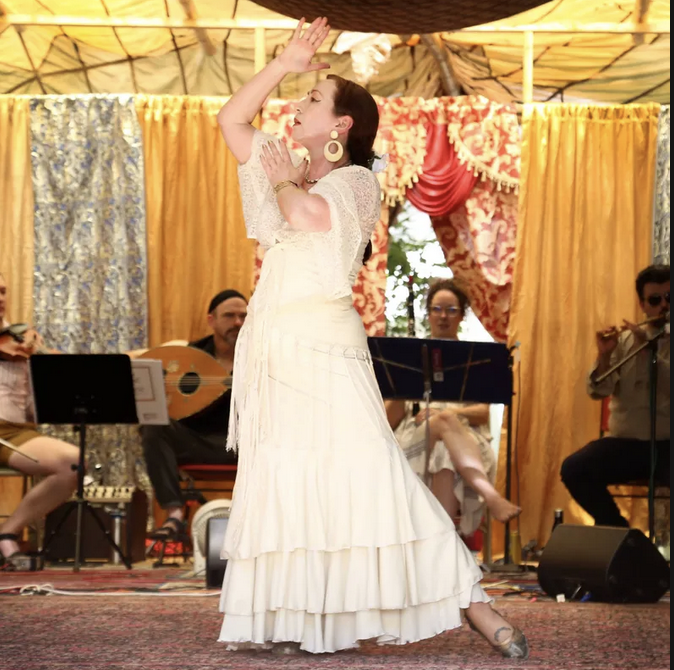
Elena spoke in particular about the transformational possibilities of Flamenco in the context of the duende, about which Federico Garcia Lorca wrote: “The duende….Where is the duende? Through the empty archway a wind of the spirit enters, blowing insistently over the heads of the dead, in search of new landscapes and unknown accents: a wind with the odour of a child’s saliva, crushed grass, and medusa’s veil, announcing the endless baptism of freshly created things.” She also shared her personal connections to Flamenco in particular and dance in general—something she was first exposed to by her father in the 1970s.
By the end of the visit, students had a much deeper understanding of this art form, its surrounding culture, and its ability to help people shape and make meaning of their lives.