
Posted in 2026
-
 Simpler. Faster. More Efficient. PCC’s Revised Accommodation Process
- Learn how PCC's revised accommodation process in the AIM portal helps faculty save time, manage flex plans, and streamline testing setups efficiently. Posted September 12, 2026
-
Comprehensively Assess Student Achievement of Course, Discipline/ Program, and Gen Ed Outcomes Using RCampus Software
- Learn how Portland Community College is integrating Our Campus software with D2L Brightspace to streamline learning outcomes assessment, flexible rubric design, and data-driven continuous improvement. Posted September 12, 2026
-
Confidently Wrong: Why AI Hallucinates and How Students Can Navigate It
- An overview of why generative AI tools hallucinate, how latent space works, and practical strategies for students and faculty to fact-check AI-generated content. Posted September 12, 2026
-
 Learning Assessment for CTE Disciplines: Assessing Student Achievement Through a Software-assisted Competency-based Approach and Beyond
- Learn how PCC is using OurCampus software to support competency-based education, align curriculum rubrics with accreditation standards, and track CTE student achievement. Posted September 9, 2026
-
 Did They or Didn’t They?: The RWC’s Perspective on Artificial Intelligence in an Age of Anxiety
- The Reading and Writing Center (RWC) addresses the impact of AI on teaching and evaluation. Posted January 31, 2026
-
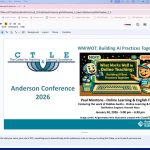 What Works Well in Online Teaching: Building AI Best Practices Together
- Learn about the latest updates to PCC's "What Works Well in Online Teaching" resource, featuring strategies and collaborative faculty guidance for integrating ethical AI practices into online courses. Posted January 31, 2026
-
 Artificial Intelligence and Natural Stupidity
- Juliet Pursell and Gale Czerski explore the ethics and dangers of artificial intelligence, focusing on its environmental footprint, creative copyright concerns, and internal biases. Posted January 31, 2026
-
 Supporting Deaf Students as a Second Language Development through Al
- Presenter: [Rosemary DiSiervi] Summary This session explores how AI can support d/Deaf students in developing English skills through accessible, bilingual, […] Posted January 31, 2026
-
 Know Your IX: How faculty can support Title IX
- Learn how PCC faculty can support Title IX policies, connect students with vital campus resources, and apply trauma-informed strategies when disclosures happen. Posted January 31, 2026
-
 Beyond Decorative: Chicanx & Latinx Communities as AI Prompts
- Generative AI often flattens Chicanx and Latinx identities into narrow stereotypes, erases diverse populations, and commercializes sacred traditions like Day of the Dead Ofrendas. Meanwhile, algorithms frequently censor social justice content. To counter this, presenters advocate for critical AI literacy, ethical tech development, and community-grounded pedagogical practices in higher education. Posted January 30, 2026