
Anderson Conference 2026
-
 Did They or Didn’t They?: The RWC’s Perspective on Artificial Intelligence in an Age of Anxiety
- The Reading and Writing Center (RWC) addresses the impact of AI on teaching and evaluation. Posted January 31, 2026
-
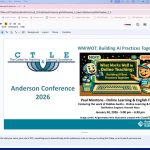 What Works Well in Online Teaching: Building AI Best Practices Together
- Learn about the latest updates to PCC's "What Works Well in Online Teaching" resource, featuring strategies and collaborative faculty guidance for integrating ethical AI practices into online courses. Posted January 31, 2026
-
 Artificial Intelligence and Natural Stupidity
- Juliet Pursell and Gale Czerski explore the ethics and dangers of artificial intelligence, focusing on its environmental footprint, creative copyright concerns, and internal biases. Posted January 31, 2026
-
 Supporting Deaf Students as a Second Language Development through Al
- Presenter: [Rosemary DiSiervi] Summary This session explores how AI can support d/Deaf students in developing English skills through accessible, bilingual, […] Posted January 31, 2026
-
 Beyond Decorative: Chicanx & Latinx Communities as AI Prompts
- Generative AI often flattens Chicanx and Latinx identities into narrow stereotypes, erases diverse populations, and commercializes sacred traditions like Day of the Dead Ofrendas. Meanwhile, algorithms frequently censor social justice content. To counter this, presenters advocate for critical AI literacy, ethical tech development, and community-grounded pedagogical practices in higher education. Posted January 30, 2026
-
 The Hidden Labor of Neurodivergent Students: Reimagining AI Through Tourette Syndrome and a Culture of Care
- Automated AI proctoring and classroom monitoring systems create structural barriers for neurodivergent students by flagging involuntary movements, such as tics, as suspicious. This session explores how remote surveillance reinforces normative behavioral assumptions, places unfair burdens on disabled learners, and why higher education must shift toward trust-based, equity-centered assessment practices. Posted January 30, 2026
-
 Is AI Use Primarily a Cognitive Offloader or a Cognitive Amplifier in Student Learning?
- Philosophy faculty discuss whether artificial intelligence acts as a cognitive offloader or an amplifier in education. Posted January 30, 2026
-
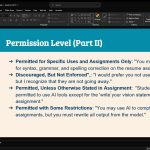 Designing Your Syllabus Al Policy: A Cross-Disciplinary Workshop
- Marc Goodman’s workshop guides educators in crafting discipline-specific syllabus AI policies. Posted January 30, 2026
-
 Leveraging a Framework for Effective & Equitable Teaching in an Al World
- Biology Instructor Josephine Pino explores how generative AI impacts flipped classrooms and course design. Posted January 30, 2026
-
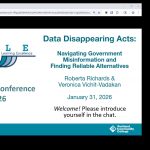 Data Disappearing Acts: Navigating Government Misinformation and Finding Reliable Alternatives
- PCC Librarians Roberta Richards and Veronica Vichit-Vadakan discuss the removal and alteration of federal government data in public health and climate science. They introduce PCC Library resources—including Statista and specialized guides—to help faculty and students locate verified statistics, archived records, and trustworthy alternative data. Posted January 30, 2026