
Homepage
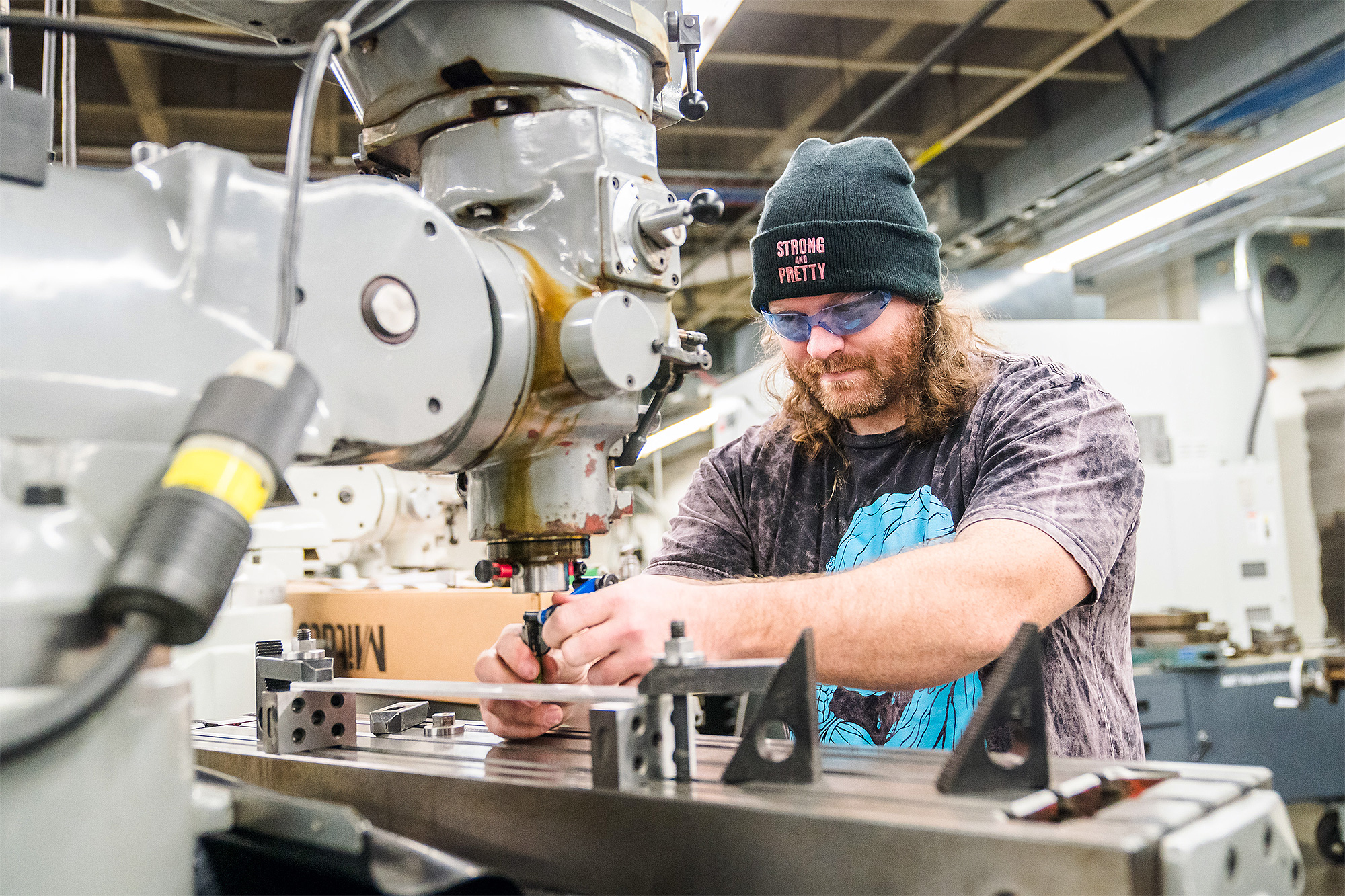
Machinists use computer-aided manufacturing (CAM) software to control, manipulate, and manage precision computer numerically controlled (CNC) machines. Machine manufacturing and tool dies have become increasingly valuable, especially in the production of precision tools for high-tech manufacturing and large industrial construction.
The Oregon Employment Department forecasts that machinist employment in the Portland area will grow 10.9% through 2027.
Why choose Machine Manufacturing at PCC?
Salary
The Oregon Employment Department reports that Portland-area machinists earn from $18.77 to $38.14 per hour. The average annual salary is $56,877.
Portland Community College provides an opportunity to learn with modular courses that provide you with necessary fundamental skills, helping you keep pace with the industry and advance your career.
The modular format allows you to attend courses on a schedule you choose:
- Flexible: Day and evening classes are available. Students can attend part-time or full-time.
- Individual: Your course of study can be tailored to fit your specific needs. Working machinist looking to upgrade their skills have options for taking advanced classes based on experience.
For more information, see our program overview and recommended tools.
Award information
| Award | Length (attending full-time) | Financial aid eligible | Currently accepting students? |
|---|---|---|---|
| Associate Degree: Machine Manufacturing Technology | 2 years | ||
| Certificate: CNC Milling | 1 year | ||
| Certificate: CNC Turning | 1 year | ||
| Certificate: Manual Machining | 1 year | ||
| Career Pathway Certificate: Manufacturing Technician | Less than 1 year |
Locations
 OMIC at Columbia County
 Sylvania
What will you learn?
Class information
CNC Operator Readiness Essentials (CORE)
Want to train quickly to launch a good career? If so, consider the CNC Operator Readiness Essentials (CORE) 3-week intensive training!
As a Machine Manufacturing Technology student, you can learn important skills in:
- Basic metallurgy
- Blueprint reading
- CNC machine programming and operation
- Communication
- Organization
- Precision layout and measurement
- Shop mathematics
- Teamwork
- Technical documentation reading
What will you do?
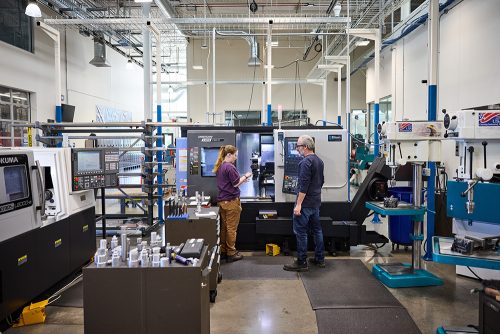
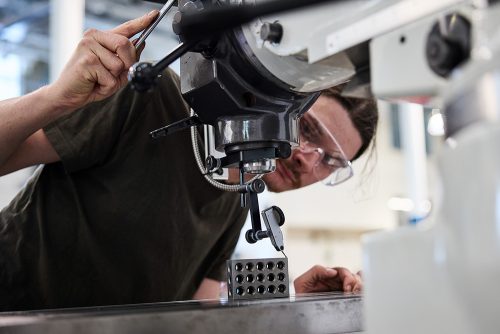
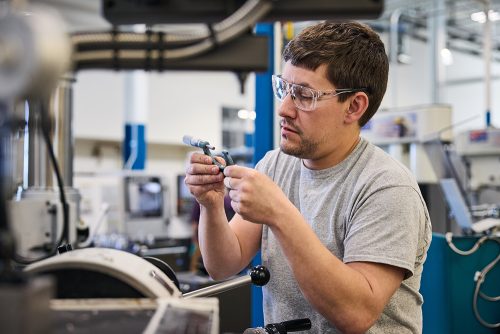
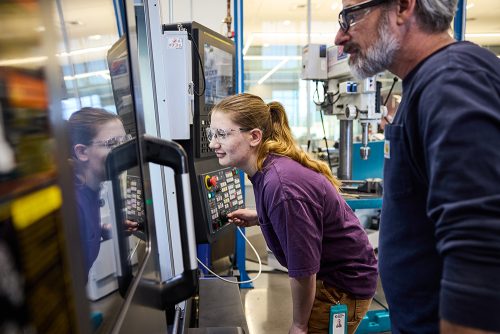
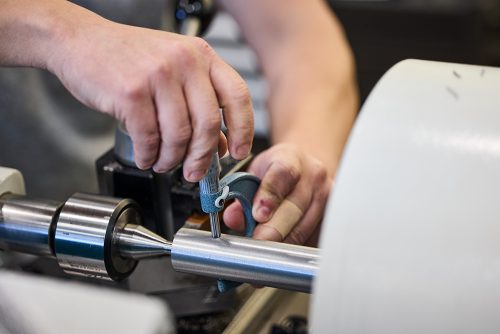
As a machinist, you shape the tools and objects that make up our lives, from hammers to housewares. You will operate equipment such as:
- Lathes
- Drill presses
- Milling machines
- Grinders
Many of these machines are computer numerically controlled (CNC). You will translate blueprints into machine settings to achieve high-quality production. Machinists may specialize in the operation of one type of machine, or you may work on a variety of different kinds of equipment, depending on who hires you. Machinists are the backbone of advanced manufacturing in almost every industry, including automotive, aerospace, medical, food production, and technology. Your work will often be creative and give you a sense of satisfaction from making things, combining your eyes, hands, and modern tools.
Who will hire me?
Graduates will be prepared for entry-level employment as:
- CNC machinists
- Computer-assisted machining programmers
- Machine operators
- Maintenance machinists
- Manual machinists
- Mechanical Inspectors
Graduates have found work with:
- Boeing
- Davis Tool
- Acumed
- ADEC
- Acentech
- Precision Castparts
- Leatherman Group
Next steps
Applying to PCC is free and only takes a few minutes.Apply now
Not quite ready to apply?
We can help you get the info you need.
Related programs
PCC offers more than 90 programs.