
Teaching Week 2025
Thank you for joining us for Teaching Week, September 8 –10
 View the Teaching Week recordings and the Teaching Week program guide.
Programming is open to all college employees. We encourage you to join as many sessions as you can. This year’s roster offers 28 diverse sessions across a range of focus areas and knowledge levels, 27 virtual sessions, and one in-person session. While focused on Teaching, sessions are open to all employees at the college.
We look forward to seeing you
Teaching Week Events are created to support academic and instructional excellence through professional learning opportunities for staff and faculty. Events are open to all PCC Staff. Together, we can shape an educational experience that leaves a lasting impact. Let’s make this year one of collaboration, innovation, and meaningful change!
In gratitude,
Coordinators with the Center for Teaching & Learning Excellence
Anne Grey, District Coordinator
Samm Erickson, Coordinator
If you have any questions or run into issues while registering, please contact us at ctle@pcc.edu.
Presentations and recordings
 Know Your IX: How faculty can support Title IX
- January 31, 2026
- Learn how PCC faculty can support Title IX policies, connect students with vital campus resources, and apply trauma-informed strategies when disclosures happen.
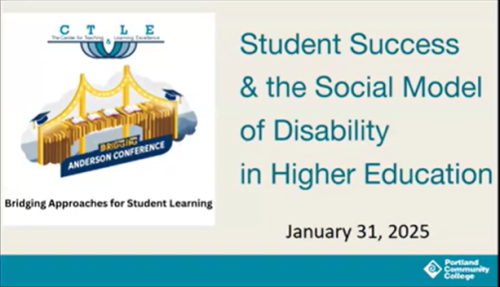 Student Success and the Social Model of Disability
- January 31, 2025
- Shifting from a medical model to a social model of disability helps educators remove barriers, strengthen belonging, and design learning environments where more students can participate and succeed.
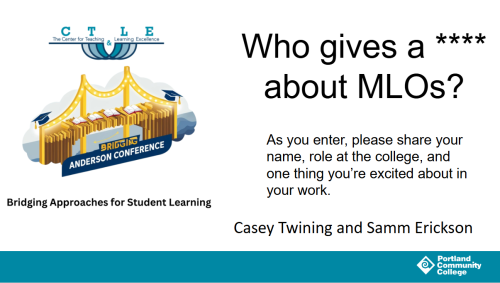 Good Teaching and the Case for Module-Level Outcomes
- January 31, 2025
- Clear module-level outcomes can strengthen course planning, connect activities with assessment, and give students a better understanding of where their learning is headed.
 Harnessing cultural capital to foster inclusive learning and academic belonging
- January 31, 2025
- Explore how recognizing and building on students’ cultural capital can foster more inclusive learning environments and strengthen academic belonging.
 Anderson Conference 2025 Keynote Speaker Dr. Debbie Silver
- January 31, 2025
- In this inspiring keynote, Dr. Debbie Silver shows educators how to embrace deliberate optimism amidst teaching pressures. Discover actionable strategies to reframe daily challenges, understand diverse student learning preferences, and build safe, inclusive classrooms. Learn how combining instructional variety, purposeful listening, and humor fosters authentic student connection, confidence, and self-efficacy.
 Survivor-Centered Classrooms: Prevention and Response to Gender Based Violence at PCC
- January 31, 2025
- This presentation from PCC’s Outreach and Advocacy Project guides faculty and staff on supporting students affected by gender-based violence.
 Using Rubrics to Improve Student Outcomes and Improve the Assessment Experience for Instructors
- January 31, 2025
- In a presentation on rubric design and implementation, Christine Fanning explains how rubrics enhance assessment for instructors and empower students. By clarifying expectations, reducing uncertainty, and promoting self-assessment, rubrics help students take ownership of learning. Fanning highlights practical strategies for teaching rubric use, addressing potential limitations, and creating effective rubrics in D2L Brightspace.
 Mining the Gifts of Improvisation Principles for Community Building
- January 31, 2025
- Patrick Tangredi and Kerry Leek demonstrate how improvisation principles foster inclusive classrooms and stronger community connections. Through low-stakes activities like word association and "Yes, And" collaborative storytelling, educators learn to build trust, encourage active listening, embrace diverse participation styles, and strengthen creative problem-solving without the pressure of performing or being funny.
 Standard Language Ideology in the Writing Classroom and Beyond
- January 31, 2025
- Yvette Rosales examines how standard language ideology creates linguistic inequities in writing classrooms. She advocates shifting from rigid grammatical correctness to a rhetorical approach focused on audience, purpose, and context. By utilizing syllabus diversity statements, context-driven feedback, and student-guided reviews, educators can empower students to make purposeful communication choices across diverse genres.
 Academic Advisors: What They Do and How It Supports Your Students Academically
- January 31, 2025
- In a presentation by Bonni Goldberg and Cherise Frehner, learn how PCC’s pathway-based academic advising model supports students through term-by-term planning, resource connection, and holistic guidance during academic or personal challenges. Discover how ongoing advisor relationships build student confidence and self-efficacy, and explore key strategies to strengthen faculty-advisor collaboration for student success.
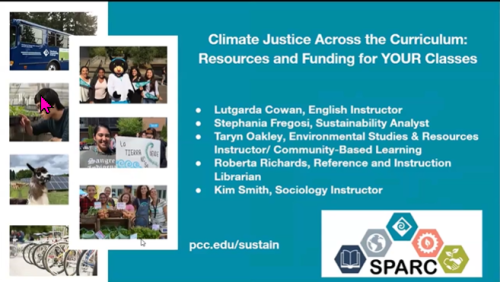 Climate Justice Across the Curriculum: Resources and Funding for YOUR Classes
- January 31, 2025
- Discover how to bring climate justice into any discipline using PCC resources, professional development, and SPARC support. Learn practical strategies to adapt existing course content, access project funding, and connect students with real-world environmental and social equity issues.
 Beyond the Food Pantry: A Holistic Approach to Supporting Students
- January 31, 2025
- PCC’s Basic Needs program supports student success by addressing food insecurity, housing, healthcare, transportation, and childcare. Utilizing a peer-to-peer, mutual aid model with Basic Needs Hubs and Peer Resource Navigators, the initiative reduces stigma and simplifies resource access. Faculty play a key role through warm handoffs, syllabus integration, and active support.
 Aligning with Accessibility Requirements: Updates to the ADA
- January 31, 2025
- Learn how PCC’s Accessible Technology Policy and WCAG standards apply to digital course materials. Discover the distinction between proactive accessibility and individual accommodations, key design practices for document and multimedia structure, and available campus tools—including Grackle, Panorama, and specialist support—to build equitable learning experiences.
 Beyond Breaking the Ice: Building a Team in the Classroom
- January 31, 2025
- In this presentation, Sarah Wheat shares how team building—rooted in performance psychology—fosters belonging, communication, and student success throughout the term. She outlines adaptable activities for in-person, synchronous, and asynchronous classes, emphasizing how effective facilitation and intentional debriefing transform interactive exercises into meaningful learning opportunities that strengthen classroom community.
 You’re invited! Helping Students Feel Like They Belong: Using Short Videos, Reels and More to Increase Accessibility
- January 31, 2025
- Discover how short preview videos, reels, and transparent course materials reduce student anxiety and eliminate learning barriers. Featuring real-world examples from biology, field-based lab sciences, and environmental studies, this Anderson Conference session showcases practical ways instructors and students can collaborate to create more welcoming, accessible, and inclusive academic environments.
 Navigating Difficult Conversations
- January 31, 2025
- This session explores proactive classroom management strategies to navigate difficult discussions.
 Understanding and Using student accommodation notices
- January 31, 2025
- Learn how students request accommodations and how to talk with them about them.
 Discovering the Communication Style of First-Generation Students
- January 31, 2025
- Lynda Coates explores how oral and print communication styles shape student experiences, particularly for first-generation and nontraditional learners. While colleges heavily favor linear, print-oriented expectations, one style is not superior. Instructors can foster equity by incorporating storytelling, hands-on practice, multi-format materials, clear instructions, and relation-building strategies into their courses.
 How Shared Governance Helps Us Serve Students
- January 31, 2025
- Learn how shared governance empowers PCC faculty and staff to directly influence institutional decisions and improve student success through representative decision-making councils.
 The Student Success and the Social Model of Disability in Higher Education
- January 31, 2025
- This post explores how applying the social model of disability in higher education removes learning barriers and supports disabled student success.
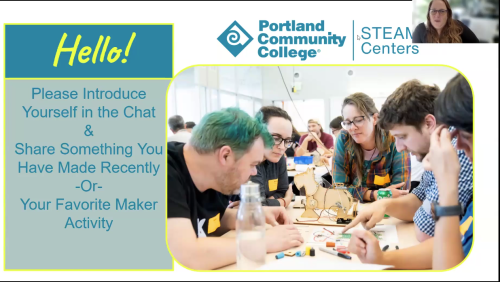 Sparking Student Curiosity: Connecting Classrooms to PCC STEAM Centers
- January 31, 2025
- Learn how PCC faculty can leverage PCC STEAM Centers to integrate hands-on, collaborative projects into their curriculum to boost student engagement and curiosity.
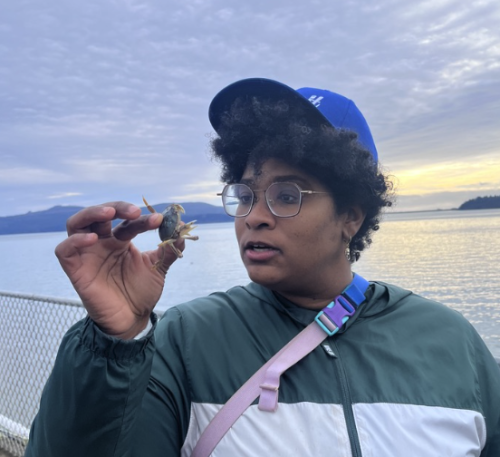 Facilitating Conversations about AI Ethics
- January 30, 2025
- Dr. Lorena Nascimento discusses integrating ethics into AI conversations across diverse environments.
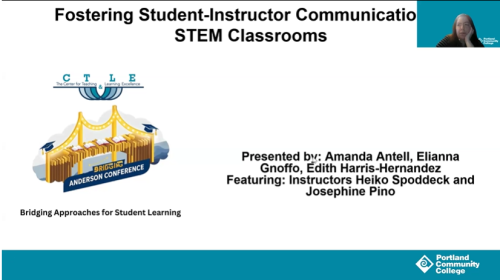 Fostering Student-Instructor Communication in STEM Classrooms
- January 30, 2025
- PCC students and instructors examine key barriers in STEM education, including limited representation, math anxiety, disability-related challenges, and structural access issues. The presentation highlights how open communication, empathetic support, flexible teaching approaches, and valuing diverse learning styles can build student confidence and foster more welcoming, inclusive STEM classrooms.
 Teaching to the Gen Ed Assessment
- February 2, 2024
- This Lunch & Learn series explores how faculty and staff can build age-inclusive learning communities. Participants examine the dynamics of multigenerational environments, distinguish between age-friendly and age-inclusive practices, and reflect on ageism's impact. The session offers strategies to reduce barriers, foster intergenerational knowledge sharing, and make educational spaces welcoming to learners across all life stages.
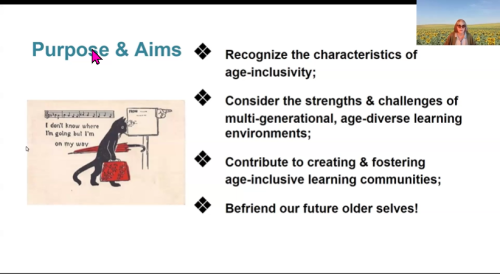 Fostering Age-Inclusive Learning Communities
- January 30, 2024
- This Lunch & Learn series explores how faculty and staff can foster age-inclusive learning communities.
- View more Presentations and recordings...