
Fire Protection Technology, Career Pathway certificate
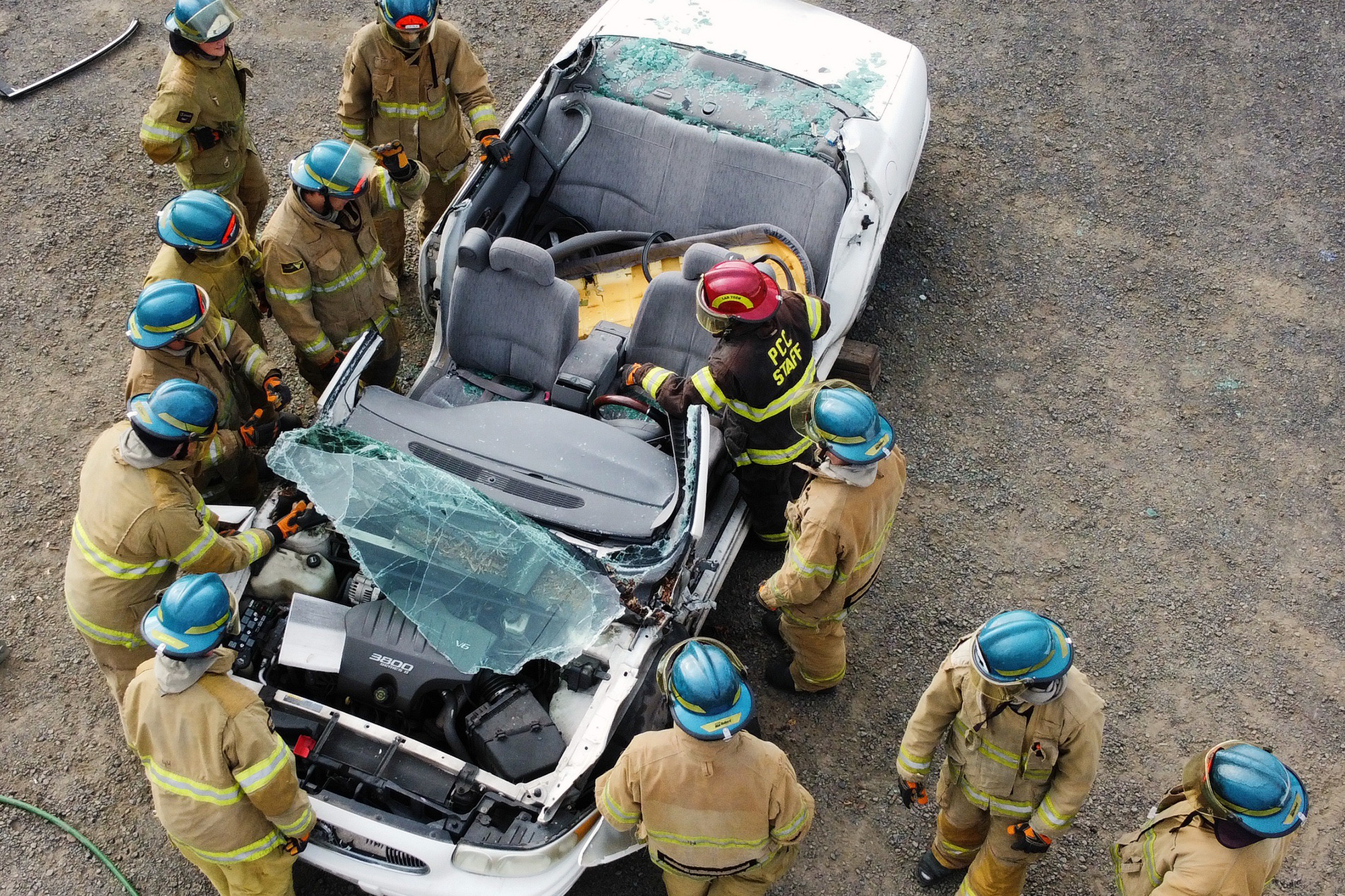
Start your firefighting career in a year!
Salary
The Oregon Employment Department reports that firefighters in the Portland tri-county area earn from $31.69 to $54.70 per hour. The average annual salary is $92,310.
The Fire Protection Technology Career Pathway certificate prepares you for entry-level work in fire and emergency services. In 34 credits, you’ll train as an emergency medical technician (EMT), complete the Fire Academy, and earn nationally recognized International Fire Service Accreditation Congress (IFSAC) certifications that employers look for.
You’ll learn the skills firefighters use every day, such as responding to medical emergencies, fighting structure fires, and handling hazardous materials incidents. Your training combines classroom learning with hands-on practice.
What will you do?
As an entry-level firefighter or EMT, you’ll respond when people call for help on their worst days. You’ll fight fires, provide emergency medical care, rescue people from crashes and hazardous situations, and work with your crew to keep your community safe. Between calls, you’ll train, check and maintain equipment, and often help educate the public about fire safety. In today’s fire service, shifts can run 24-48 hours, so teamwork and trust matter as much as technical skill. Many firefighters say the bond with their crew is one of the best parts of the job.
The work is demanding and rewarding. You’ll often make a difference in someone’s life during a crisis, and you’ll rely on the skills you build in this program to do it safely. See the certification requirements and testing page for more information.
Who will hire you?
Fire and emergency medical employers across Oregon and beyond hire graduates with EMT and firefighter certifications, including:
- Municipal fire departments
- Rural and county fire districts
- Ambulance and emergency medical service providers
- Hospitals and emergency departments
- State and federal wildland fire agencies
- Airport fire and rescue
- Industrial and private fire brigades
- Military and federal fire services
What will you gain?
Through this program, you will become eligible to earn the certifications needed for entry-level work in fire and emergency services:
- EMS 105 and EMS 106 (12 credits) are PCC’s Emergency Medical Technician Career Pathway certificate. After you complete them, you’re eligible to take the National Registry of Emergency Medical Technicians (NREMT) exam. Entry to the EMT program is limited – see how to apply to the EMT program. Review the legal limitations for EMT licensure before you apply.
- FP 111 and FP 112 are part 1 and 2 of the Fire Academy. Completing these courses prepares you to take the IFSAC Firefighter I and II certification exam.
- FP 123 prepares you to take the IFSAC Hazardous Materials Awareness and Operations certification exam.
Award information
| Award | Length (attending full-time) | Financial aid eligible | Currently accepting students? |
|---|---|---|---|
| Career Pathway Certificate: Fire Protection Technology | Less than 1 year |
About this program
Learn more about Fire Protection and all 2 awards available »
Locations
 Cascade
Courses
Course listing for the 2026-2027 catalog year.
| Code | Title | Credits |
|---|---|---|
| EMS 105 | EMT Part I | 6 |
| EMS 106 | EMT Part II | 6 |
| FP 101 | Principles of Emergency Services | 3 |
| FP 111 | Fire Academy Part 1 | 8 |
| FP 112 | Fire Academy Part 2 | 8 |
| FP 123 | Hazardous Materials Awareness and Operations | 3 |
| Total Credits | 34 | |
Extra help for students in this program
Next steps
Applying to PCC is free and only takes a few minutes.Apply now
Not quite ready to apply?
We can help you get the info you need.