
PCC Symphonic Band gives musicians of all backgrounds a place to play, breathe and belong
Story by Misty Bouse, photos by Ric Getter
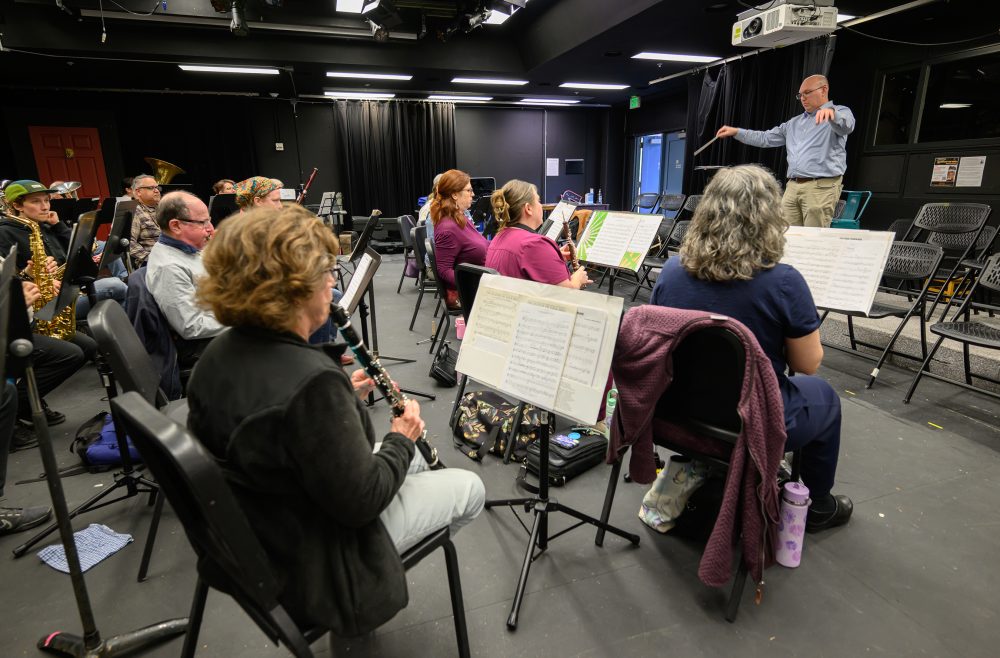
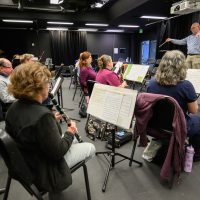
Matt Farris directs and leads the Symphonic Band class.
Alecia DeRoo often arrives at Portland Community College’s Sylvania Campus still wearing scrubs from her home-health nursing shift. Then she opens her oboe case and joins a Wednesday-night Symphonic Band class whose musicians range from high school students to people in their 80s.
About 30 players gather each term. Some are building toward a future in music; others are returning to instruments they set aside years, or decades ago. For DeRoo, who has played with the ensemble for about seven years, rehearsal is where a demanding workday gives way to breath, focus and sound.
“This is how I keep on playing,” DeRoo said. “I’ve just been a musician so much of my life, playing flute in college, and then learning oboe.”
She is a 2012 PCC nursing alum who is a registered nurse. She is also a former flute minor at Southern Oregon University, but switched to oboe a few years ago and has been taking Matt Farris’ band class for about seven years.
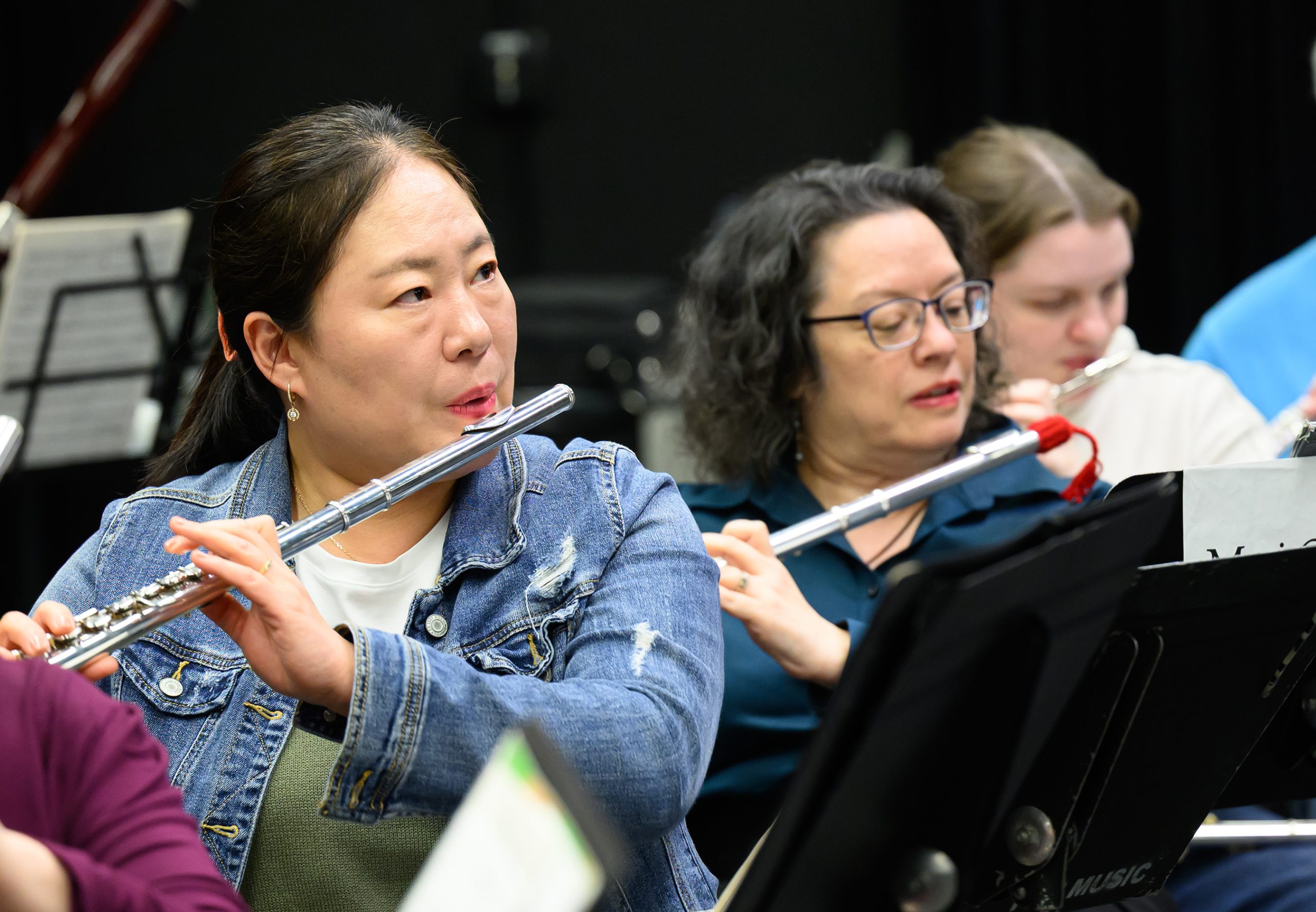
PCC’s Music Program
The program offers a vibrant, performance-rich learning environment for students planning to transfer as music majors or minors. Taught by respected, actively performing faculty and top private instructors, courses build skills in theory, piano, composition, and instrumental or vocal performance, with ensemble opportunities year-round.
“Coming here feels natural, and it’s stress-relieving,” DeRoo added.
The age span reflects PCC itself. In 2024–25, 53% of the college’s credit students were younger than 25, while 59% of its noncredit students were 30 to 64, and 16% of PCC’s non-credit students were 65 or older.
PCC’s Music Program has five performance groups (Voices of Soul Choir, Chamber Choir, Chorus, Jazz Ensemble and Symphonic Band) along with private lessons and performance sessions. The Sylvania Campus offers two full years of university-transfer-level music coursework as well as general-interest classes, and PCC reports that students have continued at institutions including Portland State, the University of Oregon, Berklee, Eastman and the New England Conservatory.
In Farris’s rehearsal room, those separate demographics become one band. For some students, it is a weekly reset after a long shift at work, a return to an instrument set aside for decades, a link to a life in music or a new community built one rehearsal at a time.
The students’ experiences echo broader research on group music. Studies have found that six months participating in a community choir reduced loneliness and increased interest in life. In a separate randomized study of undergraduates, six weeks of group music therapy reduced self-reported stress and anxiety.
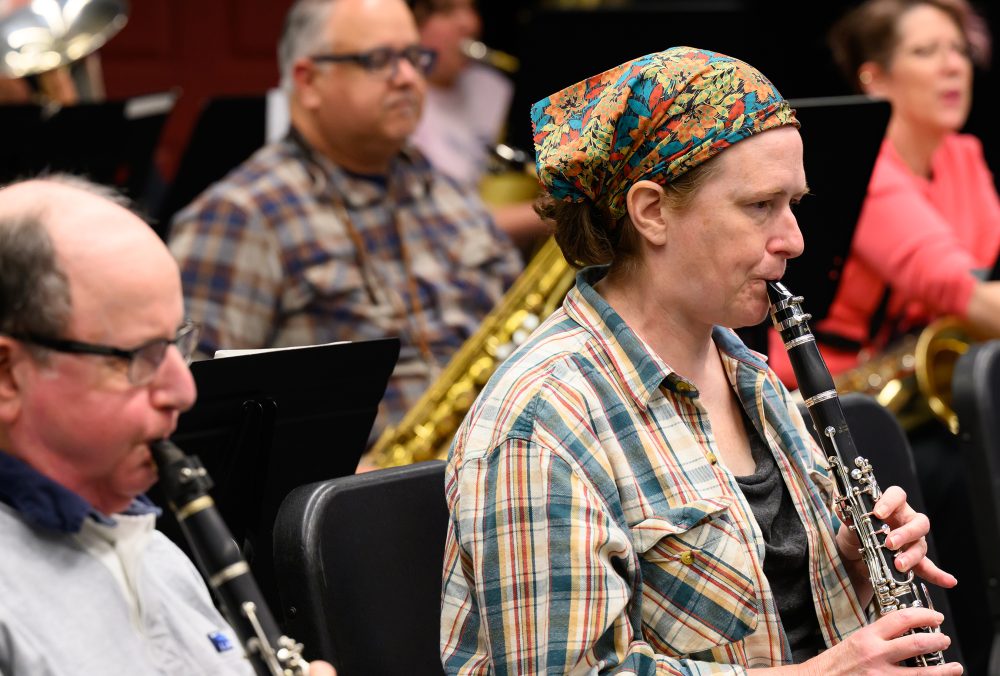
Emily Huber used the class to recover from effects of COVID-19.
Music’s Healing Qualities
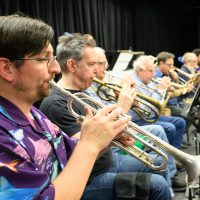
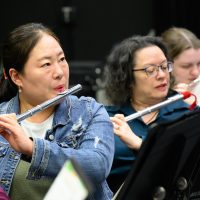
The ensemble, based at the PCC Sylvania Campus, is led by an Oregon music educator whose own path began behind a drum set after he fell for the soulful R&B sound of Earth, Wind & Fire as a middle schooler in 1980s Montana. Today, Farris directs a group that brings together lower-division college students and PCC Community Education Program musicians, from high school students to retirees. The band is open to brass, woodwind and percussion instrumentalists, and rehearses every Wednesday at the Sylvania Campus.
“We sight-read, then vote on what we will perform,” Farris said. “From high schoolers to 80-year-olds, we tackle complex, fast-paced and highly dynamic music with a punchy and impactful brass section.”
That mix of challenge and welcome is what keeps students coming back.
For Emily Huber, the band became part of her recovery. After a 25-year break from clarinet, her best friend, also a musician, enrolled her in the class four years ago, partly because Huber was recovering from long COVID.
“The breathing exercise of playing made my physical therapist really excited,” Huber said. “I love playing at this level. Learning from Matt is not what I studied before in junior high, high school or even college.”
Huber said the class is both structured and collaborative. Students practice sight-reading, then help choose the music.
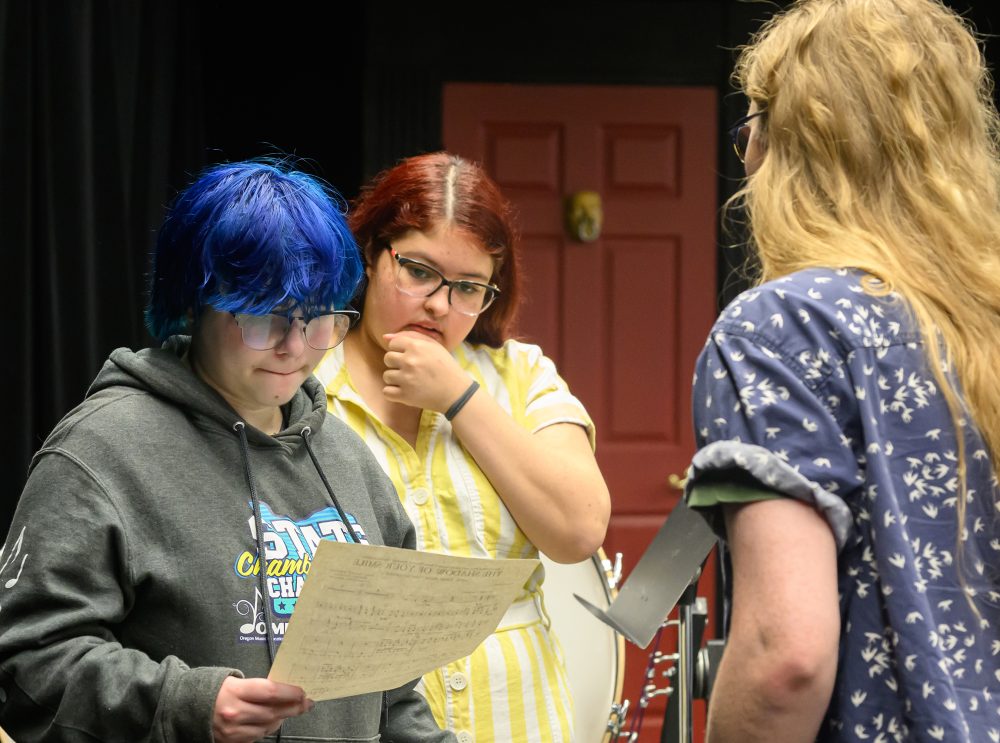
The band currently averages about 30 students per term, with some non-credit students returning year after year.
Students Come From International, Hollywood Backgrounds
Farris said that the student voice is central to the class.
“We play marches to more cinematic pieces, both vintage and new scores,” he said. “Students have a say in what we play and choose the group’s challenge piece that we take on to push ourselves.”
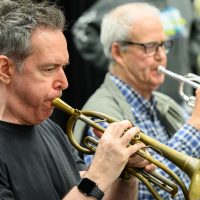
Cornet player Gregg McMickle is one of the ensemble’s veterans, with more than 12 years in the band. He brings loyalty and a Hollywood connection to the rehearsal room. A lifelong musician and former film prop master, McMickle worked on “Mr. Holland’s Opus,” the 1995 movie filmed in Portland that celebrated music teachers and the lasting influence they can have on students.
In Farris’ class, that influence is quieter but no less steady. The band currently averages about 30 students per term, with some non-credit students returning year after year. Their consistency gives the ensemble continuity and gives new students a place to land.
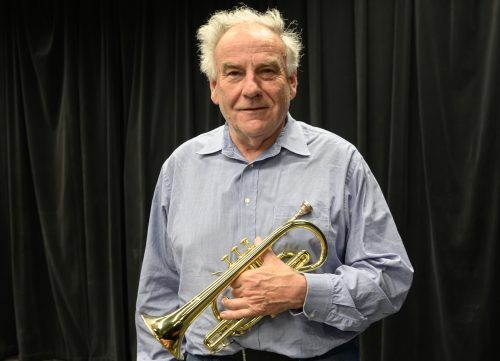
Cornet player Gregg McMickle.
“No matter how long it’s been since they have played, we try to meet students where they are,” Farris said. “It’s a great community.”
For Marcos Ferraz, that community is part of a new chapter. Ferraz, who lives in Hillsboro and is originally from Brazil, built a career as a professional bass player. An early member of Silent, a melodic rock band from Rio de Janeiro, he later spent decades as a working musician.
“I was lucky to have one big hit in a band and saved my money,” Ferraz said. “I did not live a rock star’s lifestyle. It allowed me a life as a working musician.”
Ferraz eventually came to Portland for a custom-made cornet. Then he and his wife fell for the city.
“My wife and I loved this area so much we retired here,” said Ferraz, who has played cornet with the PCC Symphonic Band for three terms.
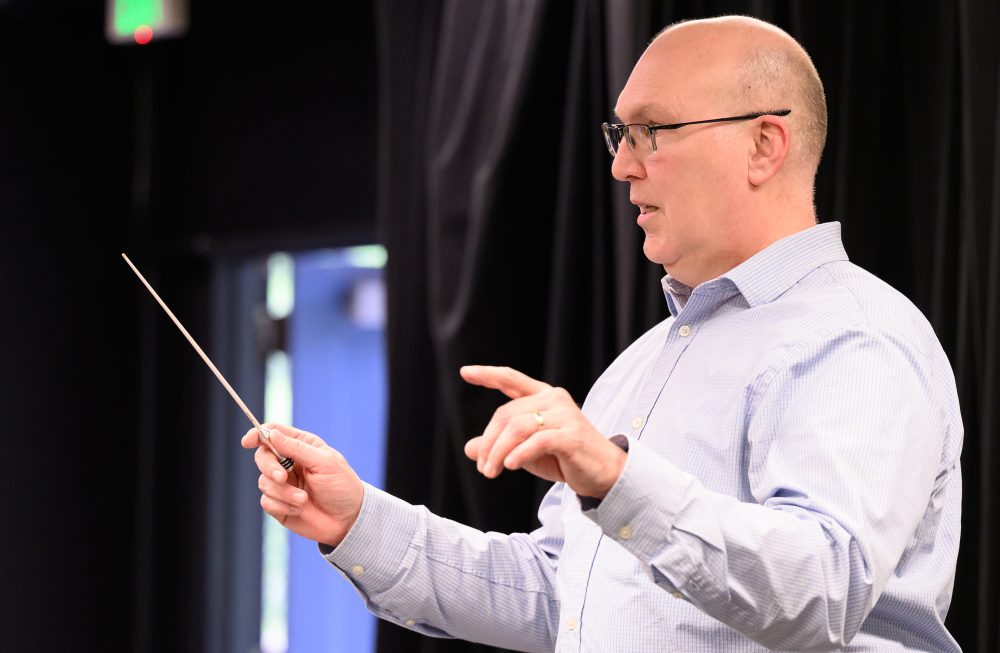
“PCC is a great atmosphere for learning,” said Farris.
Fun Atmosphere Keeps Bring Them Back
Outside PCC, Farris directs the jazz and concert bands at Molalla High School and serves as a sergeant and percussion section leader with the Oregon Army National Guard’s 234th Army Band. His music education work also includes organizing high school honor bands and serving in leadership roles with the Oregon Music Education Association.
But on Wednesday evenings, the focus is the sound in the room: students counting measures, players listening across sections, a brass line finding its punch and woodwinds shaping the melody.
“PCC is a great atmosphere for learning, whether you are taking classes for credit or just for fun,” Farris said.
The friendships often continue after rehearsal, with band members gathering for dinner at nearby Sho Japanese Restaurant, which has welcomed the musicians and even stayed open late for them.
For Symphonic Band participants, the class is a place to breathe, learn, return and belong. It is a musical home.
For more information, visit pcc.edu/music, or to check out the Symphonic Band class’s registration page.
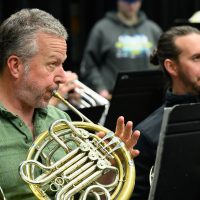
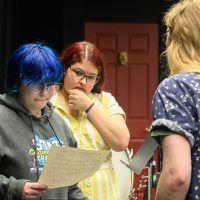
PCC’s Symphonic Community Band In Action
About Misty Bouse

A Portland Community College public relations specialist, Misty Bouse has been working in college advancement for a decade. A graduate of University of Oregon, Misty has worked as a managing editor for BUILDERNews Magazine and as a contribu... more »