
Anderson Conference
-
 Data Disappearing Acts: Navigating Government Misinformation and Finding Reliable Alternatives
- PCC Librarians Roberta Richards and Veronica Vichit-Vadakan discuss the removal and alteration of federal government data in public health and climate science. They introduce PCC Library resources—including Statista and specialized guides—to help faculty and students locate verified statistics, archived records, and trustworthy alternative data. Posted January 30, 2026
-
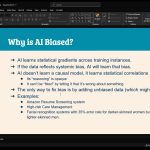 Beyond Bias: What Every Student Needs to Know About Al
- In this presentation, CIS Department Chair Marc Goodman examines how AI engineering, tokenization, and engagement-driven architectures shape model accuracy. Moving beyond basic data bias, he breaks down hallucinations, retrieval-augmented generation (RAG), and reinforcement learning. Goodman reveals why chatbots prioritize persuasion over objective truth and shares practical strategies to teach critical AI fact-checking skills. Posted January 30, 2026
-
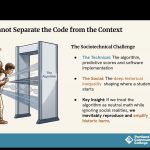 Will Al Elevate Student Achievement and Equity or Will Poorly Executed Al Drive Poorer Outcomes and Wider Academic Gaps?
- In an interactive roundtable, Portland Community College presenters explore how AI impacts student achievement, equity, and practice. Treating AI as a socio-technical issue, PCC rejects automated proctoring and plagiarism detection to avoid algorithmic bias. The session emphasizes "backstage learning"—valuing process over final products—alongside compassionate human care teams, data privacy, and ethical institutional governance. Posted January 30, 2026
-
 Al and Copyright: Legal Realities and Ethical Questions
- Cascade Faculty Librarian Rachel Bridgewater examines the intersection of copyright law and generative AI. Posted January 30, 2026
-
 Higher (order) Education: The Role of Colleges in Teaching the Cyborg Student
- As AI evolves into reasoning agents, higher education must reframe technology from an external threat to an extension of student cognition. While AI simplifies synthesis, it risks superficial "informational collages." Consequently, colleges must shift focus toward teaching epistemic hygiene, metacognition, source validation, and complex project design rather than policing tool usage. Posted January 30, 2026
-
 Student Success and the Social Model of Disability
- Shifting from a medical model to a social model of disability helps educators remove barriers, strengthen belonging, and design learning environments where more students can participate and succeed. Posted January 31, 2025
-
 Good Teaching and the Case for Module-Level Outcomes
- Clear module-level outcomes can strengthen course planning, connect activities with assessment, and give students a better understanding of where their learning is headed. Posted January 31, 2025
-
 Harnessing cultural capital to foster inclusive learning and academic belonging
- Explore how recognizing and building on students’ cultural capital can foster more inclusive learning environments and strengthen academic belonging. Posted January 31, 2025
-
 Anderson Conference 2025 Keynote Speaker Dr. Debbie Silver
- In this inspiring keynote, Dr. Debbie Silver shows educators how to embrace deliberate optimism amidst teaching pressures. Discover actionable strategies to reframe daily challenges, understand diverse student learning preferences, and build safe, inclusive classrooms. Learn how combining instructional variety, purposeful listening, and humor fosters authentic student connection, confidence, and self-efficacy. Posted January 31, 2025
-
 Survivor-Centered Classrooms: Prevention and Response to Gender Based Violence at PCC
- This presentation from PCC’s Outreach and Advocacy Project guides faculty and staff on supporting students affected by gender-based violence. Posted January 31, 2025