
Eco Social Justice Work
About Eco Social Justice Grant (formerly TGIF)
In 2008 the Associated Students of Portland Community College (ASPCC) District Student Council approved a ten cent addition to the student activity fee, creating The Green Initiative Fund. At the beginning of 2018, the ASPCC District Student Council unanimously agreed to change the name of this fund to the Eco Social Justice Grant (ESJG), this name change better reflects the broader scope of what these grants have been and will be dedicated to. This grant works to support and foster a culture of collaborative, innovative problem solving using environmental sustainability and social justice initiatives to accomplish these goals.
This grant is supported by Basic Needs, Sustainability, and Leadership team.
Want to apply?
Please visit the ESJ Grant website to find the application and project criteria.
Applications for 2025-2026 are open and will close December 1, 2025 at 12:00PM (noon).
Contact sustainability@pcc.edu with questions or for additional information about the Eco Social Justice Grant process.
About the Annual Eco Social Justice Event
Since 2017, PCC has proudly held an annual event focusing on the intersections between social justice, art activism and sustainability. These annual events, and the ESJG are efforts that have been made to broaden the scope of efforts to help create a more socially just and environmentally sustainable school and reality.
As you can see, the students of PCC have been working hard to create an ever more dynamic and engaged connection between sustainability and environmental/social justice. Because of this passion and effort, driven by a collaboration of invested students, staff, and faculty, this annual event has been established. The Eco Social Justice and Eco Artivism Events bring together students and student leaders from across PCC to provide a high impact experience.
2023/4: Eco Artivism
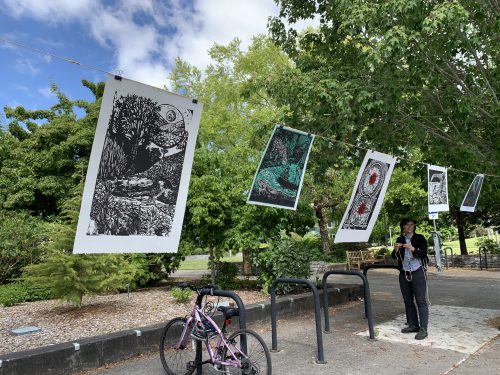
In 2023, we were able to bring back in person programming for Eco Social Justice. We saw a new interest in students who wanted to focus on art as activism. This event focused on collaborating with local artists to give students an opportunity to participate in a hands on event.
2019: Jacob Lebel & Coreal Riday-White of Our Children’s Trust
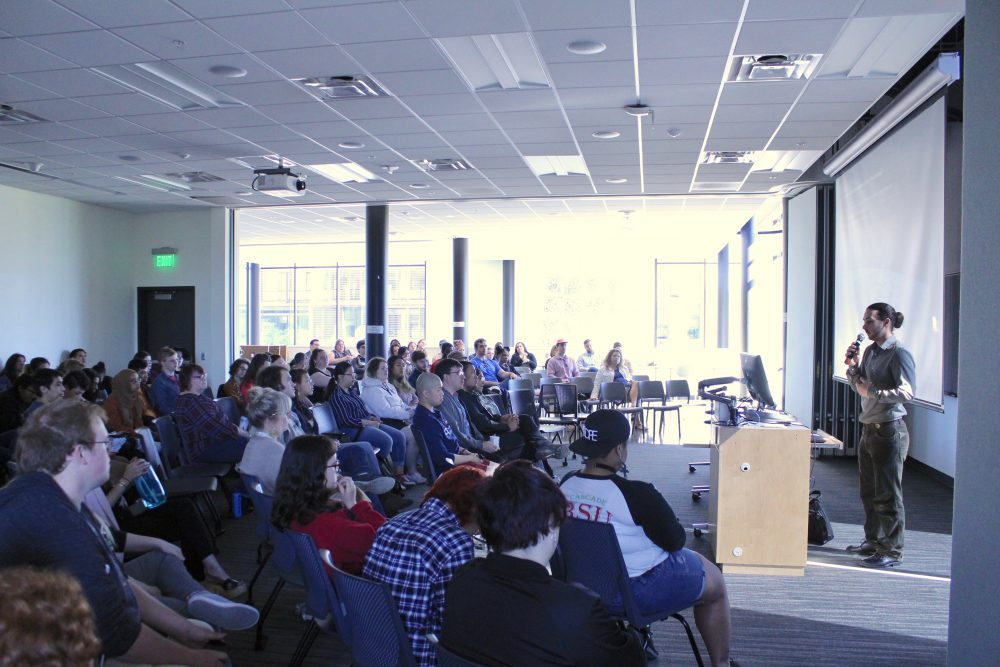
Jacob Lebel at #EcoSocialJusticeEvent – PCC Earth Week 2019
For the 3rd Annual #Eco Social Justice event, we were stoked to have one of the 21 youth plaintiffs from the Julianna V Gov “Climate Trial of the Century”, Jacob Lebel give a great Keynote followed by a powerful talk from Our Children’s Trusts Community Engagement Manager, Coreal Riday-White. We were also fortunate to have a panel with local artists showcasing the way that art can be a potent form of activism. Asa Wright, Thea Ghar, and Ines Paulina Ramirez had a wonderful panel session and then Wright and Ghar treated everyone to an afternoon of screen printing accompanied by a great DJ set from Ramirez. You can read a more detailed account of this event and a recap of Earth Week 2019!
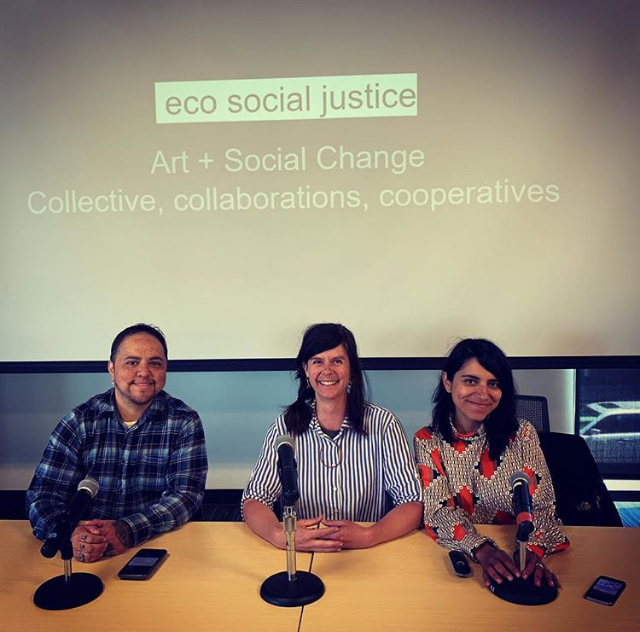
From left to right: Asa Wright, Thea Ghar, and Ines Paulina Ramirez
2018: Tara Houska
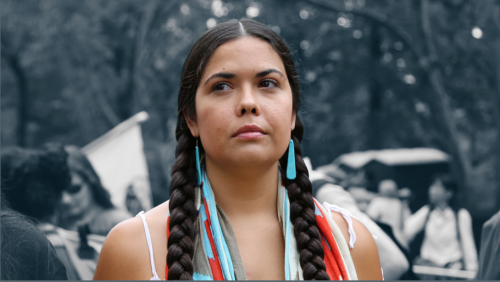 Student Life & Leadership Programs, in a partnership with the Office of Sustainability, hosted its second annual #EcoSocialJustice student in-service training, featuring Tara Houska.
Tara Houska is Ojibwe from Couchiching First Nation. She is a tribal rights attorney in Washington, D.C., and is involved in advocacy on a broad spectrum of indigenous issues. Much of her work is focused on environmental justice and institutional racism. This event is designed to incorporate student leadership teams from the various PCC IBEC Centers (Queer Resource Center, Multicultural Center, Women’s Resource Center, Veterans Resource Center) and ASPCC programs. The event included a great keynote address from Tara Houska as well as a question and answer session.
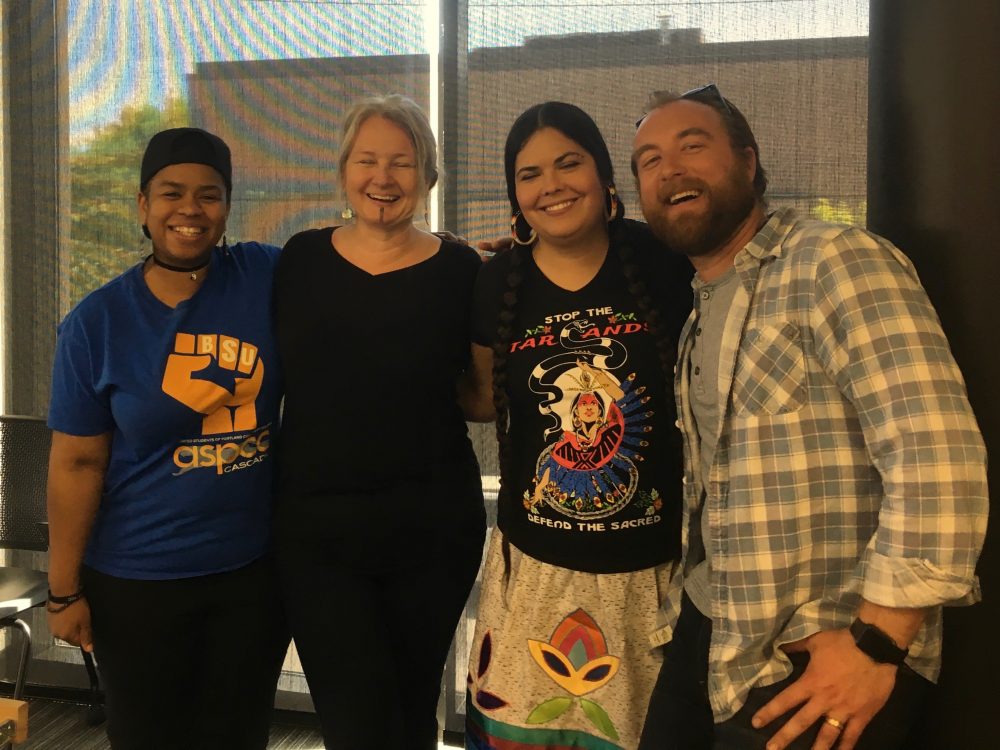
Teri Fane, Renea Perry, Tara Houska, & Joe Culhane at PCC’s 2018 #EcoSocialJustice Event
For the 2018 event, ASPCC student leaders Teri Fane, the Black Student Union Coordinator, Renea Perry, the Native Nations Coordinator, and Joe Culhane, the Environmental Justice Coordinator co-wrote the grant that helped to fund the event which allowed us to welcome Tara Houska and provide great food and additional activities to be a part of this event.
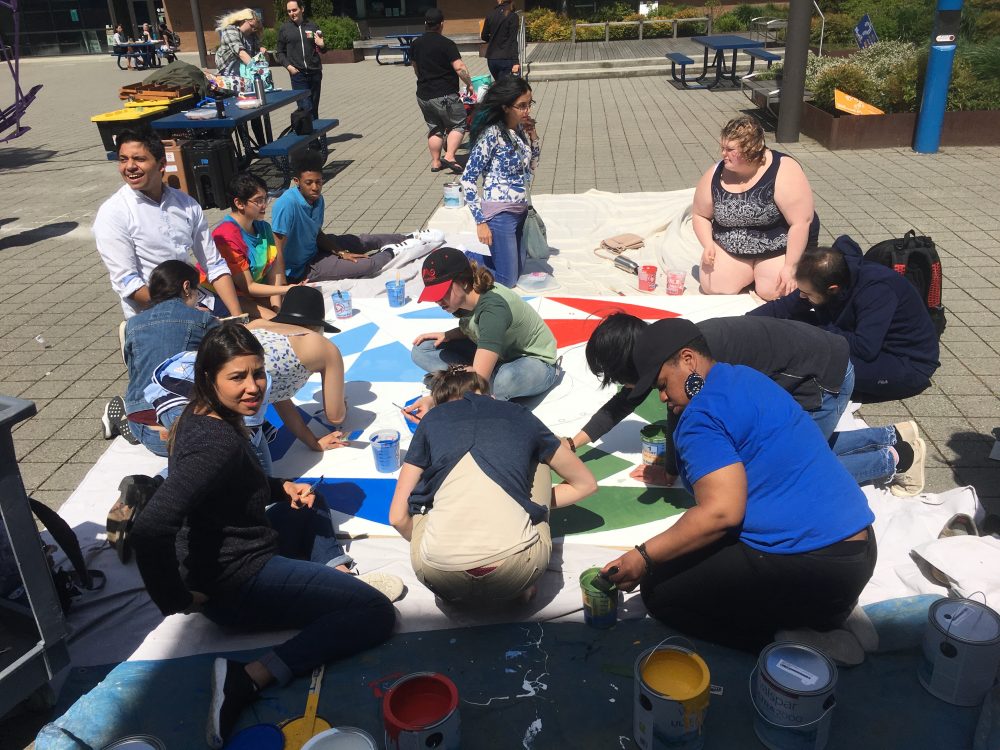
Students from the four main campuses each painted a large section of a mural and the completed piece was put together, bringing the four pieces connected as one.
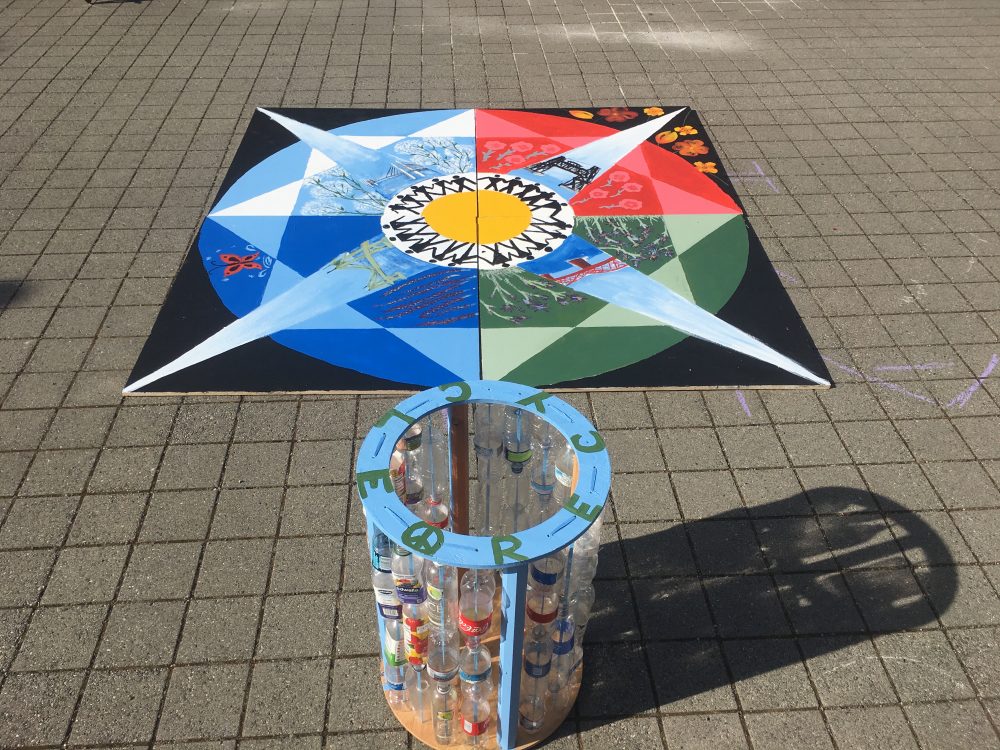
The final mural and up cycled recycling bin created by PCC student leaders from across the district during the 2018 #ecosocialjustice event
2017: Dr. Marcia Chatelain
#EcoSocialJustice
 In #EcoSocialJustice, Dr. Chatelain explored our recent history and current events in our country as a context to better understand the interconnections of racial, social and environmental justice. Looking at the many issues we face – racism, food insecurity, environmental degradation, widening economic disparities, and climate change – how can these movements come together to strategically align for sustainable change? If we are stronger together, how have we failed to collectively mobilize in the past?
Chatelain initiated the #FergusonSyllabus after the death of Michael Brown. She has been featured prominently on CNN, MSNBC, NPR and on other national platforms. Chatelain went to all four campuses to meet and speak with students and student leaders over the course of Earth Week 2017.
Current Eco-Social Justice Grant Projects
Free Food Notification System
This project will ensure the longevity of the Free Food Alert program. The college utilized a free trial for fall ’25 and now has the funding to continue this program past the free trial. This program notifies users whenever there is free food on campus leftover from an event. Not only is this putting hot meals directly in the hands of students, but it also reduces food waste.
District Irrigation Upgrades
The goal of this project is to replace old, outdated irrigation heads and nozzles with the most water efficient irrigation heads and nozzles available. This directly addresses a sustainability challenge of water efficiency and has direct impact on Scope 3 emissions within PCC’s Climate Action Plan.
Opening Doors to Opportunity: Conference Travel for Equity-Driven Student Leaders
This grant will directly fund students to be able to attend the Washington Oregon Higher Education Sustainability Conference (WOHESC) at the University of Washington. These students possess the intellectual drive and commitment to advance sustainability, but lack the financial means to attend these crucial networking and professional development opportunities. This grant addresses the need to diversify who can be future leaders who champion the integration of environmental soundness, social justice, and economic equity into practice.
Bat Boxes for Rock Creek
The goal of this project is to encourage bat populations to return to the forest and wetlands in the PCC Rock Creek Environmental Studies Center campus trail. This will be achieved by setting up to 6 roosts for bats with 2 bat boxes each, all in open areas adjacent to the wetlands and the forest which will allow them to safely land and take off from the bat boxes without the risk of running into branches or tree climbing predators. Folks will be able to monitor the bats without disturbing them by using monitoring equipment, which will detect and record the noises made by the bats as they echolocate.
From Jerseys to Pouches: Upcycling PCC Jerseys
The goal of this project is to avoid unnecessary materials in the landfill. There was a need to get rid of old PCC Athletics jerseys and due to the content of the items, they are not able to be donated and need to be disposed of properly. Working with a company called EcoLogic, the material is able to be upcycled into new items to give them a second life. They are able to utilize all of the nearly 900 square feet of fabric into zipper pouches that will be given out to students and used at events to show the power of upcyling!
BottleDrop for Food Insecurity!
Grant recipients saw the need to improve the college’s recycling rate of deposit containers and worked with the Oregon Beverage Recycling Cooperative, who runs the BottleDrop program, to bring a reverse vending machine to campus. This machine will accept deposit drink containers and the funds collected will go directly to the Panther Pantry Foundation fund. This will also fund infrastructure to collect containers throughout the district to ensure these containers are being recycled and raising money for our Basic Needs programming.
Greens Growing Greens
The purpose of this grant is to build community through the education and practice of gardening and sustainable practices. Specifically, by providing a barrier free opportunity to learn circular gardening/agriculture and cooking techniques, learn the importance of applied environmental science, and network with students, community members, and organizations in support of or related to these fields. The VRC’s will work with IBEC centers to ensure this program is student-focused and community centered.
Cascade and SE Learning Gardens Student-focused Food Justice Learning Project
This is a two-part project consisting of four workshops & two community sharing events and construction of an accessibility tool lock box at the SE Learning Garden and at the Cascade Learning Garden. Based on direct student feedback, the gardens saw a need for students to be able to learn how to garden indoor and in small outdoor spaces since most students do not have access to larger gardening spaces. This grant will fund resources for students to garden as well as provide tools for folks to work and enjoy in the garden outside of volunteer hours.
Previous Eco Social Justice Grant Projects
Over the years, the grant and student leaders have supported the development of countless sustainability initiatives throughout the district, including but not limited to:
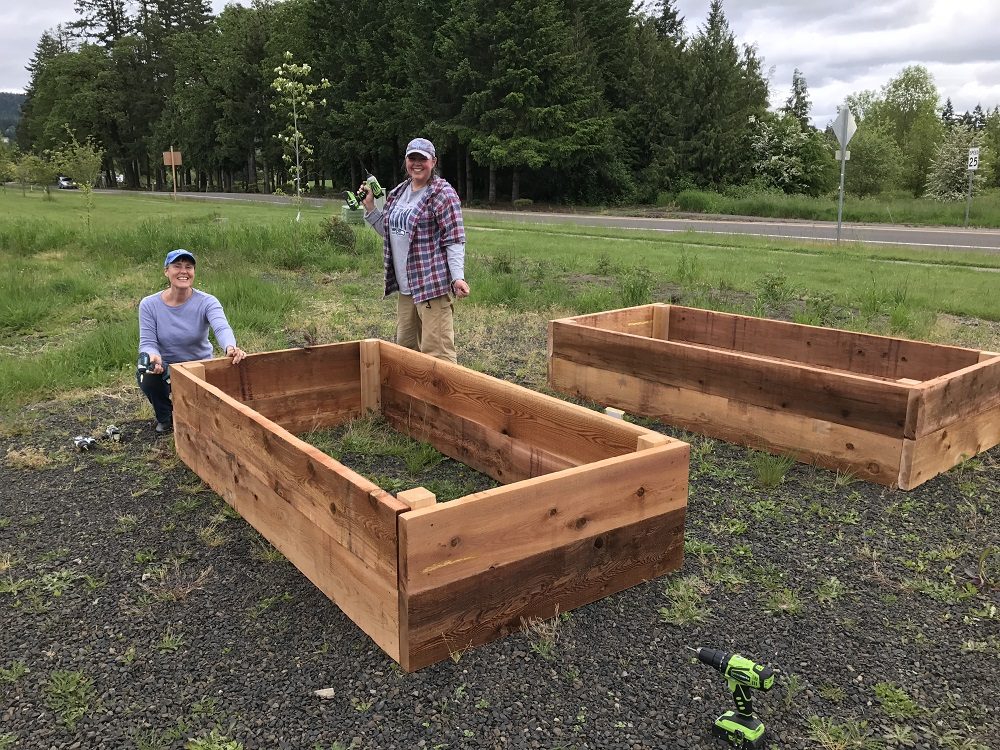
Learning Gardens
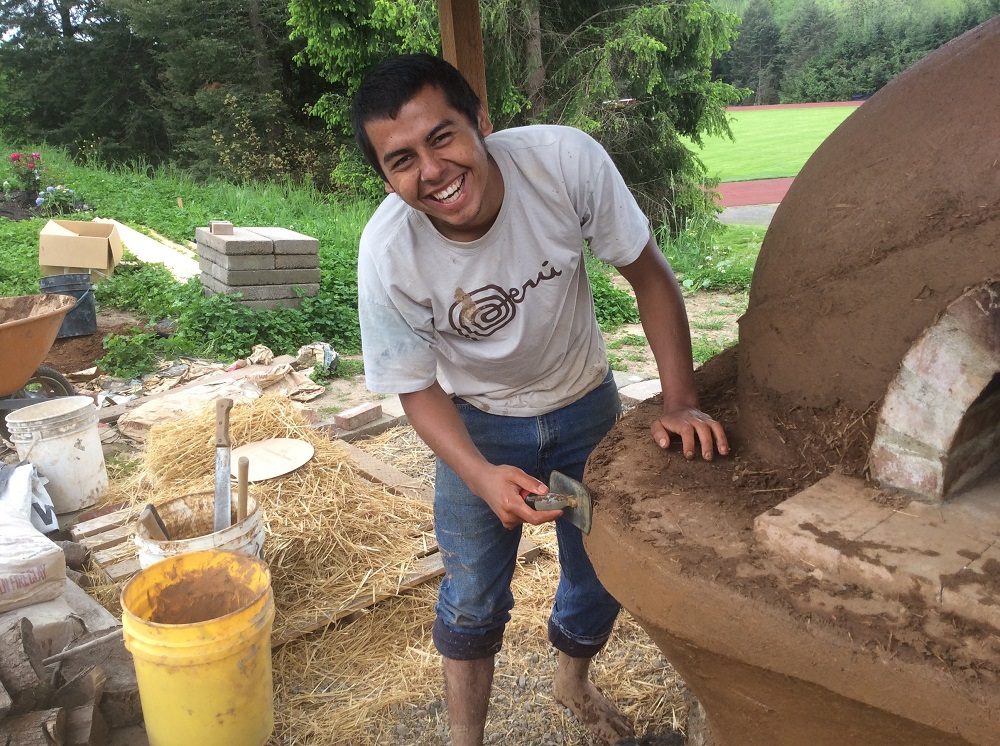
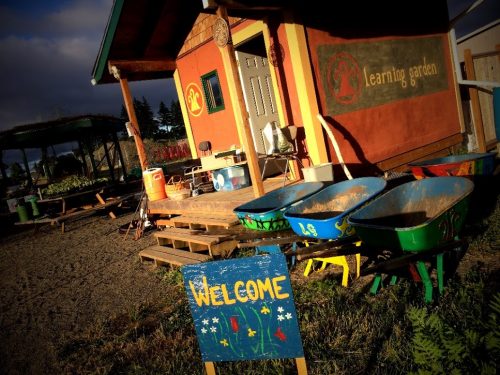 The Eco Social Justice Grant has funded much of the Rock Creek learning garden, as well as enhancements at the Sylvania learning garden, phase I of the Newberg learning garden, a master plan and now completed Southeast learning garden, and most recently, the Cascade Campus just got approved for design and installation of a Learning Garden as well!
Filament To Do That! Recycling Plastic Waste Into Valuable 3D Filament.
The goal of this project is to provide one of the most desperately needed steps in the plastic recycling process: local manufacturing of a high quality, useful recycled plastic product. The sustainability problem we address is Portland Community College’s production of a significant volume of recyclable plastic waste without an ongoing local means to recycle it back into a reusable product. This ample source of plastic waste is a challenge which presents PCC with an opportunity to become a recycled product producer by manufacturing recycled 3D printing filament for reuse.
Butterfly Garden
Plant native species to attract and support pollinators (specifically butterflies), increase green space on campus to help the environment, and to give students at PCC a beautiful space to look at and be around while providing the environment with nourishment.
Tree Canopy for Climate Change
The goal of this project is to create a larger tree canopy on three campuses to help combat climate change. We will purchase 44 climate adapt trees that would be planted by the grounds team and student volunteer parties. The tree canopy will grow in time and provide many benefits.
Food Pantry Locker
Installing self access lockers that students can use during non-pantry operational hours. These lockers would make the pantry more accessible to online students, reduce in-person staffing hours and costs to run the Panther Pantry. Additionally, this program would help alleviate the stigma that comes with in person shopping. With this students would be able to easily place an order through the pantry and pick up groceries at their convenience.
Sustainable Food Serviceware: Expanding Durable Dishware in Dining Services
This project will provide durable cups and bowls to Dining Services district-wide allowing them to offer a low-cost durable option for catered events. The goal of this project is to address the issue of single-use dining practices for catering.
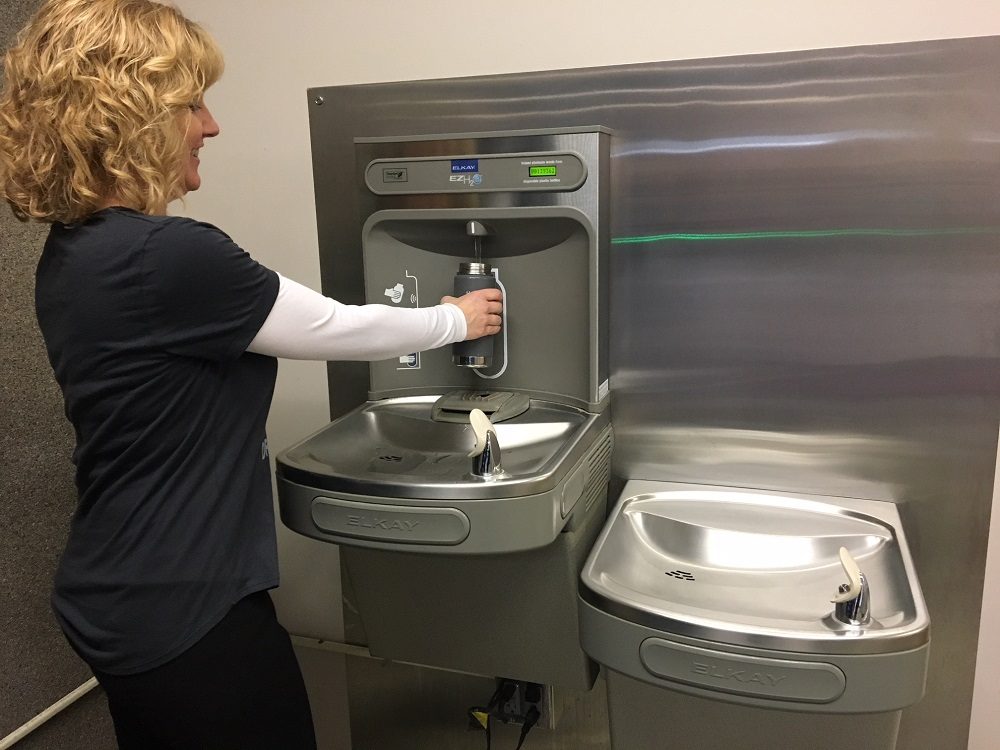
Water Bottle Filling Stations
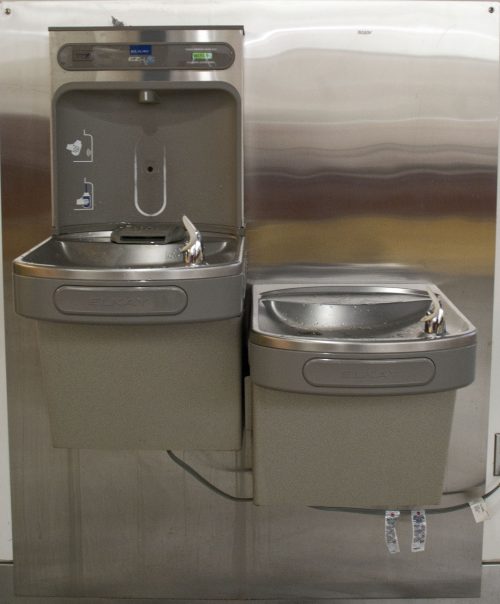 Water bottle filling stations have been added all around the district, greatly reducing the consumption of plastic water bottles.
Bike Rentals
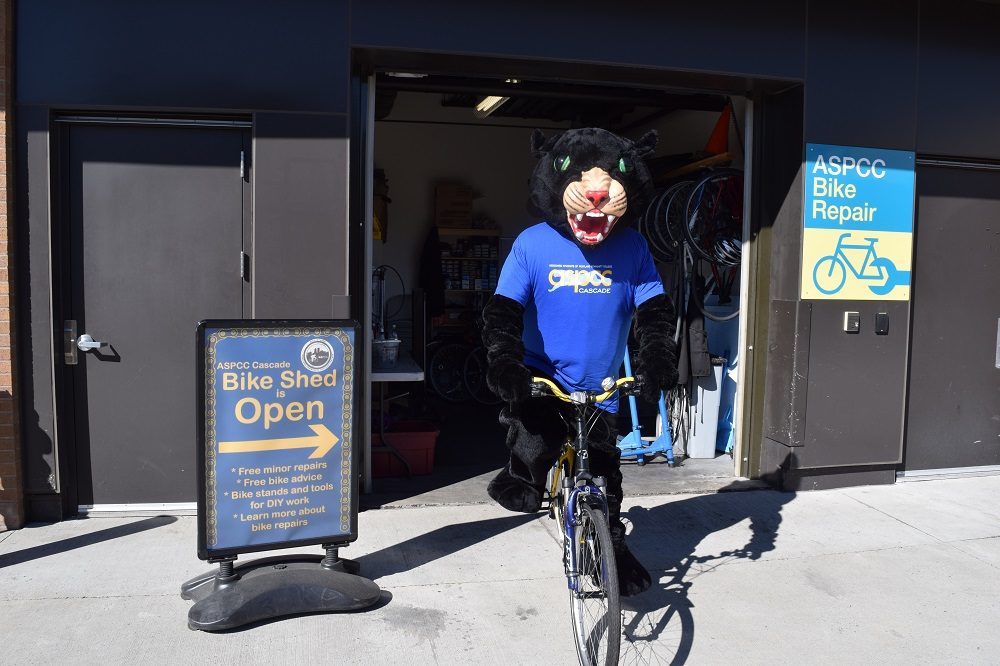
The Bike Programs at Cascade and Southeast are both Eco Social Justice Grant funded and student-managed.
OZZI Machine
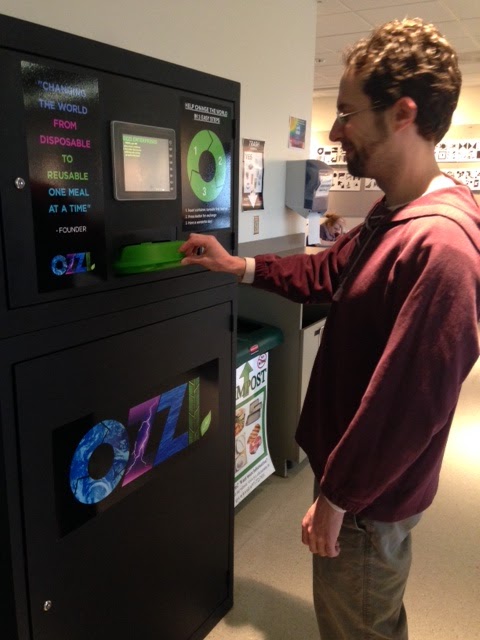 Located on the Rock Creek Campus, the OZZI reduces our carbon footprint and diverts waste with reusable to-go food containers.
Digital Signage
The Digital Signage (televisions that display ads and save paper) were added all around the district.
Cascade Learning Garden
The Cascade Learning Garden is the most recent large scale grant approved. It received funding for two phases and we are in the process of completing phase I which is the design phase. There is plans in the works to have a ribbon cutting ceremony at the 2018 Earth (Extended) Week to celebrate this project. Design and ribbon cutting pictures to come…
Mobile Farm Stand
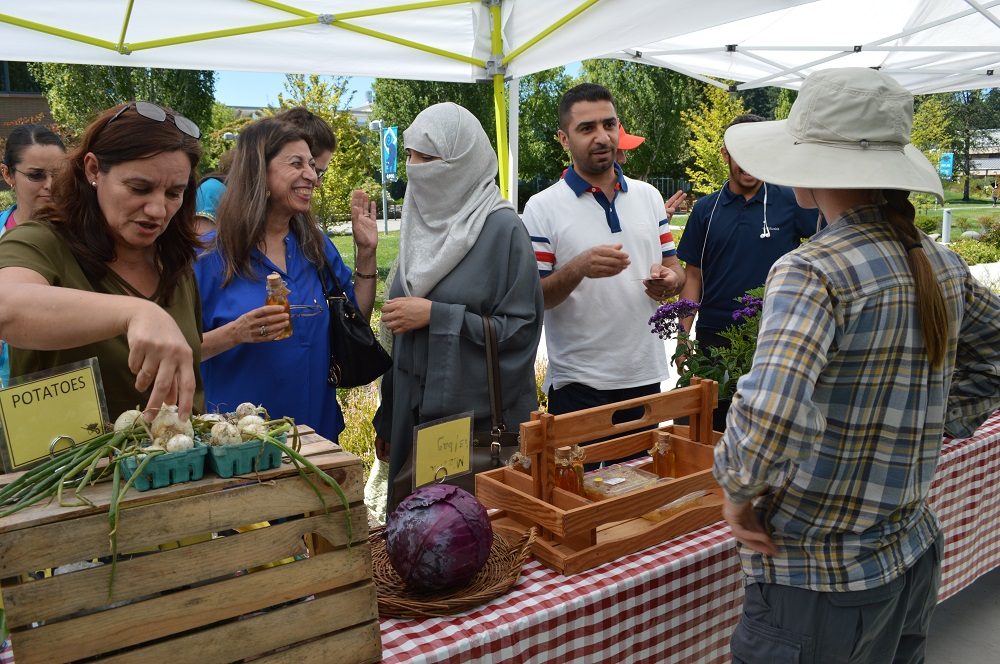
This project will provide fresh produce as part of the canteen food pantry offerings; it increases informal education on sustainable food and agriculture; it reduces the number of miles students, faculty, and staff drive to get their food; and it provides a revenue stream for the long-term sustainability of the Learning Garden.
Trees and Bees
This project will provide additional fruit trees to finish the orchard as well as raspberries and grans. Class and community members will be able to learn about small scale orcharding and cane fruit production. This project will also provide bee colonies for the beehives currently in the Learning Garden.
Welcome Kiosk RC Learning Garden
The Welcome Kiosk will serve as a bulletin board for new visitors, volunteers, community bed stewards, classes, and the community. This will offer the latest event information, photos, handouts, volunteer engagement information and general education about the LG. There will also be an area where community bed stewards and our LG staff can leave extra food from the days harvest to share.
Winter Food Production
Installation of hydroponic systems for growing greens and vegetables in an existing heated greenhouse.
Charging stations Solar Umbrellas
Solar powered outdoor charging station umbrellas will be added to our outdoor tables.
PCC Rainwater Harvesting Tank
To promote rainwater harvesting as a water, a water tank has been purchased by the ESJG to collect sufficient rainwater to cover 15% of the anticipated usage by LAT Department for resulting in 23,300 gallons per year.
Newberg Learning Garden
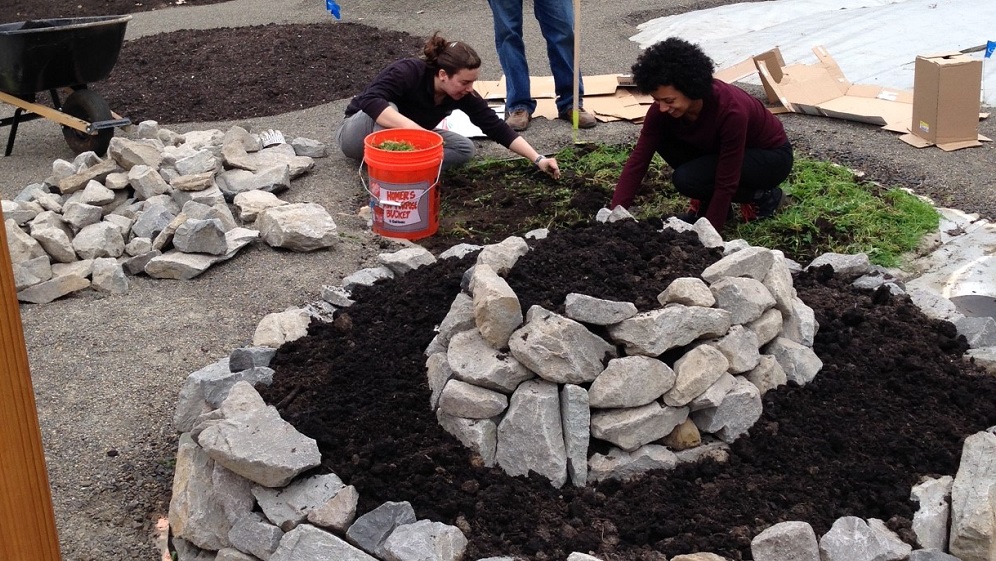
The development of the Learning Garden at PCC Newberg Center has been with the goal to provide space needed to offer new classes and continue the connection with the surrounding community. In the Learning Garden master plan we have included areas designated to implement environmental science, horticulture, landscape technology, building technology, psychology, physical education, health education, and various lab science classes. The Learning Garden has the potential for covered classroom areas, areas for accommodating a video projector, garden beds, an amphitheater, and a greenhouse. All these areas would be utilized to nurture learning for both students and staff. The next phase of the garden will include installation of the eight to ten raised beds for food production, two rain gardens, a drought-tolerant desert planting, finishing the cob tool shed with rainwater catchment system, an earthen oven, a rocket stove, the amphitheater, the greenhouse dome, and an herb spiral. Currently the fruit trees include persimmon, pawpaw, and berries. Later installations will include public art pieces, arbors, trellises, and benches. Food will be grown for use on-campus and for donation to food pantries. The mission of the Newberg PCC Learning Garden is to promote health, community, a space for lab science classes at PCC Newberg Center, interdisciplinary academic collaboration, student leadership development, and sustainable food systems education and experiences for Portland Community College students, faculty, staff and community members.
Wind Turbine
A wind turbine built by students in PCC STEAM Labs and installed in the Rock Creek Learning Garden.