
Effective reading strategies
Morse Code method1
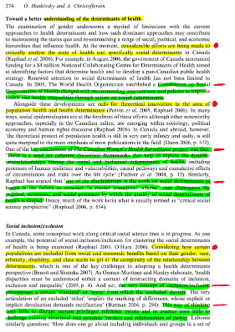
Image Credit: Morse Code Notes Method Image Link
What is it?
- Use Dots and Dashes to assign importance in your class readings.
- Dots = Major ideas.
- Dashes = Examples and explanations that support the main ideas (Dots).
- Review Dots and Dashes and take notes.
When to use
- Reading.
Pros and cons
- Pro: One continuous pass is the fastest, most energy-efficient possible way to get through a reading.
- Con: It can feel laborious at first.
Active reading2
What is it?
- Intentionally engaging with the ideas and information in a text and transforming that information into notes that records the understanding of and response to the text.
- Also referred to as Critical Reading.
What does it look like?
- Generating questions.
- Annotating and summarizing.
- Drawing diagrams and visuals.
- Chunking (breaking text into sections and identifying main ideas).
- Highlighting.
What does it not look like (passive reading)?
- Reading too quickly or slowly.
- Forgetting material right away.
- Falling asleep while reading.
- Multitask while reading.
- Overuse of highlighting.
Strategies for effective reading2
- Ask yourself pre-reading questions.
- Identify and define any unfamiliar terms.
- Bracket the main idea/thesis of the reading, and put an asterisk next to it.
- Make marginal notes or comments in addition to highlighting.
- Write questions in the margins, and then answer the questions on a separate piece of paper.
- Make outlines, flow charts, or diagrams that help you to map and understand the ideas visually.
- Read each paragraph carefully to determine the main ideas and the purpose of the text.2
- Write a summary of an essay or chapter in your own words.
- Write your own exam question based on the reading.
- Teach what you have learned to someone else.
Need more support?
Online learning success coaches offer personalized support to help you clarify and achieve your goals, reflect on your habits, and overcome challenges.
Sources
2 Active Reading Strategies: Remember and Analyze What You Read