
PCC’s College Access Latinx Initiative earns 2026 ‘Examples of Excelencia’ honor
Story by James Hill
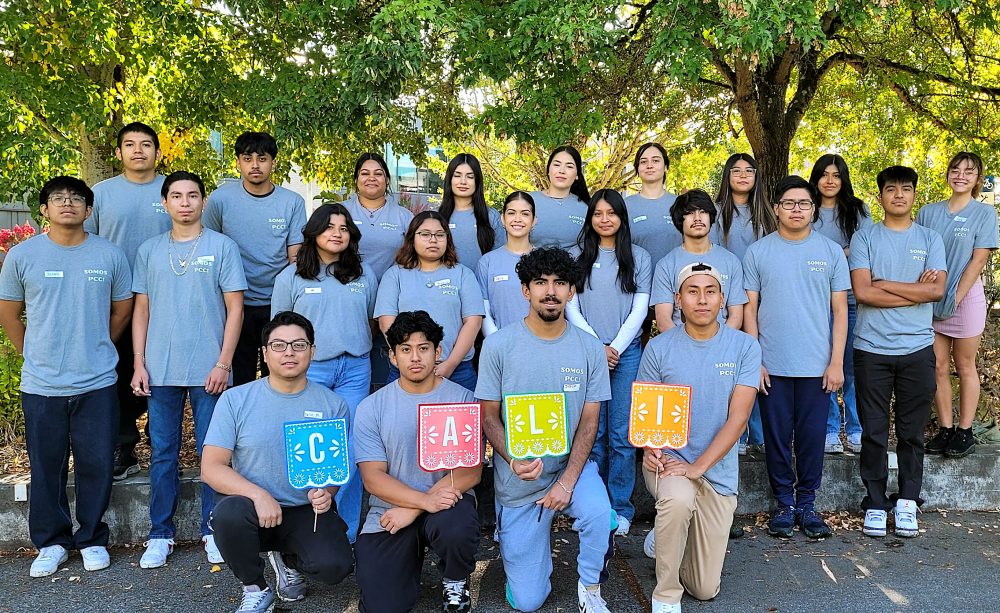
Launched in 2022, CALI is a cohort-based program designed to remove systemic barriers and create culturally affirming pathways for Latine students
Portland Community College’s College Access Latinx Initiative (CALI) is once again at the top of its class.
Excelencia in Education announced CALI is one of three programs nationwide that are 2026 Examples of Excelencia, recognizing PCC program’s successful, culturally responsive approach to supporting Latine students throughout their college journeys. In August, CALI was one of 11 programs nationwide (and one of six in the Student Support category) selected as a finalist for this year’s recognition. Examples of Excelencia is the nation’s only effort dedicated to identifying and promoting evidence-based programs that improve success for Latino and all students in higher education.
In 2025, CALI was named a finalist by Excelencia for the same designation.
Launched in 2022, CALI is a cohort-based program designed to remove systemic barriers and create culturally affirming pathways for Latine students, including those who identify as Indigenous, first-generation, Deferred Action for Childhood Arrivals (DACA) and students with mixed-status. Its comprehensive support begins with outreach to high school students and continues through college enrollment, academic persistence, graduation and leadership development.
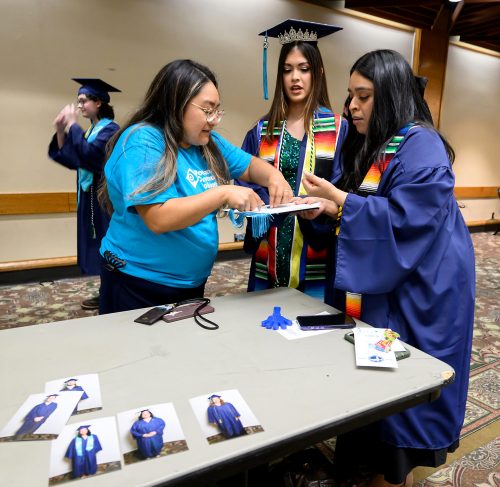
A PCC graduate from the CALI Program gets help from program coordinator Liz Mota.
“CALI reflects PCC’s commitment to creating an institution where Latine students are not only welcomed but also have the support, relationships and resources they need to thrive,” said Dean of College Access Programs Efraín Rivas-Flores. “This national recognition affirms the hard work of our students, staff, families and community partners, and shows what is possible when colleges intentionally design services around students’ lived experiences.”
CALI combines bilingual family engagement, culturally responsive advising, academic pathway support, emergency resources and peer mentoring. By addressing academic, financial and social barriers together, the program helps students build a sense of belonging while navigating financial aid, registration, college resources and the transition into higher education.
Since its launch, CALI has served 122 students, all of whom identify as Latine. Thirty students participated during the 2024–25 academic year.
Over three years, CALI students completed 78% of their attempted credits, compared with 69% among Latine PCC students who did not participate in the program. CALI also achieved 100% first-year retention for its first two cohorts, compared with 52.6% among Latine students outside the program. The program reports an average graduation rate of 92%.
CALI’s impact extends beyond graduation as former participants return as paid peer mentors, using their experience to guide newer students through enrollment, financial aid and college life. Students who once felt uncertain about becoming the first members of their families to attend college are now helping the next generation find confidence, connection and a path forward.

CALI combines bilingual family engagement, culturally responsive advising, academic pathway support, emergency resources and peer mentoring.
“Excelencia identifies and promotes programs at the forefront of improving higher education achievement to grow what works for Latino, and all, students,” said Adriana Rodriguez, chief operating officer and vice president for institutional programs at Excelencia in Education. “The 2026 finalists demonstrate how intentional, asset-based practices strengthen institutions and produce positive results for students, families and communities.”
The recognition supports PCC’s broader work toward becoming a federally designated Hispanic-Serving Institution (HSI), a designation that requires colleges to maintain an undergraduate Latine enrollment of at least 25% for two consecutive years, along with meeting other federal eligibility requirements. The college is working to transform policies, teaching, programs and student services so that Latine students, and all students, have opportunities to belong, persist and complete their educational goals.
PCC’s Hispanic-Serving Institution Task Force is guiding this work using the Seal of Excelencia framework, which emphasizes institutional data, effective practices and leadership accountability. Programs such as CALI illustrate how this commitment can translate into measurable student outcomes.
“PCC’s goal isn’t simply to earn a federal designation,” said Rivas-Flores. “Becoming a Hispanic-Serving Institution means transforming how we design policies, programs, teaching, and student services so Latine students, and all students, have equitable opportunities to succeed. Becoming an HSI would also create opportunities to pursue federal funding that strengthens programs and services for Latine students and all students. Ultimately, when we improve the institution for Latine students, we improve the institution for all students.”
As one of three examples, CALI will join Excelencia’s Community of Practice for What Works, a national network of leaders from more than 120 previously recognized programs. Members share evidence-based practices and collaborate to expand approaches that support Latino and all students.
For more information about the finalists, visit Excelencia in Education’s 2026 finalist webpage.
About James Hill

James G. Hill, an award-winning journalist and public relations writer, is the Director of Public Relations at Portland Community College. A graduate of Portland State University, James has worked as a section editor for the Newberg Graphic... more »