
Future Connect marks 15 years of turning college access into college completion
Story by James Hill, photos by Ric Getter.
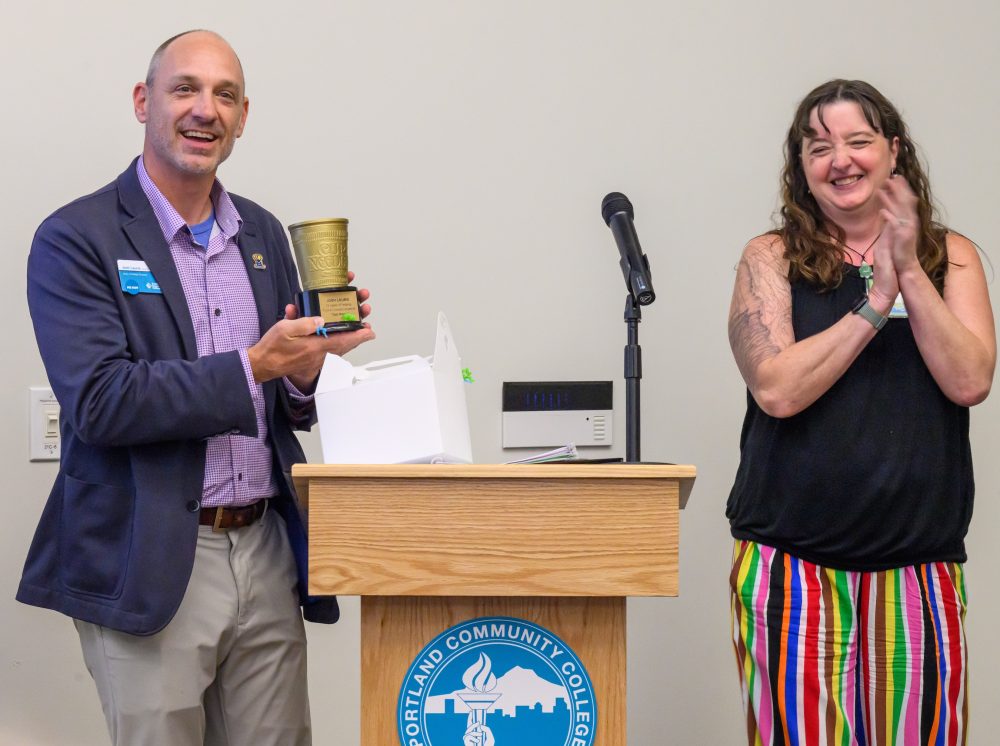
Josh Laurie, PCC’s College Success director and longtime Future Connect champion, receives a Cup of Noodle award to symbolize the basic needs obstacles his students overcome. Future Connect Manager Suzanne Hesse enjoys the moment.
Oregon’s community colleges are drawing students back, but will they stay? Two-year enrollment rose 6.6% in fiscal year 2025, even as the state’s latest affordability measure found that 35% of resident students faced college costs beyond their expected resources.
For first-generation and low-income students, admission is often only the first hurdle. Finding the money, guidance and sense of belonging needed to graduate and transfer can be even harder.
Against that backdrop, Portland Community College and the PCC Foundation marked the 15th anniversary of Future Connect, a nationally recognized program designed to turn college access into college completion. The Sept. 10 celebration at the Willow Creek Opportunity Center in Washington County brought together former students, elected leaders, community donors and friends of the program.
Since its first cohort entered PCC during the 2011-12 academic year, Future Connect has served nearly 5,000 students. The program combines scholarships with personalized advising, career guidance and support from a dedicated college success coach. Students also receive job and internship resources and help navigating academic, financial and personal barriers.
“Future Connect demonstrates what is possible when a college and its community commit not only to opening the door to higher education, but also to helping students thrive once they walk through it,” said Dr. Katy Ho, interim president of Portland Community College. “For 15 years, the program has combined financial support with personalized coaching, trusted relationships and a strong sense of belonging for thousands of first-generation and low-income students. Its success now shapes how PCC supports new students across the college.”
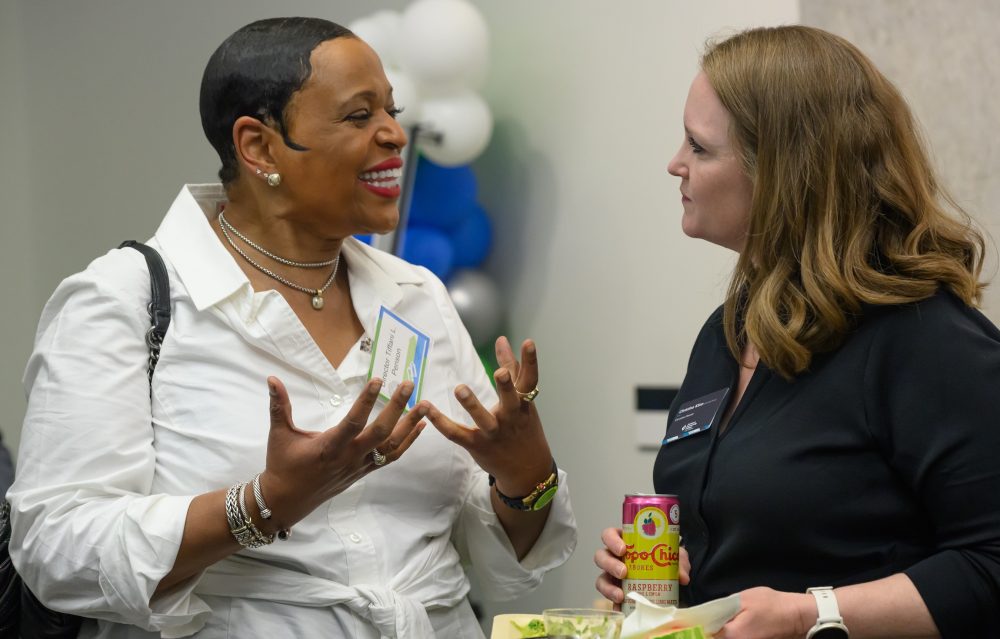
Board of Director Tiffany Penson (left) chats with PCC Foundation Executive Director Christina Kline at the anniversary celebration at Willow Creek.
Future Connect cohorts reflect communities that have historically faced some of the greatest barriers to higher education: 75% of students come from low-income households, 85% are the first in their families to attend college and 87% are students of color. In total, the PCC Foundation has secured more than $24 million in gifts and grants (from private and public partners) for Future Connect with $8 million supporting scholarships.
“Fifteen Years of serving students is something the community can truly be proud of,” said Josh Laurie, dean of PCC’s College Success Programs. “In that time, we have invested and reinvested in how students access opportunity through education. When we started the program 15 years ago, people said it might not stick and it might just be a flashy object that fades. But we believed in what we were building and so did the community.”
In 2011, Future Connect began with more than 100 students and support from the City of Portland and PCC Foundation donors. It later expanded through partnerships with Beaverton and Hillsboro and now welcomes more than 300 new students each year.
Its influence has extended beyond PCC. In 2015, then-Gov. Kate Brown ceremonially signed House Bill 3063, the “Aspirations to College” law based on Future Connect. The law funded similar programs at Oregon community colleges, and Future Connect received a $1.3 million state grant in 2016.
A 2017 Education Northwest evaluation found that Future Connect improved first-year grade-point averages and credits earned, persistence into the second year, and three-year completion and transfer rates. In December 2021, the federal What Works Clearinghouse found promising evidence of effectiveness in its review of the evaluation.
The transfer component is key. According to Columbia University, a national research report shows that about 80% of entering community college students aspire to earn a bachelor’s degree, yet only 33% transfer to a four-year institution and 16% earn a bachelor’s degree within six years. For students from low-income households, the completion rate is 11%.
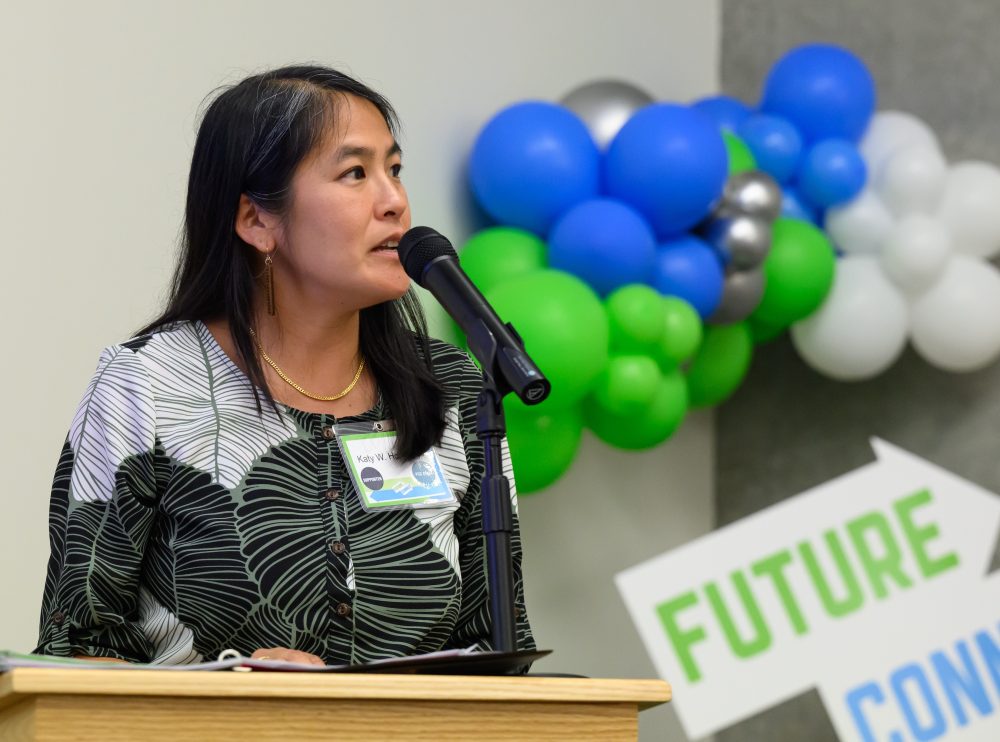
‘Future Connect demonstrates what is possible when a college and its community commit not only to opening the door to higher education, but also to helping students thrive once they walk through it,’ remarked Dr. Katy Ho, interim president of PCC.
Future Connect scholars can continue receiving assistance through available scholarships at Portland State University, Lewis & Clark College, Pacific and Linfield Universities, and any Oregon university of their choice. Known as Future Connect’s Next Step Scholarships, qualifying PCC graduates earn scholarships that pay for tuition and other costs. On average, Next Step scholars receive between $35,000 to $68,000 annually through institutional and merit-based scholarships and grants.
The program also provided the foundation for PCC’s First-Year Experience, which brings Future Connect-style wraparound support to more new students. PCC piloted the initiative in fall 2024 with a $1 million gift from Brigid Flanigan, founder and principal of Tenfold Senior Living, and has expanded to serve 5,000 students a year.
“Future Connect shows what can happen when a community gets behind a strong idea,” said Christina Kline, executive director of the PCC Foundation. “We have helped connect individuals, businesses, foundations, and public partners with opportunities to invest in the program as it has expanded into new communities, reached more students, and shaped new approaches to student success at PCC. That sustained commitment reflects tremendous confidence in Future Connect and, most importantly, in its students.”
Longtime supporters include Michael and Alice Powell, founders of Powell’s Books. The couple supported a Future Connect leadership program; Michael served on the PCC Foundation Board, and both were honorary chairs of the Foundation’s inaugural comprehensive fundraising campaign.
“Future Connect has meant so much to us because we’ve seen what can happen when students are given the opportunity and encouragement to pursue their goals,” Michael said.
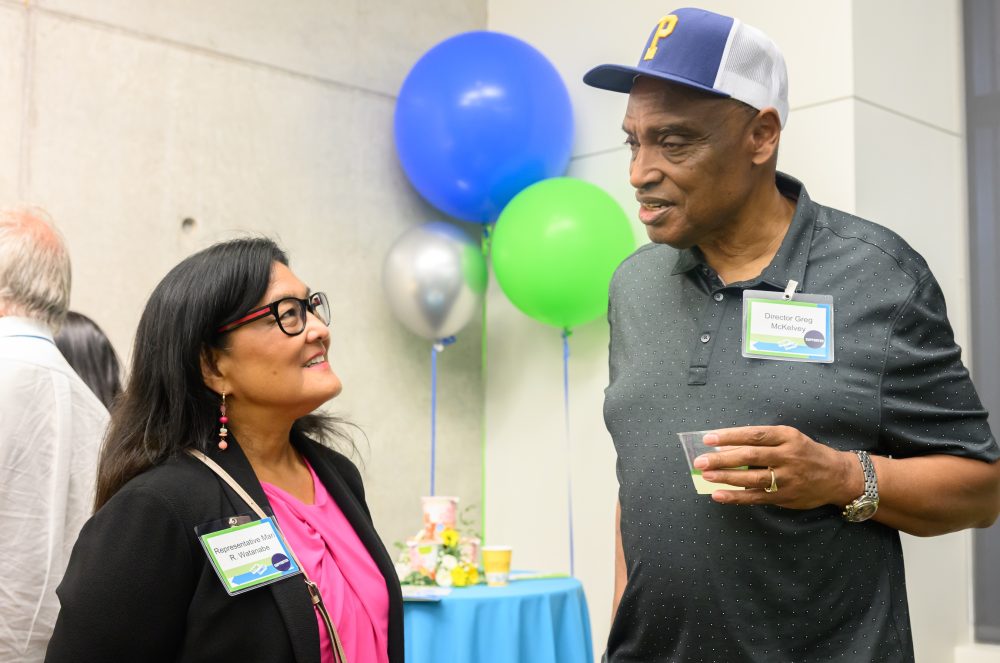
Former PCC Board member and current Oregon State Rep. Mari Watanabe visits with PCC Director Greg McKelvey.
“To have been part of this program from the beginning and watch it grow over 15 years has been incredibly meaningful. We’re proud to have played a part in helping thousands of students continue their education and build the lives they envision for themselves,” added Alice.
Laurie said the anniversary demonstrates the durability of a program that some initially questioned.
“It is quite simply a way to envision a caring approach within a large institution; it takes time, a ton of energy and ultimately a lot of trust,” Laurie said. “We are so grateful to have all three of those still going strong after all these years.”
Future Connect Through The Years:
- 2013 – The City of Beaverton and the City of Hillsboro each earmarked $100,000 in city funds to support Future Connect. Each city’s grants were matched with funding raised by the college and the PCC Foundation and put toward scholarships for the program. Additionally, the Meyer Memorial Trust also provided matching donations.
- 2015 – Then Oregon Governor Kate Brown ceremonially signed House Bill 3063, known as the “Aspirations to College” bill, based on PCC’s Future Connect model, appropriated $3 million to the Higher Education Coordinating Commission to be expended for a grant program that distributes the funds to community colleges.
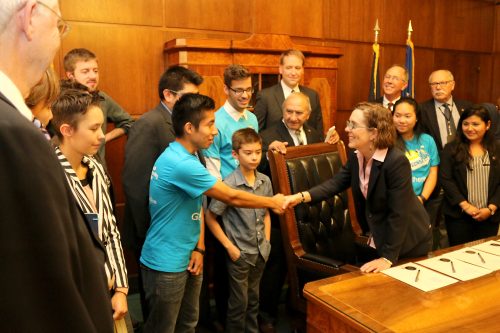
In 2015, then Oregon Governor Kate Brown signed the “Aspirations to College” bill, which was based on PCC’s Future Connect model.
- 2016 – The program was awarded a $1.3 million grant from the HECC to broaden the reach and impact of its services in the Portland area. The money was part of the statewide initiative HB 3063 (“Aspirations to College”), which disbursed $3 million to similar community college programs throughout the state.
- 2016 – Future Connect celebrated five years as leaders pursued an external evaluation of the program to measure its impact and to determine areas of improvement. It worked with the Department of Community Colleges and Workforce Development and other state agencies to collaborate with eight other community colleges who received funds through HB 3063.
- 2017 – A report by Education Northwest indicated that Future Connect has had a positive impact on completion rates for first-generation and low-income college students. This evaluation demonstrated how Future Connect improves first-year grade-point averages and credits earned, improves persistence to the second year of college, as well as increases three-year completion and transfer rates.
- 2020 – HECC awarded the PCC Foundation $413,910 to support under-served students in Future Connect.
- 2020 – The program was recognized by the What Works Clearing House as an evidence-based program for college success.
- 2024 – In the fall, PCC piloted the First-Year Experience, which is based on the wrap-around support model illustrated by Future Connect. The initiative received a $1 million gift from a donor.
About James Hill

James G. Hill, an award-winning journalist and public relations writer, is the Director of Public Relations at Portland Community College. A graduate of Portland State University, James has worked as a section editor for the Newberg Graphic... more »