
Alum Focus: Leah Blankenship explores neuroscience at University of Oregon
Story by Misty Bouse. Photos submitted.
At 16, Leah (McDowell) Blankenship stepped onto Portland Community College’s campus through its Beaverton Early College High School and into a world that would shape her career, her confidence and her calling.
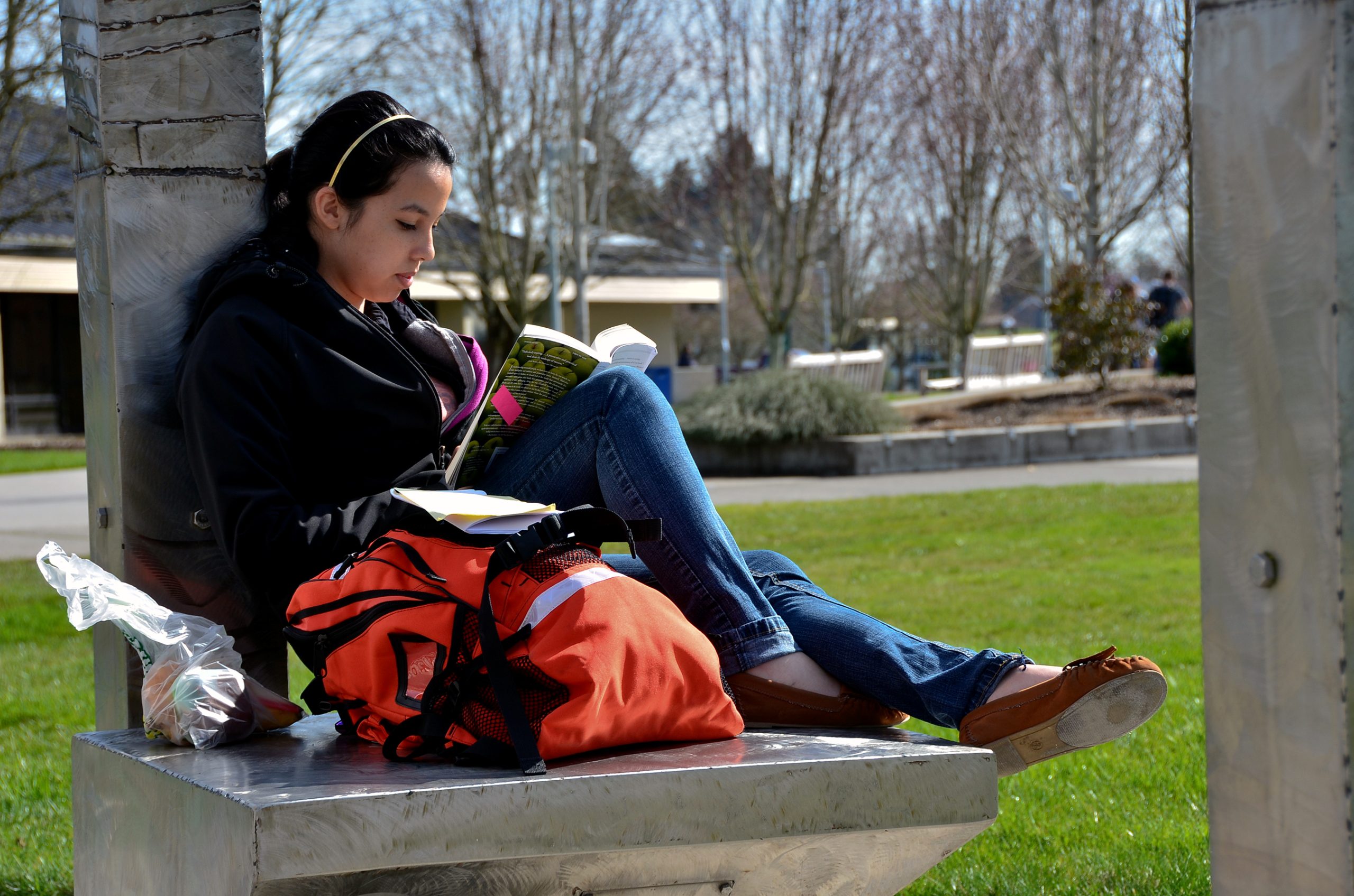
Beaverton Early College High School
Beaverton Early College High School is an options program available to students in the Beaverton School District and partner districts. It is an opportunity for students to blend high school and college in a coherent, personalized, and rigorous education program at Portland Community College.
Now a neuroscience doctoral candidate at the University of Oregon, Blankenship is studying the brain’s lesser-known regions to better understand opioid addiction and mental health. But her path was not always clear or easy.
“I didn’t know I was autistic when I started,” said Blankenship, who was later diagnosed at age 18. “High school was hard socially. At PCC, I found space to thrive.”
Blankenship, raised in Hillsboro and Beaverton, attended both public and private schools before enrolling in the early college her junior year of high school in 2017. The experience was impactful.
“It was the best decision I made,” she said. “The variety of classes, the people, the flexibility: it made a huge difference. I was earning real college credit in a place where I felt like I belonged. It’s a great way to transition into college, especially for neurodivergent students. Smaller class sizes, flexible schedules, and diverse peers can make a huge difference,” said Blankenship.
She graduated from PCC in 2019 with both an Associate of Science and an Associate of Arts Oregon Transfer degrees. She said her coursework in psychology, biology and chemistry laid the foundation for her undergraduate studies in neuroscience, psychology, and biochemistry at the University of Oregon. She would go on to pursue a doctorate just one month after earning her bachelor’s degree.
As a self-described neuroscience nerd, Blankenship began exploring the science behind her own experience even before receiving a formal autism diagnosis. She became captivated by the concept of women “masking” autism symptoms and often hiding traits to fit in socially. This resonated deeply, she said.
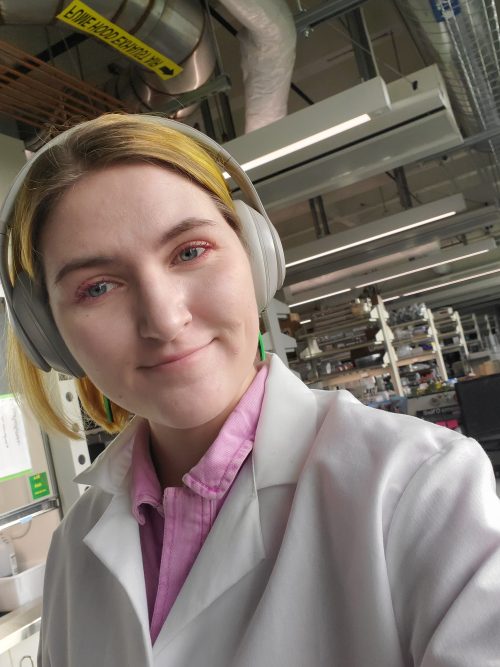
UO Neuroscience PhD student Leah Blankenship at the Sylwestrak lab.
“Getting the label wasn’t surprising. It was affirming,” she said. “I had always known there was something different. Now I had a word for it.”
That perspective has driven her academic research. Her doctorate work focuses on a small but powerful brain region called the habenula. In her lab, Blankenship investigates how specific cell types in this area impact dopamine and serotonin regulation—neurotransmitters tied to motivation, reward and addiction.
“I’m especially interested in translational research,” she said. “It’s important to me that science can impact real lives.”
Blankenship is the founder of the Neurodiversity Alliance at the University of Oregon, a student-led organization offering support for neurodivergent students, including those with autism, ADHD and related conditions.
“The first real friendships of my life came through neurodivergent community,” she said. “For the first time, I didn’t have to pretend to be neurotypical. I wanted other students to find the same acceptance.”
The group, now more than 200 members strong, hosts in-person meetups and maintains an active Discord server. The mission is to create inclusive spaces, improve campus culture and help students navigate college life, from writing professors an email to finding their first study group, which is key.
“It’s not cheating—it’s collaborating. Learning with others can boost your success and reduce isolation. It’s not just about advocacy,” she said. “It’s about changing the experience for students, especially freshmen who often drop out at higher rates.”
Blankenship also advises, “Don’t pretend to be someone else. Build a community where you can be your authentic self. That’s when the real connections happen.”
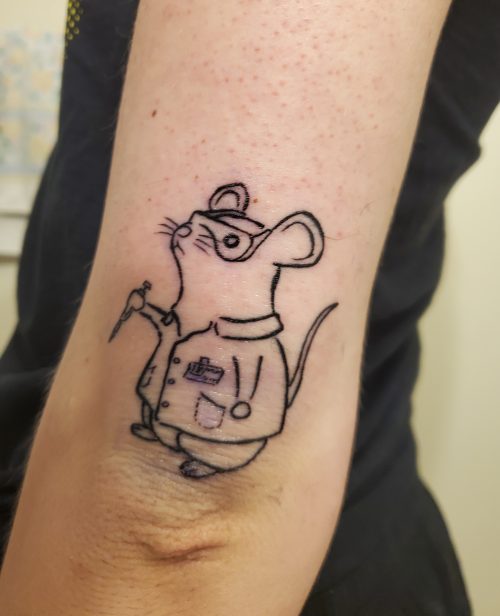
Blankenship’s tattoo is in homage to the mice she works with, which enable her study of cell-type differences in the brain.
Having earned scholarships from PCC and the University of Oregon, including Intel’s Andy Grove Scholarship, Blankenship is a 4.0 grade-point average student. This accomplishment means she has earned her degrees without incurring debt, which her parents, also PCC alumni, greatly appreciate.
For neurodivergent students who struggle in traditional classrooms, Blankenship says STEM (science, technology, engineering and math) and research can be surprisingly accommodating.
“You don’t have to be a math genius,” said Blankenship. “If you’re curious and enjoy learning, you belong in STEM. Try different science classes and talk to people in the field.”
She also advises that graduate school can be more accessible than people think.
“Many doctoral programs in science pay you a stipend. You don’t need a master’s degree first,” she said. “Just get research experience as an undergrad or through a job. Graduate school is mostly doing research, not sitting in lectures. It’s about results. You arrange your own lab schedule. There’s more flexibility than people realize.”
Still, she cautions that time management and imposter syndrome are real challenges.
“But gaps in knowledge aren’t failure,” she added. “They’re opportunities. You’re in the perfect place to learn.”
Now in her third year of graduate school, Blankenship hopes to pursue a career in research or teaching. She dreams of becoming a principal investigator at a university or teaching at a community college. Along the way, she wants to continue writing about science and advocating for inclusion to make STEM more accessible to everyone.
“No matter what, I want to use my degree to make a difference,” she said. “And I want more students to know: STEM and grad school might be for you, too.”