
Phlebotomy Technician, non-credit training
Why choose the Phlebotomy Technician non-credit training program at PCC?
Salary
Phlebotomy technicians were paid an average wage of $43,130 in 2023, according to the U.S. Bureau of Labor Statistics.
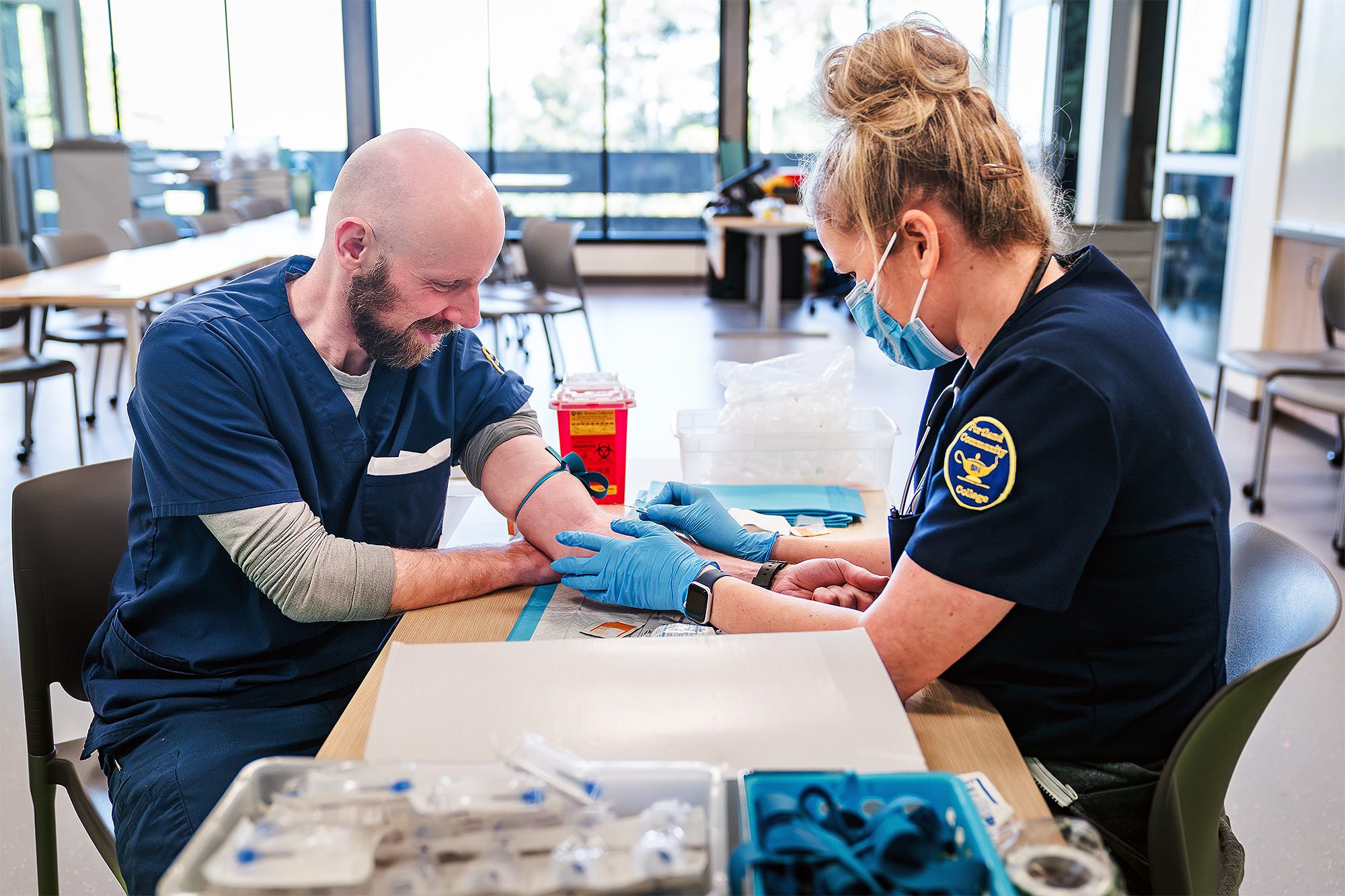
PCC’s Phlebotomy Technician training program consists of two courses that span two terms, totaling 190 hours, and will prepare you to pass the American Society of Clinical Pathology (ASCP) exam and become a nationally certified phlebotomist.
Award information
| Award | Length (attending full-time) | Financial aid eligible | Currently accepting students? |
|---|---|---|---|
| Non-credit Training: Phlebotomy Technician | Less than 1 year | Limited entry, see how to apply to Non-credit Training: Phlebotomy Technician |
About this program
Learn more about Medical Professions and all 3 awards available »
Locations
 CLIMB Center
What will you learn?
Get in touch
Contact Bem Hanamoto if you have questions about Phlebotomy Technician non-credit training.
Term I is a 90-hour course consisting of both classroom and lab work. You will learn about:
- Collecting blood and handling, transporting, and processing specimens
- The anatomy and physiology of pertinent body systems and pathologic conditions
- Lab equipment use and care
- Safety precautions and quality control
- HIPAA (Health Insurance Portability and Accountability Act)
Term II is a 100-hour clinical rotation.
- You must successfully complete Term I to enroll in Term II.
- Students will be supervised by laboratory personnel for a total of 100 hours in a hospital, physician’s office, outpatient facility, or other site approved by the program.
- A minimum of 100 successful, supervised blood draws must be completed.
- At the end of the clinical rotation, you are prepared and eligible for the national certification exam through the American Society for Clinical Pathologists. Holding a national certificate greatly enhances employability in the field.
Upcoming courses
What will you do?
After completing both terms, you will be able to:
- Confirm a patient’s identity and correctly label specimen receptacles.
- Obtain blood specimens by performing venipunctures and fingersticks.
- Instruct patients in the proper protocol for collecting urine specimens.
- Establish a chain of custody for specimens after a patient has provided samples.
- Track collected specimens and maintain daily tallies of collections performed.
- Maintain quality results by following clinic procedures and testing schedules.
- Maintain a safe, secure, and healthy work environment by following standards and procedures and complying with legal regulations.
- Take the national certification exam through the American Society for Clinical Pathologists.
Next steps
Learn how to get into this program.See how to apply
Not quite ready to apply?
We can help you get the info you need.