Let’s Talk! At ORAHEAD 2025
Hosted by Miri Newman. Guest speakers Rosa, Claire, Dana, Sarah, Taylor, and Jewls. Produced by the Let's Talk! Podcast Collective. Audio editing by Julie Kagawa and Miri Newman. Transcript editing by Julie K. and Miri. Web article by Phyllis Petteys. Web hosting by Eugene Holden.
Let’s Talk! At ORAHEAD 2025
Summary: Miri visits ORAHEAD, the Oregon branch of the national AHEAD conference, and talks to people there about their experiences as accessibility specialists and disability advocates.
- Hosted By: Miri Newman
- Guest Speakers: Rosa, Claire, Dana, Sarah, Taylor, and Jewls
- Produced By: Let’s Talk! Podcast Collective
- Audio Editing: Julie Kagawa and Miri Newman
- Web Article: Phyllis Petteys
- Web Hosting: Eugene Holden
- Released on: 4/24/2026
- More resources at our home website.
Episode Transcript
Transcript edited by Julie K. and Miri
Disclaimer
Asher: You’re listening to Let’s Talk! Let’s Talk! is a digital space for students at PCC experiencing disabilities to share their perspectives, ideas, and worldviews in an inclusive and accessible environment. The views and opinions expressed in this program are those of the speakers and do not necessarily reflect the opinions or positions of Portland Community College, PCC Foundation, or our community partners. We broadcast on our home website, pcc.edu/DCA, on Spotify, and on XRay 91.1 FM and 107.1 FM, and KBOO Community Radio, 90.7 FM.
Episode Intro
Miri: Thank you for tuning in for another episode of Let’s Talk! My name is Miri, and today we’ll be exploring the Oregon Association on Higher Education And Disability conference, more commonly known as ORAHEAD. ORAHEAD is a place for people who work in accommodations and accessibility to get together, discuss developments in legislation over the previous year, and swap advice, techniques, and stories with others from all across the state.
Over the weekend, I got the opportunity to talk with some of these incredibly passionate people, to learn about all the different paths they’ve taken to get to where they are today, and how the work that they do means so much to the students they get to work with.
Rosa Ramirez from EOU
Rosa: My name’s Rosa. I’m the Accommodation Specialist at Eastern Oregon University. As a student, I was working three part-time jobs. Full-time student, full-time student athlete. Spring term, my boss at the time just quit—took off. And so I was basically doing that job, and then I was like, “Hey, I graduate. Can I apply for that job?” And they’re like, “Yeah, I don’t see why not.” And I did. So that’s how I got into this position. I’m starting my third year.
Miri: You said full-time student athlete. What’s a little bit about that? What kind of athletics were you doing?
Rosa: I was a female wrestler for Eastern. I was a walk-on.
Miri: Were you good?
Rosa: No.
Miri: No.
Rosa: Oh, definitely not. I was okay. I could hang with the big dogs, but I was not a big dog.
Miri: That’s super cool.
Rosa: Yeah.
Miri: How did you get interested in this kind of work in the first place?
Rosa: I wasn’t super interested at first. I was just kind of looking for a big kid job, and this was the spot. I was like, “I’m already doing it. Might as well get paid.”
Miri: Yep.
Rosa: That’s how I got into it. And then, as the year went on, I was like, “I really love helping students and making them feel welcome.” Funny thing, one of your podcast students was also a student at Eastern, and I worked with him a lot. It was really good to see him finally walk across stage, ’cause I did a lot of his stuff as a student worker. And then I got into the big kid spot, and I was still doing some of his stuff, and then finally saw him walk across his graduation stage. And that was pretty good.
Miri: That was the moment where it hit you, “Oh, I helped that happen.”
Rosa: Yeah. From then, it’s just, “I love helping students.” And I was like, “Wow. I, I helped—a lot actually. Just little things like that.
Miri: How long was that?
Rosa: Just last year.
Miri: Last year. Nice. Did you meet him that same year or before that?
Rosa: No, so I was a student worker. I was doing a lot of his stuff, but I didn’t get the whole picture of who he was. I was just, ” Hey, you gotta do this audio text.” And I’m like, “Okay, cool.” I just didn’t know.
Miri: And that was working with us?
Rosa: Yeah.
Miri: That’s kind of a crazy coincidence.
Rosa: Yeah, I know. When you were doing your podcast, I turned over to Taylor. She’s like, “Yeah.”
Miri: “It’s Miguel!”
Rosa: I was like, “Why? How’d you know?” But I didn’t know, like what? That was kind of funny.
Miri: It’s a small world of not a whole ton of people who are actually doing it.
Rosa: Yeah.
Miri: This is probably, what, a quarter of us in this room, in the whole state?
Rosa: Yeah. It’s still a bunch of us too. It’s crazy.
Miri: Yeah. Awesome. Thank you.
Rosa: Yeah.
Claire Lingefelter from LBCC and Dana Gallup from OCCC
Miri: Thanks for having a quick little talk with me. Could you both introduce yourself and where you work?
Claire: Yeah, sure. I’m Claire Lingefelter. I work at Linn-Benton Community College in Albany, Oregon. I’m an Accommodation Specialist and I work on our care team as well.
Dana: Hi, I’m Dana Gallup. I’m a Student Support Specialist and I work at Oregon Coast Community College. I’ve been doing so for seven years.
Miri: So what got you started with being a student specialist?
Dana: It was a little bit on accident.
Miri: I’ve heard that a couple times.
Dana: I moved out here for family reasons and needed a job in Ed, and was looking to switch gears a little. I’ve been a teacher and a sub and private tutor, and I would be like, “I would like to have one job, please, instead of three.” And then I got a job that was three jobs in one. But it’s okay! It means that every day is a little different, which is nice. I was really enjoying the transition to higher Ed. And I really come to love the kind of unique situation of a community college. It’s not just your standard idea of a college student coming straight from high school. I mean, I do have those, but I also have folks that are a lot older, that are established, have families, they’re looking to get a different job or a better job, or are coming back to school after years and years away, and there’s a lot of baggage with that. And I feel lucky to get to be part of helping them reach some of those goals.
Miri: What are the differences in what students have to deal with if they are a fresh student, someone coming out of high school or early college, or someone who’s returning after a period of time, maybe even decades?
Dana: I feel like there’s definite generational difference in how people view disability, especially. I find that there’s a tremendous amount of shame that people that are older carry. There was a lot of messaging that was very damaging that they were given when they were younger. One of the reasons why I’m glad to have kind of fallen into this work, and the reason why it matters a lot to me is, for example, members of my own family who went to school in the sixties. They didn’t get told, “Oh, you have ADHD, here are some accommodations that might help you have access to your education.” No, they were told to their face they were stupid, couldn’t learn, and would never amount to anything.
Miri: Yeah.
Dana: And I’ve seen the pain that they carry to this day.
Miri: Mm-hmm.
Dana: It was always, when I was a classroom teacher, and even now in this role in accessibility services, it’s always been about, “I don’t want that to happen to anyone else. I don’t want anyone else to feel that way.” That’s why it matters to me.
Miri: That’s so cool and absolutely fantastic, reasonable thing, too. I think this is something that a lot of people are saying, is they’re just tired of seeing people be treated badly. So they’re like, “This is a job where I can make people be treated respectfully and with the way that they need to be treated.”
Dana: Yeah. And so the older students, they’ll come to me with a fresh diagnosis, “Hey, I’m 40 something, but I just got diagnosed with ADHD.” And I’m like, “Awesome! Let’s talk about it. Have you experienced this and this and this?” Because everyone has different grab-bag of symptoms. And they’ll go, “Yeah.” I hear that all the time from other students, “ADHD, really? Yeah. Let’s try these. Have you heard of these strategies?” And we have a whole fun conversation. Well, funny to me. It’s fun because I’m a nerd about this stuff, you know. We have this whole conversation about it, and then you can sometimes, with some of those conversations, you can just see their shoulders sag in relief.
Miri: Mm-hmm.
Dana: And they go, “Wow, this is so cool. I didn’t know that there were all these accommodations out there.” And I’m like, “Yeah! Let’s set ’em up for you.” Of course, not every conversation is like that or that easy, but those are the ones that kind of stick with me as, “Let’s keep doing this job, even if it’s a tough job sometimes.”
Miri: And what about for yourself? How’d you get started in working in accessibility?
Claire: I kind of, similar to you, moved out to Oregon because I had some changes in my personal life, and my family has moved out here over the years. Originally from the East Coast, and I was teaching middle and high school Spanish for four years on the East Coast. And then when I moved out here, was substitute teaching and also private tutoring and the whole nine yards. I live in Corvallis, Albany, and it’s just a smaller area, and there aren’t as many jobs teaching. I also was considering what else do I wanna change in my life? Thinking about other ways that I could stay working with students, but maybe try higher Ed. Community college has always appealed to me as a place to maybe teach someday. I like the idea of that space, having gone to community colleges myself, and this feeling that the students really wanna be there as a step to a four-year institution, or they’re coming to change, like you were saying.
Miri: About people at community colleges—
Claire: Yeah.
Miri: —wanting to be there. And that being such a big change from high school, middle school—
Claire: Exactly.
Miri: —where you’re forced to be there.
Claire: Yeah. I love that. I think the shared motivation that a lot of students have to be there, it’s great. So this job opened up and I applied, ‘cause I thought I might be a good fit. Especially because I got a master’s degree when I was still living on the East Coast, and it was focused on teaching students with dyslexia foreign languages. And ‘cause that was one of my passions when I was teaching Spanish, I ended up with a lot of students with dyslexia in my class. I was in, sometimes, private institutions where nobody was telling me about accommodations. I was coming up with it myself. And members of my immediate family have dyslexia and stuff, so I already felt quite passionate about finding best practices for that. Coming into this job, I felt that was something I could continue to work with students on, and then partner with professors—
Miri: Mm-hmm.
Claire: —figuring out those best practices and good accommodations for students with dyslexia. That’s a lot of my work now with our students with print disabilities. I have members of my immediate family who also have a lot of mental illness and ADHD and other neurodivergence going on. And those who have gone to college in my family have had, at other institutions, negative experiences with disability services that enraged me, frankly. And so, um, yeah, I felt this is work that I am both interested in and have personal experience with, and also feel passionate about. It needs to get done, and I wanna do it well, and I still get to work with students in community college. They wanna be there, I wanna be there. I love the problem-solving. Every day is a new puzzle, and it really is like you said, it’s fun for me to talk about strategies and things. Even if you don’t have a diagnosis, you coming with a constellation of struggles, then we can figure out ways to accommodate whatever you’ve got going on. Even though often the circumstances are not great for students, it feels good to be able to put something in place that will help them be on a path to being more successful in the future.
Miri: You said “print disability?” Sorry.
Claire: Yeah, so we have students who will come with diagnoses of dyslexia, or other disabilities that might affect their ability to read or understand print with their eyes. And I just end up working with a lot of students who need audio books or some sort of assistive technology. Sometimes students with vision disabilities, although we have another member of our team who also works with us. Everything overlaps in our team. Yeah, a lot of students with both diagnosed and undiagnosed reading disabilities and related things come to me.
Miri: Interesting. And, sorry, I think I cut off a question of yours.
Dana: No, I just—what was I gonna say? Oh, no, cut this out. Um, I feel like so many students come in to my office, and even if they’re not conscious of it, they just want to be heard.
Claire: Yeah.
Dana: They need someone to listen, and they need to feel like the person listening cares. I may or may not be able to do something about all the things that they have to tell me about, but I can try to point them towards other departments or other services that we have, and I can just, at the very least, be an active, sympathetic ear.
Claire: Mm-hmm.
Dana: And I find that that’s a huge part of it.
Miri: Yeah. That seems like one of the most common things that students end up needing. Even if they aren’t given a direct accommodation through official channels, just having someone they can go and talk to and be listened to and respected, especially for high schoolers, often for the first time in their life.
Dana: I’m struggling, and I want someone to see me.
Claire: Yeah.
Miri: Yeah, exactly.
Dana: And I want that struggle to be acknowledged, that it’s hard, instead of being told that it’s some flaw of mine or something in my head.
Miri: Mm-hmm.
Claire: I love it when students come in and either they have a diagnosis that’s new to them, or they’re just feeling a lot of shame about, like, “Oh, I feel like it’s such an imposition. I’m taking out people’s time just being here. I hate asking about accommodations.” And we talk about it in certain accommodations, and they’re like, “Oh gosh, seems like so much.” And I’m like, “Yo, this is so normal.”
Miri: Yeah.
Claire: Like, it is normal what you are experiencing in the spectrum of things I see all day. It’s so normal. It’s all in this spectrum of human existence. Normal.
Miri: Yeah.
Claire: And they’re like, “Oh, okay, okay.” I love, sort of similar, they get to be heard and also be validated in their experience.
Dana: Yeah.
Claire: Yeah, of course, X, Y, Z thing that you’re dealing with is difficult, and that’s normal based on what’s happening in your brain and body.
Dana: I really try to push the “different operating system” metaphor. “There’s nothing wrong with you. You’re running Mac OS in a Windows world.” You know? “It’s obnoxious because there’s some compatibility issues with the brain wiring that you have.”
Claire: Right.
Miri: Mm-hmm.
Dana: And the way that things are designed. And that sucks.
Claire: Yeah.
Dana: And try to think of it that way. And again, I have, like, my stupid pet analogies that I use with students, but I use that one a lot because I’ll have students who come in with that baggage and shame that I mentioned. Your brain wiring is just a different kind of brain wiring.
Claire: Right.
Dana: It doesn’t mean it’s less.
Miri: That really emphasizes that it’s not something wrong.
Dana: Yeah.
Miri: It’s just is something that is different.
Dana: There can be things that that brain wiring is really good at. Not to like invalidate the fact that it’s a disability. You are disabled by it. There’s things that are gonna be really hard, depending on the situation for you, and that’s awful, right? That’s a struggle that I never want to go at it from toxic positivity either. Like, “Oh yeah, your brain is a superpower!” For example, it can help someone with ADHD feel better to be like, “Well, you know what? You might have a lot of trouble with executive dysfunction, but I bet you’re amazing at coming up with a billion good ideas in a group project. You are like the ideas person, usually.” And they’ll go, “Yeah. I mean, I kind of am.” And I’m like, “Awesome.”
Miri: Mm-hmm.
Claire: Exactly.
Miri: Awesome. Well, thank you guys both so very much. I love hearing smart people get really into something and just, like, be like, “Oh yes, this is something my brain likes,” and then just letting them go. It’s just, it’s one of the best parts of my job. Just listening to smart people will be smart for a little while. It’s the best.
Dana: Well, thanks for calling us smart. I appreciate it.
Miri: You’re both smart, dedicated, and passionate people.
Dana: And I’ll have to, at some point, connect with you about resources for dyslexia.
Claire: Oh, sure.
Dana: I got a couple students I’m working with, and I feel like I could know a lot more about it.
Claire: Sure. Yeah.
Miri: Mm-hmm.
Claire: For sure.
Sarah Livengood from PSU
Sarah: My name is Sarah Livengood. I work at Portland State University. Full title is Assistant Director for Alternative Access at the Disability Resource Center.
Miri: What got you started in working in accessibility?
Sarah: I’m one of those students that took years to get their degree. It took about 20. I went to Portland Community College right away after high school. But then there’s this trajectory, “I gotta quit school ’cause I gotta go work, and I can’t do school.” Just a pretty normal path. I decided at some point in my mid thirties, I finally built up the confidence. “I want to go get my master’s degree, become a mental health counselor.” So I gotta get the bachelor’s outta the way.
Miri: Mm-hmm.
Sarah: Enrolled back in PSU, then quickly found it was so hard to keep a job and do that. I was just running into the same thing, and I’m like, “Well, why don’t I get a job on campus?” So I got a job in the Disability Resource Center. I’ve actually worked there for, like, 10 years. Started as a student employee.
Miri: Yeah. The second person I’ve talked to was, “I’ve started out as a student employee,” and then just kind of really liked this.”
Sarah: Yeah, no, it was really cool. By the time I was graduating, they had an opening for front office assistant. So I was like, “Oh, I wanna stay.” I got the job, became the office manager, and by that time, I was pursuing my master’s degree and stayed there.
Miri: What’s your master’s in?
Sarah: My master’s in Clinical Mental Health Counseling.
Miri: Nice.
Sarah: I still have aspirations to be a mental health counselor, but I love the work that I’m doing at the DRC, so I don’t think I can leave it just yet.
Miri: Yeah.
Sarah: Yeah.
Miri: So what is your favorite part of doing this? What is the thing that gets you out of bed and to a very emotionally draining and, uh, resource-difficult job?
Sarah: Yeah, I mean, it has changed over time. In the beginning, I was like, “I need money. I’m needed, and I have a hard time leaving jobs. Great team to work with.” But as I moved up into positions, like I was an access counselor for many years, a Disability Services Counselor, and that’s where I really started learning how to interpret the law, really think critically about barriers and students’ needs, and pair them up with accommodations. I was like, “This is really cool.” I’m really proud of it, that we are doing it, that I’m doing it. And then, as I’ve gone up, I’ve started working with faculty more often. So all that coordination, yes, it can be really hard and people hate you, but I think it’s just so cool once you finally get something going. But I think the most centered kind of response is I believe higher education is to upward mobility, identity and all these things people deserve. If accommodations are part of that, then I wanna make that accessible to people too.
Miri: And your master’s is in mental health?
Sarah: Clinical mental health.
Miri: Yeah. How much of what you see in your day-to-day is mental health-related disability versus, like, physical injury-related disability?
Sarah: Mental health is huge. I think it represented 95% of our students. Not that it was the only disability, but it was the most prominent. Students had mental health disabilities, but they also had chronic anxiety or depression, or any mental health condition was the largest represented. I believe it probably still is.
Miri: Mm-hmm.
Sarah: I still see a lot of that. I see a lot of chronic health, chronic medical conditions, and neurodivergence is pretty big now too.
Miri: What is the line between getting mental health accommodations versus just neurodivergency accommodations, even in the approach, if the end result is the same?
Sarah: Yeah. I try to ask students, “Okay, you’ve disclosed you have such-and-such disability. Tell me, when that’s active or when it’s symptomatic, what is that like for you in the classroom setting?” I go straight to the barrier. We think of the accommodation and we match it up with that to address that specific thing. I guess you could say maybe mental health disabilities are gonna attract more things like flexible attendance or breaks during class or turning your camera off, versus neurodivergence might be alternative to presentation or alternative to group projects. But we don’t like to do that in this field. We don’t like pigeonhole. My training has very much been, “Stick with the barrier” and go from there.
Miri: Nice.
Sarah: Yeah.
Miri: That’s really cool to hear.
Sarah: Yeah.
Miri: One of my favorite parts about doing this is getting to hear smart, passionate people talking about the thing they are passionate and knowledgeable about. I’m always lucky to get to talk to people who are like that.
Sarah: Yeah.
Miri: Thanks for your time.
Sarah: Oh, no, thank you.
Miri: And I am very looking forward to trivia.
Sarah: Let’s do it! I hope you enjoy trivia. I love it. It’s like the fourth or fifth year I’ve done it here at the conference. I need to release, like, my greatest hits.
Miri: What started you doing trivia?
Sarah: Well, I started doing trivia as a side job many, many years ago. I was just looking for part-time work and going to it, like bar trivia.
Miri: Mm-hmm.
Sarah: I would see people host. I had a friend that was hosting, actually a neighbor and a friend. It just looks fun. I bet I could do it. And one day I was like, “I wanna try it.” And I loved it. The first time was scary—
Miri: Mm-hmm.
Sarah: —and I was really shy, but it’s more get to play music and people have so much fun. And I wasn’t ever really writing the questions back then. I was working for a company that provided questions. I was just speaking and being a good host and entertaining. I like to do that.
Miri: Mm-hmm.
Sarah: I guess the music was the most fun, like pairing up the music. A lot of teams liked when you would give them hints or you would kind of make a theme going on and tie the music in. So that was really cool for me. Yeah, and then people get word that you’re a trivia host, and they’re like, “Well, can you do it for everything?”
Miri: We love doing trivia.
Sarah: Yes. Yeah, no, it’s fun. I love hosting. I’m looking forward to it.
Miri: Awesome.
Sarah: Yeah.
Miri: Thank you so much.
Sarah: Yeah.
Miri: I’m ready to win!
Sarah: You’re welcome. Yeah, do it.
Miri: Awesome. Thank you so much.
Taylor Smith from EOU, Sarah Liven at PSU, and Jewls Griesmeyer-Krentz at WU
Jewls: The future is accessible. We need to envision a way to make that possible and tangible and something we can work towards. Something beautiful and attainable. That’s everything to me.
Miri: And that could be the soundbite. That’s the start of the episode.
Sarah: Yeah. You should have pressed record.
Miri: I did.
Sarah: Oh, good.
Jewls: Oh, okay then. There you go. One of my favorite things when I’m working on planning a conference— and one of the things I’ve tried to do, as ORAHEAD president—has been to try and build community. If I could think of one thing that’s the most important for me, has been to build community and build vision and purpose around that. So when we do a conference, having that overarching theme we’re working towards, to me, has been really important. It’s the last couple of conferences, there’s been a theme that’s driven it, and I like that. I like being able to look back and say, “Oh yeah, that was the one that worked on community,” or “worked on building an accessible future” and having a purpose, a mission that we could grow teeth with.
Miri: Mm-hmm.
Jewls: Or “That was the one that was the day after the election last year.”
Miri: Yeah. I was hearing about that before the conference from Phyllis, and she was like—
Sarah: It was weird.
Miri: —it was an energy like she’s never experienced before.
Jewls: I still get chills when I think of that—standing up in front of this room full of people and the looks on everybody’s face. We’re all just devastated. And yet, I can’t assume everybody’s political position, and I have to figure out something to say because I have to name it. I can’t just let that go without saying anything. So I just say, “This is hard. This has been rough. And whatever side of the political spectrum you’re on, we’re all hurting.” And we gotta name that, because we all have to be together in this. No matter what, we all have students at our heart, all working towards the same goal, and that is access and accessibility for students. We’re all on the same mission. So how do we do that?
Miri: Yeah. No matter which side of the political spectrum you’re on, whoever you voted for, if you are doing this kind of job, you don’t want to see the resources for your students disappear. They’re the reason you do this, I would assume. I mean, nobody’s doing it for the pay.
Jewls: Yeah.
Miri: And it’s because there are students who we care about and people who we want to see live their fullest lives. If those reasons or resources are taken away, then that makes everything harder and a little bit sadder.
Jewls: It does. And we set aside time for just collective grieving at lunch, or just a space for that. I think that was important. Setting the tone for community is huge, because if we don’t have the trust of our colleagues, if we don’t know our colleagues and can’t rely on them to have input and answers for the tough questions when they come up, we’re in this by ourselves— and this is hard work. This is hard work in hard times. That’s what I’ve been the most interested in. That, for me, is what I can focus on. The thing that I can do.
Miri: Mm-hmm.
Jewls: To build an accessible future is to build a community.
Miri: And it’s an incredible thing. It’s an impressive thing. It’s hard to do, and as obviously as, you know, playing everything and getting everyone to do the same thing, care about the same thing, communicate in a meaningful way.
Jewls: Well, and even harder is finding a way to build a sense of belonging when you don’t agree. Ben McBride talks about expanding the circle of human concern to include those people that we don’t necessarily agree with. But we can find some sort of common ground, or we can build a sense of belonging with or find a bridge. And I think that’s for the work we do, it’s hugely important. We have a lot of professors that we work with that do not agree with us. Full stop. We need to find a bridge. And in order to do that, we need to expand the circle of human concern to include them and their concerns. What are they concerned about? Because most likely, they also have students and student concerns that are at their center. They are also interested in student learning. So, how do we build that bridge?
Miri: And for the record, what’s your name and where are you from?
Jewls: Oh! Sorry—I just went woobooloo!
Miri: No, that was amazing.
Jewls: Yeah, I—I—I talk…
Miri: And we listen. That’s the point.
Jewls: My name’s Jewls Griesmeyer-Krentz. I use she/her pronouns. I’m the Assistant Director of Accessible Education Services at Willamette University, Pacific Northwest College of Arts specifically, and I’m also the president of the Oregon Association of Higher Education and Disability—ORAHEAD. Happy to be here.
Miri: We have with us also two more excellent, brilliant people. If you could introduce yourself, tell us where you’re from and what you do?
Sarah: I’m Sarah Livengood, Assistant Director for Alternative Access at Portland State’s Disability Resource Center. I’m also the treasurer on the ORAHEAD board.
Miri: Nice.
Taylor: And my name’s Taylor Smith, the Assistant Director of Disability Services at Eastern Oregon University.
Miri: Nice. So how did you get started doing disability advocacy?
Taylor: Great question. I started out, actually, as a student worker within our learning center on campus. And throughout my experience in being a student at Eastern, I had a lot of great mentors. And in terms of my kind of professional career path, I was uncertain about what I wanted to do in the future. The one thing that continued coming back to me was I knew that I wanted to work with people, and I wanted to be in a role where I could serve people and help.
Miri: Mm-hmm.
Taylor: That was a guiding thought for me. And like I said, I had great mentors that continued encouraging me about finding my path and going towards something that I was passionate about. I was encouraged to apply for the accommodation specialist position in our office, worked in that role for a couple years, and it was awesome. I gotta work one-on-one with students and really get to know students on a deeper level, and understanding some of the struggles or the barriers they were experiencing. I just knew that I wanted to continue with that work.
Miri: Nice. And the role you have now—how has that furthered that?
Taylor: Yeah. So I am doing a lot of the intake meetings with students.
Miri: What is an intake meeting?
Taylor: It’s a key component to understanding limitations students with disabilities face and understanding what challenges they may experience in the academic field. So, in an intake meeting, there’s a lot of questions, lot of getting to know the student—what they’re passionate about, what their future goals are, courses or field of study they want to look into. It’s really just having a conversation, engaging with a student, and getting to know them.
Miri: And you get to do that as a primary part of your job now?
Taylor: Yes.
Miri: Nice.
Taylor: And it’s my favorite. Love getting to work with students, getting to know them, be a part of their path to their future. And yeah, just understanding what kind of makes them tick and what gets them excited about their future.
Miri: That’s super cool. I don’t work student-facing—or at least not the public student-facing. I just work with our student advocates who are already a paid group in the school. So hearing from people who work with students at that level is always super interesting, because that’s just not something I get to see in my day-to-day job, which is looking at a bunch of waveforms and putting ’em together, fixing transcripts and stuff. So that’s super cool.
Taylor: Yeah. I mean, I started out with some of the more technical and technology components to the position and understanding some of the accommodations that were available to students, which I think was helpful in transitioning to communication and understanding student role of just engaging with students on a more one-to-one basis. But yeah, I definitely love the interactive process and just getting to know students on a more personal level and getting to understand what they enjoy doing on campus, what they’re learning in their field of study, and what their hobbies are and just trying to figure out ways that I can best support them in whatever their future goals are.
Miri: And what got you started in this whole thing? Which I guess I’ve asked about before, but—
Sarah: That’s okay. You mean in the field of disability services?
Miri: Yeah. Or what got you to start in the position you are now?
Sarah: Um, well, a very long process, but—actually it’s kind of funny. I’m a long-life adult learner. Completed my bachelor’s degree—I think I was like 38. And while I was doing that, I decided to get a job on campus at Portland State and got a job at Disability Resource Center. And Jewels, with us today, was my supervisor. She hired me as a classroom assistant to assist blind students in the classroom, providing descriptions of things written on the board and things in class.
Miri: Mm-hmm.
Sarah: I did some alternative formats work too, which I loved—being able to remediate documents. And then from there, I became office manager and access counselor consultant. And I threw in my hat for the Assistant Director, ‘cause I was like, “There’s something about this job that I just didn’t wanna leave.” I really liked my team, which is completely different from where I started. But like Taylor was saying, I just really like being a part of a student’s journey. And then just the more I learned about the ADA and all the different policies that you bring together—you couple that with—
Miri: Like Title II, which we know now.
Sarah: Title II, which we learned today in trivia. You take all of these policies, and the law, your built-in compassion and sensibility, and your wanting to help that student achieve what they wanted. You use all of that to come up with a set of accommodations. It sounds so ridiculous, but it’s so much more than that. That’s the big drive that’s really kept me here. I joined the board—gosh—
Miri: The ORAHEAD board?
Sarah: The ORAHEAD board… what, 2017 maybe?
Jewls: Oh, like maybe a year or two after I did?
Sarah: Yeah.
Jewls: Maybe?
Miri: Were you still both working at PSU then?
Sarah: Uh-huh.
Jewls: Yeah.
Sarah: And one of our coworkers comes out of her office. She’s like, “Would anybody like to join the ORAHEAD board as treasurer?” And I was like, “Me.” Because when I was office manager, I was a financial person. I mean, admittedly, that’s a good resume builder. You know? And I was like, this drive of, “I wanna be in this field—and yeah. I wanna be on a board.” So I became treasurer, and I’ve been here ever since, ’cause nobody wants to be the treasurer.
Jewls: And it’s because you do it amazingly well and nobody can measure up.
Sarah: Oh, I don’t know about that. But being on the board is really fun. You get to plan these awesome conferences.
Jewls: It’s amazing.
Sarah: Yeah, that’s the best part. And then just learning, getting to meet people on a regular basis. We have board meetings and we discuss the conferences, but we also discuss initiatives we wanna do. And, that’s just been really fun. I don’t know if that answered your question, but—
Miri: Perfect.
Sarah: Yeah. Thanks.
Miri: So how did you get involved in both in ORAHEAD and disability advocacy?
Jewls: Oh, boy. Okay. I had a very circuitous pathway. I started my higher education journey as an acting major down at USC. Ended up coming back to Portland because LA is an evil place when you have anxiety, ADHD, and a lot of other things. So I went to Portland State and I got my degree in Psychology. But I decided I wanted to be a historian and ended up in a master’s program at Portland State for History—specifically medieval history. I was doing Latin. I actually taught Latin at PCC for their non-credit program. And I was working on my master’s—done all my coursework, done my comps, was almost done with my thesis. Then I got divorced and sick. Very sick. And it became clear my pathway I had planned for myself—to get my PHD and become a professor of History—was not possible, because that would’ve been moving. And I had two little kids at the time when I was a single mom and had an abusive husband. Ex-husband. It was a very difficult time. So I had to rethink things a little bit and in thinking about it, I always knew I wanted to teach. But what I found that I loved the most as a graduate teaching assistant, was when I worked one-on-one with the students with disabilities. I loved that. So I did a right turn and ended up shifting my master’s degree—much to my federal financial aid chagrin—to a master’s in rehabilitation counseling. And decided I was going to be a rehabilitation counselor and work with students with disabilities. That’s when I got sick and had to stop working. I did finish school, but I couldn’t work for a while and eventually got to the point where I could work, got the job at Portland State, and do my dream job working with students. I love working with students. I love figuring out what works, thinking outside the box, getting to use the creativity and the excitement of having something that like—yeah. God, there’s nothing better. Like, damn it, when it really works, it works, and it’s so good. And when it doesn’t, it can be heart-crushing. But when it works, it’s so good. Now I love helping others to help others. That’s my new favorite thing. There you go. That’s my circuitous pathway.
Miri: From everyone I’ve talked to this weekend, there’s been almost no direct pathways into this. Almost everyone I’ve talked to has been like, “I was studying something at this school. I started doing student employment, then just kind of fell into this role. I’d realized that it’s what I was meant for.” Or someone who’s like, “Yeah, I was planning on doing computer science and I was getting a degree in that. Then I realized that was really stupid, and the way the teachers talked to people was really mean, so I wanted to fix that.”
Sarah: Mm-hmm.
Miri: Like, just a lot of circuitous roots into finding this.
Sarah: Yeah.
Miri: Which is super interesting, ’cause that’s all about people discovering their passion for this instead of something that they wake up one day when they’re eight and decide they want to do. I’m sure there are a few of those. But it’s really interesting how this is something that sticks to people once they start doing it.
Jewls: It is. Once it grabs hold of you, there’s very few of us that let go of it. We get burned out because we are vastly under-resourced. I don’t know that there’s any single one of us that would say that our offices have enough resources.
Miri: And how much does having the ORAHEAD community of like-minded and similarly under-resourced people from other education centers help with that under-resourced, do you think? Like, being able to get people together and combine thoughts and ideas—how much does that affect what you’ve done or what you think other people have been able to do?
Jewls: It makes all the difference. I don’t think that we could do what we do without the think tank and the feel tank.
Sarah: Feel tank. Yeah.
Jewls: That is ORAHEAD. Yes, we share ideas, but we also share the moments of joy and the moments of exasperation that come with our jobs. It’s a think tank and a feel tank.
Sarah: Yeah. I look at like, “Why have I been at PSU for 10 years?” All of my jobs, I stayed at for long periods of time because it’s hard for me to leave a job. It’s hard for me to disappoint people. I don’t wanna quit. I’m needed and can’t leave because whatever. But having a community, like ORAHEAD, being, “Wait a second, no, no, no, no. I’m in this job because this is cool. What we’re doing is pretty awesome. No, we’re going to fight back against these rigid policies of schools and instructors. We’re going to provide accessibility—a pathway for students that are trying to achieve the same thing we did in our own educations.” The fight is definitely a big part of it.
Jewls: Mm-hmm.
Taylor: I think it’s been really valuable to connect with other professionals in the field. There’s a lot of times we’re navigating really complex systems and policies and processes. Every student we’re working with is unique. They have many strengths, many different backgrounds, and ways of navigating the world, so no two students are alike. Every student that comes into our office is a new opportunity to understand something you’ve never understood before, right? It can be challenging because you don’t necessarily have all the answers right away. And having ORAHEAD and people that get the work, they understand the work, has been invaluable and just navigating really complex situations and finding ways to advocate and help students get what they need.
Miri: Yeah, that was something that was one of the presentations earlier—a group discussion about how to deal with different situations. So different people from different schools came up and asked the group, “Hey, this has been a weird situation that has come up in my professional work. How should I deal with this? What is the right answer?” Having a space where you can ask that question and get different, sometimes contrary answers, is important. Because if you just ask one professional, they’re gonna come at it from only their perspective. Especially the sizes of different schools—like PCC is way bigger, has way more resources than a ton of other community colleges in the state—just because we are based in a city of over a million people with, like, 50,000 students—
Jewls: Mm-hmm.
Miri: —every year. As opposed to somewhere out in eastern Oregon or southern Oregon. Or southeastern Oregon, where there’s approximately one person per cactus.
Taylor: That’s another interesting thing about these conferences too. Specifically, we are all coming from higher Ed, whether that’s a community college or a four-year or private institution. There’s someone that’s likely going to have a similar setup as you. And so, kind of what you were just explaining, Eastern Oregon University doesn’t necessarily translate to PCC, right?
Miri: Mm-hmm.
Taylor: Because PCC is serving thousands of students, and our population is not as big as that. But in conferences like this, we still get the opportunity to connect with schools that are more of a similar size and demographic. So it’s cool to be able to have this as a resource and have that connection with other professionals that you don’t feel so alone or isolated in the work you’re doing.
Miri: Yeah.
Taylor: And sometimes it can happen that way. I know, just in universities in general, there’s a lot of silos—a lot of people that are just on their own doing their own work and moving through it. With our roles specifically, it’s so much student engagement, so much faculty engagement and staff and moving parts. There’s just so many different aspects to the job you have to be in the know about, and having multiple moving parts makes it more complex. Being able to, like I said, getting to understand different perspectives, get more ideas from professionals that may have had more experience in that specific situation—or they’ve navigated something similar—getting varying viewpoints to problem-solve through those situations has just been really awesome.
Jewls: Yeah. It is amazing to be able to connect with other people from other universities that have the same type as you and get those perspectives. It’s also interesting to engage with those that don’t have the same type and you can get some other perspectives. Regardless, it’s like I said yesterday morning, “How many people in our lives do we have, especially if we’re in a one-person office or a small office, do we engage with on a daily basis that get it?”
Sarah: Yeah.
Jewls: I mean, my wife is awesome. She really is.
Miri: Let’s hear it for wives.
Jewls: I mean, like, she’s amazing, and I honestly say as wives go that aren’t in the field, she gets it as much as she can. But she doesn’t get it the way that my colleagues here get it. And to be able to engage with other people that get it—and I don’t have to explain it—first, there’s this shorthand to it. To be able to let that part go when there’s that one professor that does that thing, right? And you go look at me in the eyes and, “Oh, yeah, I know that one.” Right? And it’s just like, “You see me.” That’s huge.
Sarah: I think you were talking about the Listserv in real time, hosted by former board member Jeffrey Larson. But, that is just a true example of how critically we have to think about the issues we do. We can’t just look it up in a book and go, “Okay, there’s the answer. We’re good.”
Miri: Mm-hmm.
Sarah: We have to take so many things into perspective—yes, the law, the student’s identity, the specific school you’re working with, the instructor and their whatever.
Miri: Your budget.
Sarah: Your budget. So many things. You have to take all, and that’s the really cool thing about this job. That is how you do individual justice for somebody, ’cause you have to think about all that. That’s these conferences.
Jewls: Yeah.
Sarah: That’s where you feel that.
Miri: Mm-hmm. I like how this conference has fairly equal representation between different sizes of schools. I mean, for some reason PCC sent about 37 people. Um. But, like, the big schools—Oregon State, University of Oregon—have the same number of voices in this room as smaller schools, like Reed, or very small schools like rural community colleges. And having equal voices who are able to raise different levels of concern is important and interesting, because a big school can be like, “Oh yeah, throw money at it.”
Sarah: Uh-huh.
Miri: There’s hoops that they have to jump through and people who are like, “Oh, I don’t want to spend that money.” But, there is the money to spend, as opposed to some very small schools where they’re like, “Well, our budget is $4 and most of this sandwich.” Which is a thing we have to think about as disability advocates and people who are trying to make things easier for our students, even though that costs money sometimes. Like getting interpreters for classes, which will be $400 a week per class. Or getting extra accessible technology in classrooms or online, which can be who knows how much. Which is a different level of struggle for every level of education—
Jewls: Mm-hmm.
Miri: —in our state. And having that all roughly equally represented here has been really interesting to see and hear.
Jewls: Mm-hmm.
Miri: So that’s a valuable piece of this that is underappreciated from anyone who doesn’t know.
Jewls: Yeah. That’s part of what keeping the price and the location accessible has been a focus of the board as we’ve planned this. That’s something that certainly we’ve talked about and a concern as we plan what we’re doing. Like how much are we paying a keynote if we do this? And can we do this? What are we doing? How many meals do we provide? If we do that, can we do this? How much can we charge? It’s a lot of thought.
Miri: Mm-hmm.
Jewls: But we wanna make sure there can be people attending from all of the different colleges. That’s a big deal.
Miri: So, there is one more thing I wanted to ask. You mentioned that you did classroom assistance for blind students.
Sarah: Mm-hmm.
Miri: Was there special Ed training you had to go through? To be able to do that? What was that like?
Sarah: Yeah. So it was facilitated by none other than Jewls Griesmeyer-Krentz.
Jewls: That is indeed true.
Sarah: It was actually a day-long training. We learned about the history of the ADA, of course, but we learned a lot about blind culture. And I’ll let Jewls speak to it too, because she was a creator of the training materials. But I remember the training—we got to learn, “Hey, these are the core things you’re going to do and this is how you do them.” We had blind students attend the training so we could work with them directly. A lot of guidance from Jewls. But yeah, why don’t you talk more? You could probably talk better about what that training was like.
Jewls: For me, it was really important that that training, first, have a critical foundation in disability studies essentially. But basically a social model so the classroom assistants were not entering into it from a pity perspective or engaging in microaggressions. It would be very easy in that role to do that. So we
Miri: What would that be like?
Jewls: Um, well, for example, if the professor asked a question of the student, the classroom assistant might butt in an answer. Or more frequently, the professor might ask the classroom assistant what the student’s name is—the classroom assistant might just answer what the student’s name is instead of not say anything and let the student answer. That’s an example of a microaggression that would happen frequently. So we would practice on communication, problem-solving, and boundaries. I tried to think about what were all the things I wish I knew when I started helping people and developed a training around those things and included ways to be a human guide that made sense and ways to work with somebody. Mostly, I included the blind students to speak for themselves about what worked for them and what didn’t. I think that’s what made the most sense.
Miri: What do descriptions for a blind student look like in a classroom setting—especially in something more complicated, like biology or chemistry, whether it could be color-coded diagrams, for instance?
Sarah: So, yeah, it’s also a good idea to work with instructors to say, “Hey, when you’re writing things on the board, make sure you’re describing them,” in a very general sense. A classroom assistant might be available to say, “Oh, the instructor is drawing a chart on the board. It’s got two columns with headings, A and B at the top, and then on the sides we have X and Y,” and filling in things. And that’s where it can get a little lost, because if you have a classroom assistant who is a Humanities major—like an art major—assisting for somebody in a chemistry class, there might be some gaps there, right? Maybe the instructor has written something down completely foreign to them, so—
Jewls: Mm-hmm.
Sarah: It’s great to be able to match a chemistry major to a student, but that’s not always possible. You have what you have as far as student employees. That’s why classroom assistant should be providing visual descriptions or descriptions of things that would otherwise not be seen by the students—so things they’re writing on the board, things happening in the classroom that could use some contextual information about. Like, “Oh, everybody’s got up and went to this side of the room, so we’re gonna do that too.”
Miri: Mm-hmm.
Sarah: If they’re watching a video, maybe they need to know that video includes a person with a very sad face while they’re describing something. We try to get universal design a lot, ’cause there’s so much that can be left out. Audio descriptions of films, asking instructors to be a lot more descriptive of what they’re writing on the board—I’m sure you have more.
Jewls: Yeah, there’s a lot of working with instructors directly to plan ahead so that there’s less reliance on the classroom assistance and more reliance on universal design. But classroom accessibility and classroom access, where there’s a gap, classroom assistance provides a bridge. The biggest thing is a classroom assistant deals in content, not interpretation. As Sarah talked about, they gotta know enough to be able to say, “It’s a theta, not a circle with a line through it.”
Miri: Mm-hmm.
Jewls: They’ve gotta have enough common vocabulary with the class. Ideally, you wouldn’t need a lot of classroom assistance if professors were used to teaching classes in an accessible way and had their materials to the alternative formats department in a timely manner so the student had alternative-format versions of anything shown in class.
Miri: Yeah. It seems like everyone in this line of work, the ultimate end goal of their work is that position doesn’t have to exist anymore.
Jewls: Yeah. Or that that position has changed.
Miri: Yes. Making classrooms universally accessible, having everything be prepared with universal design in mind, having everything available in two, three, four formats for all students’ access levels. It would be the ideal. And that’s something we’re all trying to work for every day.
Jewls: Yeah.
Miri: You know, starting from on a student-by-student level, ’cause that’s where it has to start. Those students have to have something.
Sarah: An instructor describing what they’re writing on the board—it’s not just helpful to a blind student. It’s helpful to a student who’s behind in class and like, “Oh, I don’t remember what that symbol means.”
Miri: Or missed a week from illness.
Sarah: Or missed a week from illness, right? Or they’re colorblind, they can’t see the different colors.
Jewls: Or they’re taking notes and they have to have their head down.
Sarah: Absolutely.
Jewls: There’s any number of reasons.
Sarah: Hence the term “universal.”
Miri: Yeah. There’s a lot of talk about intersectionality when it comes to different disabilities, or disability and gender, disability and race. But the most frequent and most ignored intersectionality is between every single person having an easier time learning—whether or not you are a six-foot-one, able-bodied, white football player, or if you are a disabled student of color.
Jewls: Universal access helps everybody.
Miri: Exactly.
Taylor: Yeah, definitely benefits everyone.
Jewls: Yeah.
Miri: Which is the hope, I think.
Jewls: I think that is.
Miri: It’s not called “partial design.”
Jewls: Yeah, no.
Miri: Yeah. Thank you guys so much for talking to me. Again, my favorite part of this job is hearing smart people talk about the things they know about. So this is always so much fun for me—just listening and learning. And, you know, I ask questions that I’m curious about too.
Jewls: Oh, this has been a lot of fun.
Sarah: First time recording a podcast.
Episode Outro
Miri: You’re listening to Let’s Talk! Portland Community College’s broadcast about disability awareness and culture. Working in accessibility is not a glamorous position. You’re perpetually underfunded, understaffed, and underappreciated. One of the things I noticed at ORAHEAD this year is the stark difference between PCC’s representatives and those from across the rest of the state. Of the roughly 60-70 people in attendance, PCC made up nearly 10 of them. Plus, a lot of the people I talked to, not even while recording, were the representative out of a total team of two at their institution. Having to handle the caseload of their entire school by themselves, alongside advocating for their students and their department, the resilience with which they work is, by the traditional meaning, incredible. A lot of them have been involved in this kind of work since back when they were students, working to provide access to students like them, and to make the world just a little bit better, each day at a time.
Ending Disclaimer
Kylo: Thank you for listening to Let’s Talk! – Portland Community College’s broadcast about disability culture. Find more information and resources concerning this episode and others at pcc.edu/dca. This episode was produced by the Let’s Talk! Podcast Collective as a collaborative effort between students, the Accessible Education and Disability Resources Department, and the PCC Multimedia Department. We air new episodes on our home website, our Spotify channel, X-Ray 91.1 FM and 107.1 FM, and KBOO Radio 90.7 FM.
OREAHEAD
Written by Phyllis Petteys
Edited by Miri Newman
The Oregon Association of Higher Education and Disability (ORAHEAD) is an organization of professionals who focus on supporting disabled college students in Oregon. As it says on the website, “ORAHEAD has been established to strengthen the professionalism, expertise, and competency of individuals who are vitally interested and involved in services for students with disabilities.” Oregon is a large and geographically diverse state with many colleges and universities, and ORAHEAD provides opportunities for members to connect with and learn from their colleagues across the state. ORAHEAD is the local affiliate of the national organization, Association of Higher Education and Disability (AHEAD).
Last November, Miri Newman, Podcast Editor for the Let’s Talk Podcasts, went to the coastal town of Newport to present at ORAHEAD’s annual fall conference, this year titled: The Future is Accessible: Leading Disability Services with Vision and Purpose. Miri became a “roving reporter” to create the podcast, finding these six participants to share their thoughts about their careers working with disabled students:
- Rosa Ramirez – Eastern Oregon University
- Claire Lingenfelter – Linn Benton CC
- Dana Gallup – Oregon Coast CC
- Sarah Livengood – PSU
- Jewls Griesmeyer-Krentz – Willamette University
- Taylor Smith – Eastern Oregon University
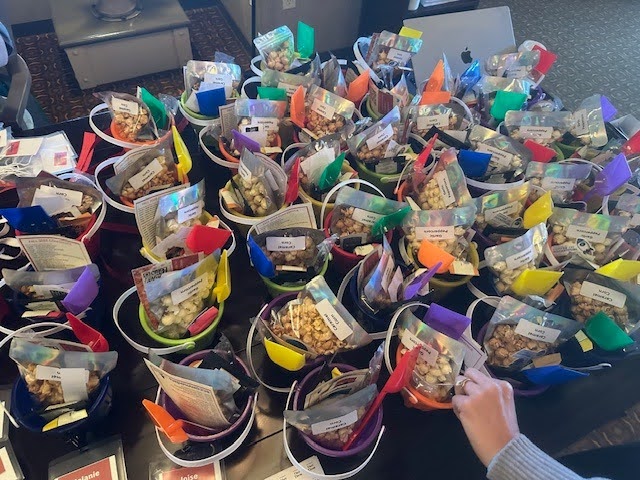
The fall conference is a welcome way for ORAHEAD members to step away from their schools for three days to reflect on disability in higher education and learn from each other. In addition to Miri’s presentation about the Let’s Talk podcast, the conference included a wide range of offerings. The keynote discussed encouraging students to link their interests with their educational journeys and re-think traditional advising processes. Other presentations–from colleague to colleague–discussed strategies, best practices, and ideas to incorporate into their work. Topics included the importance and power of plain language; the experience and benefits of a community building group for autistic students; strategies for advancing intersectional equity; understanding and implementing meaningful support for deaf students; and how to achieve digital accessibility compliance. And there was our favorite presentation–Diversity Representation in Graphic Novels. There were many opportunities to dig into situations that arise during a work day and get feedback from many perspectives, including conference staple “Listserv in Real Time.”
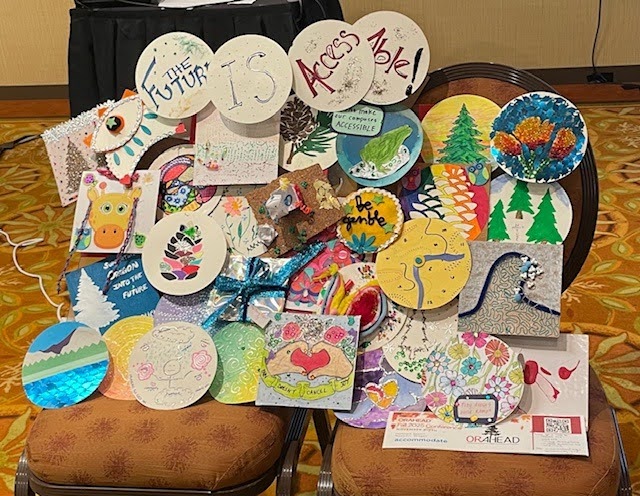
Miri interviewed Rosa, Claire, Dana, Sarah, Jewls and Taylor while they were hanging out and getting to know each other, in between conference sessions and rainy beach time. They shared how they entered the field, what their jobs involve, and their passion for supporting disabled students. As Jewls said when reflecting on the importance of connecting with colleagues; “We can’t do what we do without the think tank and the field tank that is ORAHEAD.”