
Let’s Talk! At the STEAM Center
Hosted by Miri Newman. Featuring Nora Hobson. Produced by the Let's Talk! Podcast Collective. Audio and transcript editing by Miri Newman. Web hosting by Eugene Holden.
Let’s Talk! At the STEAM Center
Summary: Miri talks with Nora, Outreach Specialist for PCC’s STEAM Centers, about what the STEAM Centers are, what sort of services they provide, and fun upcoming events for students!
- Hosted By: Miri Newman
- Featuring: Nora Hobson
- Produced By: Let’s Talk! Podcast Collective
- Audio and Transcript Editing: Miri Newman
- Web Hosting: Eugene Holden
- Released on: 10/30/2026
- More resources at our home website.
Episode Transcript
Transcript edited by Miri Newman
Disclaimer
Kylo: You’re listening to Let’s Talk! Let’s Talk! Is a digital space for students at PCC experiencing disabilities to share their perspectives, ideas, and worldviews in an inclusive and accessible environment. The views and opinions expressed in this program are those of the speakers, and do not necessarily reflect the opinions or positions of Portland Community College, PCC Foundation, or our community partners. We broadcast on our home website, pcc.edu/dca, on Spotify, on XRAY, 91.1 FM and 107.1 FM, and KBOO Community Radio, 90.7 FM.
Interview Start: Meeting the Guests
Miri: Thank you for meeting with me today and agreeing to do this interview. I’ve been looking forward to telling people about STEAM Centers for a while, ’cause I think that’s a really cool thing that PCC provides. And a lot of the people who were in my graduating class, my graduating cohort, worked at least to some extent with the STEAM Centers. So yeah, will you introduce yourself and tell us how you ended up working at the STEAM Center?
Nora: Yeah! So; Hi! My name is Nora Hobson. I am an outreach specialist for the STEAM Center, as well as a technician/assistant for the PCC Maker Lab. And that one’s based at Sylvania. So basically, I ended up working at the STEAM Centers by being just a consistent maker within the space. You know, I visited a lot. It was like one of my routine stops, during my student tenure at PCC. And basically I came up with a lot of projects, I really like ingratiated myself into the community of the center, and eventually, you know, it being a casual position, eventually another casual left and I was able to kind of apply for and hopefully get the role, which I was really lucky enough to get. So yeah, that’s how I ended up working here.
Miri: How long have you been there?
Nora: Oh, yeah. I’ve been at the STEAM Centers for about three years.
Miri: Nice!
Nora: And I’ve done outreach now for about two years. We just started our third grant cycle.
Miri: Nice. Yeah. So what exactly are the STEAM Centers? What do they do, and how’d they come to be?
Nora: So the STEAM Centers are — You can think of them as a series of maker spaces. If you don’t know what a maker space is, you can also think of it like a tool library. Basically, we’re like a community space, and we house a variety of different like pieces of tools and technology that it might not be feasible to keep in your home, especially not multiple pieces all at once. . So, you know, we provide access to tools like 3D printers. We have laser cutters in the space, vinyl cutters, so like, you know, sticker-making machines or T-shirt-making machines. I’m currently recording from the sewing room of the Sylvania lab.
Miri: Nice.
Nora: Sylvania’s really lucky to have a whole sewing room. Most of the s- other centers will also just have like a sewing machine. But each of the centers are also going to have access to pretty much the same equipment across the district. So this space we have sewing machines, we have embroidery machines, sergers, just a whole fleet of tools and tech. Uh, we also have stuff for electronics as well, so if you wanna get into soldering or introductory circuits as well, just a whole array of things.
Miri: Interesting. Yeah, I have only interacted with the STEAM Center at Cascade, which, mostly what I was there for was the laser cutter and the 3D printers.
Nora: Yeah, yeah.
Miri: Um, so it’s super cool to have stuff also available for sewing and —
Nora: Absolutely!
Miri: — garment construction and stuff like that.
Nora: Or garment repair as well. . I mean, it’s not just, like, creating things, entirely from scratch. It’s about altering them to fit your body better. It’s about, you know, fixing it so that it doesn’t go into a landfill immediately. It’s about, you know, altering it or just, like, completely changing it into something new. Transforming it, really.
Miri: Yeah, that’s super cool.
Nora: Yeah!
Miri: So aside from providing access to all these tools, you also have classes and workshops and stuff that you guys host, right?
Nora: Yeah. Well, so we don’t host classes per se. We collaborate with, um, specific, classes that would like to, you know, use our space or utilize our tools. Like at Sylvania specifically, we have been doing academic collaborations with the engineering department, for introductory engineering classes. We also —
Miri: That’s pretty cool
Nora: — today we just had the printmaking, art, I think, 274, class come in to learn how to use our laser for their woodblocks. But yeah, we also do host workshops throughout the term. Each center is gonna have a slightly different workshop schedule just because each coordinator decides to make different workshops and run them based off of need for their space. We’re always gonna have Maker Basics, you know, like 3D printing, come in, learn how to 3D print on our printer. We’re gonna have sticker making, where [you] come in, learn how to take an image that you really love, and make it into a sticker that you can just slap on your tablet.
Miri: I’ve always wanted to do sticker making. That sounds like fun.
Nora: Sticker making is awesome. The vinyl cutters that we have are awesome. They’re… I mean, it, it’s, it’s all basically magic in here. It’s wild. Um, and then, yeah, we’ll also have slightly more advanced workshops that you have to sign up. Maker Basics are all basically drop-in workshops. So if you ever see an advertisement for it, you know, on the ASPCC boards, or on Panther Hub, you’re going to be able to just, like, drop in at any time during that lab day. I think even Michael runs it just all week too. You can drop in any time, and we will teach you on the spot for that workshop. That’s a Maker Basics workshop. We’re also doing advanced workshops, which we ask that you sign up in advance for, and those are gonna be one-day workshops where we have, you know, a beginning, a middle, and an end — so please, like, show up on time — where we train you on a process like digitizing for the embroidery machine, or learning how to use the laser cutter, where, you know, we’ll have to teach you a software and then another software, and then we’ll have to show you how to thread the machine. it’s multiple steps, and therefore, It becomes a little bit harder to just, like, jump in and get to it right on the spot.
Miri: And these are… You mentioned that you do some work with classes, but these are open to, just, PCC students, right?
Nora: Absolutely. Absolutely, yeah. All of the workshops, we do our best to keep them free. I don’t think we’ve ever had a paid workshop that you have to attend. Even the sign-up ones, you just sign up on Panther Hub and the ticket is free. You just show up, you do it. We provide the materials, we provide the tools. It is all covered by your student fees, so. Within reason! I mean, if you wanna print a million ducks, maybe no a million ducks.
Miri: Oh, darn. Well, there goes my weekend plans…
Nora: We’ll let you get to, like, five or 10 pretty easily, you know?
Miri: The rest of the time, for just drop-in times?
Nora: Yeah. So drop-in times, basically what we’re gonna do, oftentimes we’re, we’ll be assisting classes or students. Like, where we get stretched pretty thin ’cause it’s a pretty high-demand space. Drop-in times are really cool, because they’re basically just open lab hours. Students are basically welcome to come in and work on projects, either for class or for personal projects, anytime during our open lab hours. Each space has assistants and technicians, and a couple of work studies as well to be able to help you through the project, and help you kinda brainstorm how we might help you bring these projects to life. Ultimately they are your projects, so there’s only so much brainstorming that we can do. We’re not gonna build your stuff for you. We’re not a manufacturing space. But as long as you’re willing to come in and, like, learn how to use the tools, and then utilize those tools to create something that you’re excited about and cool with, the world is your oyster at our space. Just come in, talk to us about the scope of your project. We’ll help you brainstorm, and we’ll help you get started on your creative journeys.
Miri: How do people who come for drop-in times bring materials? Like, do they have to bring all their own materials? Is there, like, a budget thing?
Nora: No. So, for the most part, the spaces provide materials, especially if you’re doing, like, a project like sticker making or, you know, 3D printing for the first time. You’re welcome to come in and just basically pick from the filaments that we have available to use. We’ll give you some guidance as to, like, what filaments are used for what. Mostly we print in, like, PLA at our spaces. . But if we, if you need something that’s, like, more structural or something that, like, squishes, we have some filaments for that as well. It just really depends on what the project is and why the project might need something different from the standard.
Miri: And what about for sewing? Will the student be bringing — I mean, obviously their own fabric presumably, but, like, thread and stuff, do you provide, or would they be bringing those as well?
Nora: We, we provide thread. We provide thread. We provide sewing notions. Really, whatever’s in the space is available. Oftentimes we even have fabric, too. We get a lot of people who are really interested in donating fabric, at least at the Sylvania campus.
Miri: That’s really cool.
Nora: And I’ve had to actually turn away some fabric donations, ’cause our cabinet is full.
Miri: Interesting. That’s really cool.
Nora: But yeah, no, oftentimes, like, especially for, like, costuming projects, if you’re doing, like, a cosplay or something really hyper-specific, a lot of our fabrics just won’t match the vibe of the costume that we’re looking for, in which case I often recommend, like, “Use our fabric for mock-ups. Go insane.” My personal fabric collection here is collecting dust. Um, so I say like, “Please, go after and, like, play. Go forth, play. Do some of the practice projects.” And then for larger projects or projects that you have a really specific vision for, that’s when we’ll say, “Hey, maybe, you know, we’re gonna need you to bring in some of your own materials, bring in your own filament.” Especially like, you know, if you’re, if you’re doing like a dozen patches on the embroidery machine and you’re going to be using a lot of thread from the thread library. You don’t necessarily need to buy all your colors but, you know, replenish some of the, some of the smaller like used spools. Or contribute a new color to the thread library ’cause things like color spools, they get used, but they get used really slowly. So it’s better to have kind of a, more broad color spectrum for students to choose from in general as like a community availability rather than having everyone like buy exactly the supplies that they need, bring it to the space, use what they need, and then take it home with them. That’s a burden on kind of everybody involved.
Miri: Yeah. That’s a cool thing to suggest that people do, ’cause I wouldn’t have even thought about like being able to use your external materials that you’re gonna bring into the space, and then add them to the collection, have it be like part of a maker Community, where it’s like, “Oh, yeah, you know, I bought this much thread for this project, and I used this much of it, so I’m just gonna leave you guys the rest of it for someone else.”
Nora: Yeah! Exactly! And it can vary from like material to material. We love getting more thread. We love getting more PLA, as long as it’s not like old PLA. it can gain water and get a little bit harder to use the older it gets.
Miri: Clog up the machine a little bit. Awesome. One of my colleagues has brought up a couple of times the idea of getting a group of people together to go in and make 3D prints or customizations for mobility assistance tools, or even just parts of mobility assistance or other accessibility tools that people don’t have.
Nora: Absolutely. That sounds awesome.
Miri: How long does a print take, like if you’re just going in to do that?
Nora: Yeah, that can wildly vary, unfortunately, depending on the size of the print, and the material that you’re printing with, and the printer that you’re printing on. Our spaces, we mainly have Prusa printers. Prusa’s a brand of printer. And it’s, uh, it’s one of the more common ones. Our spaces tend to have prusa Minis. I think most of the spaces are updated to Mark 4s at this point as well. I don’t know if we still have any Mark 3s around. But we stay within the Prusa ecosystem for the most part. These printers, I would say they could print out something… Oh, let’s see. What’s something that’s a recognizable and common size? I would say that they could print out something the size of a soda can in maybe two and a half hours, just off the top of my head.
Miri: So you have a collection of materials. Do you also have displays of things that people have made there?
Nora: Oh, yeah, absolutely. Each space does displays a little bit differently, but most of the spaces have some form of like display area or display case. Oftentimes they do get a little old and dusty ’cause not many people want to put out their displayed items, and so we end up with a lot of stuff that technicians have made in the space, or just like really cool and innovative projects that happened like three years ago. But most spaces, they do have a space to like showcase students’ work, cool projects, things like that.
Miri: Nice. So, if there are people who want to come to one of the just drop-in workshops, how do they go about finding out about that?
Nora: Yeah, so all of our workshops are advertised on PantherHub. We’re with the PCC STEAM Centers, but you can also find out about them on our PCC webpage, pcc.edu/maker, It’ll also tell you the open lab times
Miri: If there is someone coming in there with a disability or other accessibility needs, how are those met? What is the best way for somebody with some sort of accommodational need to interact with the space?
Nora: Yeah. So I mean, every accommodation that someone is going to need is going to be different. I think first things first is we always do our best to just meet that student at the level of need that they need. We do our best to make sure that there are multiple forms of documentation for any given equipment, and also that all of the staff are really well trained and able to operate as teachers and tutors for each piece of equipment within the space. .
Miri: So that includes, like, safety trainings and all that sort of thing?
Nora: Oh, absolutely. We take safety insanely seriously at the STEAM centers. . We have PPE at every space, for any level of desire or need. So, you know, if you’re operating the band saw, which we have at Sylvania, we require that you tie your hair back, that you wear your safety goggles, that you operate under the safety procedures. And even then, the tools are still, like, locked out, and we’re by your side operating that tool with you because it is such a hazard. We just wanna make sure everything in the space is used and maintained and operated with as much safety in mind as possible.
Miri: Oh, yeah. I, myself, am absolutely terrified of band saws.
Nora: Yeah. And if a student is ever uncomfortable with using a machine like that, we’re happy to step in and help figure out that situation together. You know? If I need to cut something on the band saw, I can cut it.
Miri: That’s actually super helpful, I think.I think a lot of people want to make things, case in point myself, and are just intimidated by either the lack of knowledge of how to use a tool so having someone there to very patiently and genuinely guide them through it.
Nora: Yes.
Miri: And also just some of the risks of things. Like, I’m a guitar player. I, I really would like to have all 10 fingers for as much of my life as I can —
Nora: Right?
Miri: — As I can go through, so.
Nora: Right. No, exactly.
Miri: Is there anything else that you wanna bring up or any upcoming events that you wanna, like, get out there?
Nora: Oh my gosh, so many. I know that we have a whole variety of workshops coming up, and I wanna plug every single one of them. We have a VEX Robotics Building Day at Sylvania Campus, where we’re gonna build VEX robots and play soccer with them.
Miri: What’s a VEX robot?
Nora: It’s a robotics kit. They’re often used for, like, robotics high school competitions, and so you can build them in different ways, and then you can play a variety of different games with them that are like robotics competition kinda games.
Miri: Okay. Like soccer!
Nora: And then we do have next Friday, all the way out at OMIC, we have a jotes making workshop,
Miri: jotes??
Nora: With the community. Yeah, jotes. Jean tote bags. Uh, or jurse!
Miri: Okay.
Nora: Whichever is worse. Uh, you’re welcome to, you’re welcome to think of jote or jurse.
Miri: I was thinking, “Is that like jorts?” But I’m like, “I’m not gonna say that ’cause that, that’d be silly.”
Nora: Nope. It’s pretty much, it’s pretty much jorts, but the legs are sewn together. You cut off the legs of the pants, and you cut out the crotch, and you sew it across the bottom. And then you add Handles, made out of the previous pant leg straps. You know, it makes a, it makes a very fun and whimsical little bag for you to take around town. It’s one of my favorite projects.
Miri: It’s a conversation piece.
Nora: It is a conversation piece indeed.
Miri: Okay, that’s super cool. I might, I might, might-
Nora: Yeah, it’s a lot of fun.
Miri: I might look into that one.
Nora: That one’s gonna be out at OMIC in Scappoose, though. So that one might not be —
Miri: Oh, okay
Nora: —very close. But keep an eye out for more workshops, ’cause we do rotate out workshops, and especially the bigger ones, we do try to rotate them from campus to campus, too. So, you know, jotes will be back again at Sylvania. We’ll do them at Southeast. We’ll do them at Cascade. We’ll do them at Rock Creek. We try to do as many as we can, all around town.
Miri: And you keep an eye out for that both on…
Nora: pcc.edu/maker and Panther Hub.
Miri: Perfect. All right. Thank you very much for talking to me today.
Nora: Thank you so much, Miri. It was great talking to you.
Outro and Credits
Kylo: Thank you for listening to Let’s Talk! Portland Community College’s broadcast about disability culture. Find more information and resources concerning this episode and others at pcc.edu/dca. This episode was produced by the Let’s Talk! Podcast Collective as a collaborative effort between students, the Accessible Education and Disability Resources Department, and the PCC Multimedia Department. We air new episodes on our home website, our Spotify channel, XRAY, 91.1 FM and 107.1 FM, and KBOO Radio, 90.7 FM.
At the STEAM Centers
by Miri Newman
When I was a student with the Music and Sonic Arts program at PCC, my cohort spent an abundance of time working on our projects in the Create Space on Cascade campus. For our capstone (“Sonic Summer“), one of my classmates, Kendall, created a massive liner with a full garden scene that we used to make a silhouette against the back window of the gallery space during the display (seen on the left of the image below).
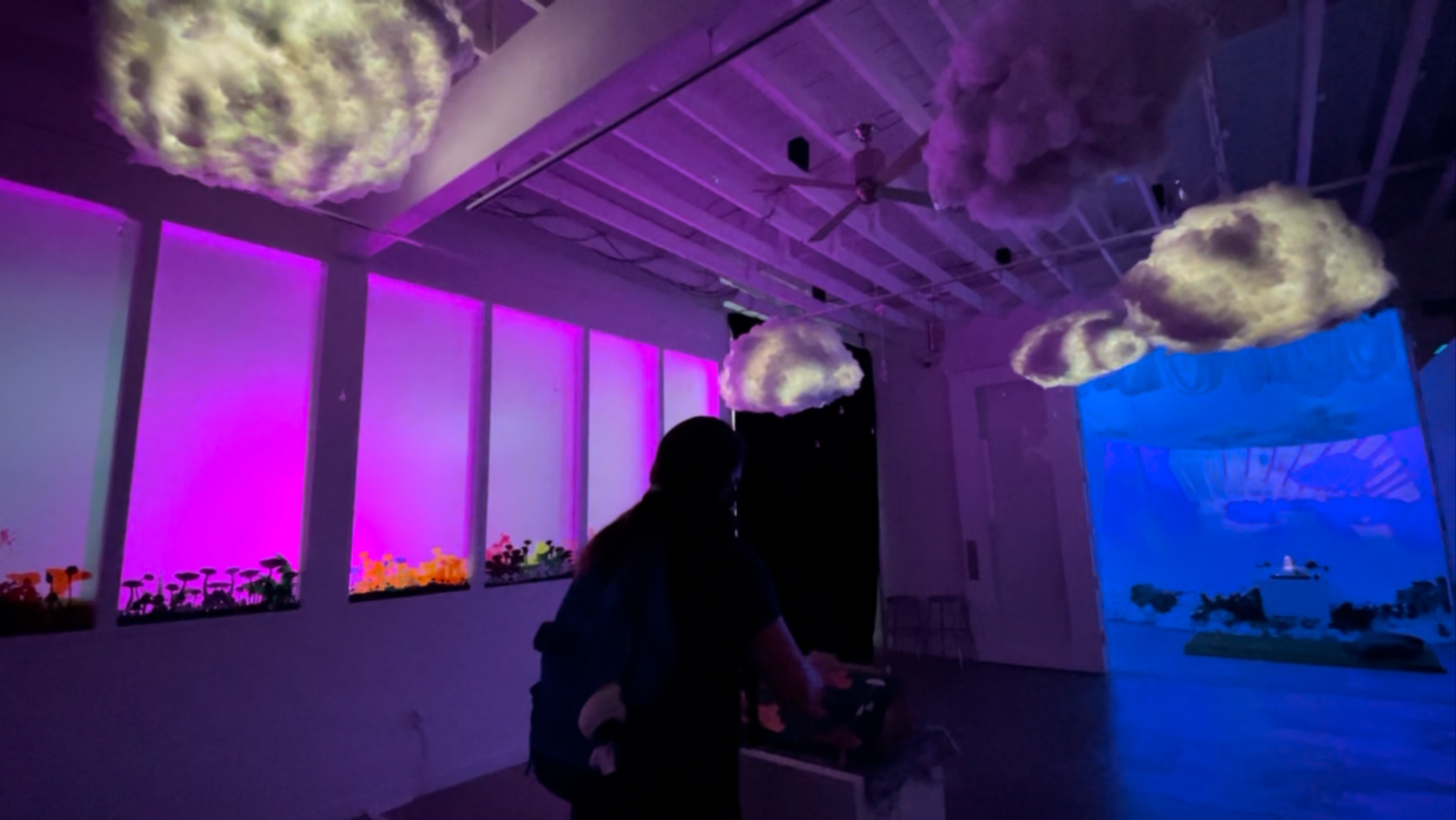
These were all designed by her and fabricated on the laser cutter, using translucent acrylic with a peel-adhesive backing. Needless to say, haha just kidding — to say, they were a huge hit with the class when she brought them over from the Create Space.
The whole project was only possible thanks to what the STEAM Centers provide, and while my view the whole time I worked on the project was this:
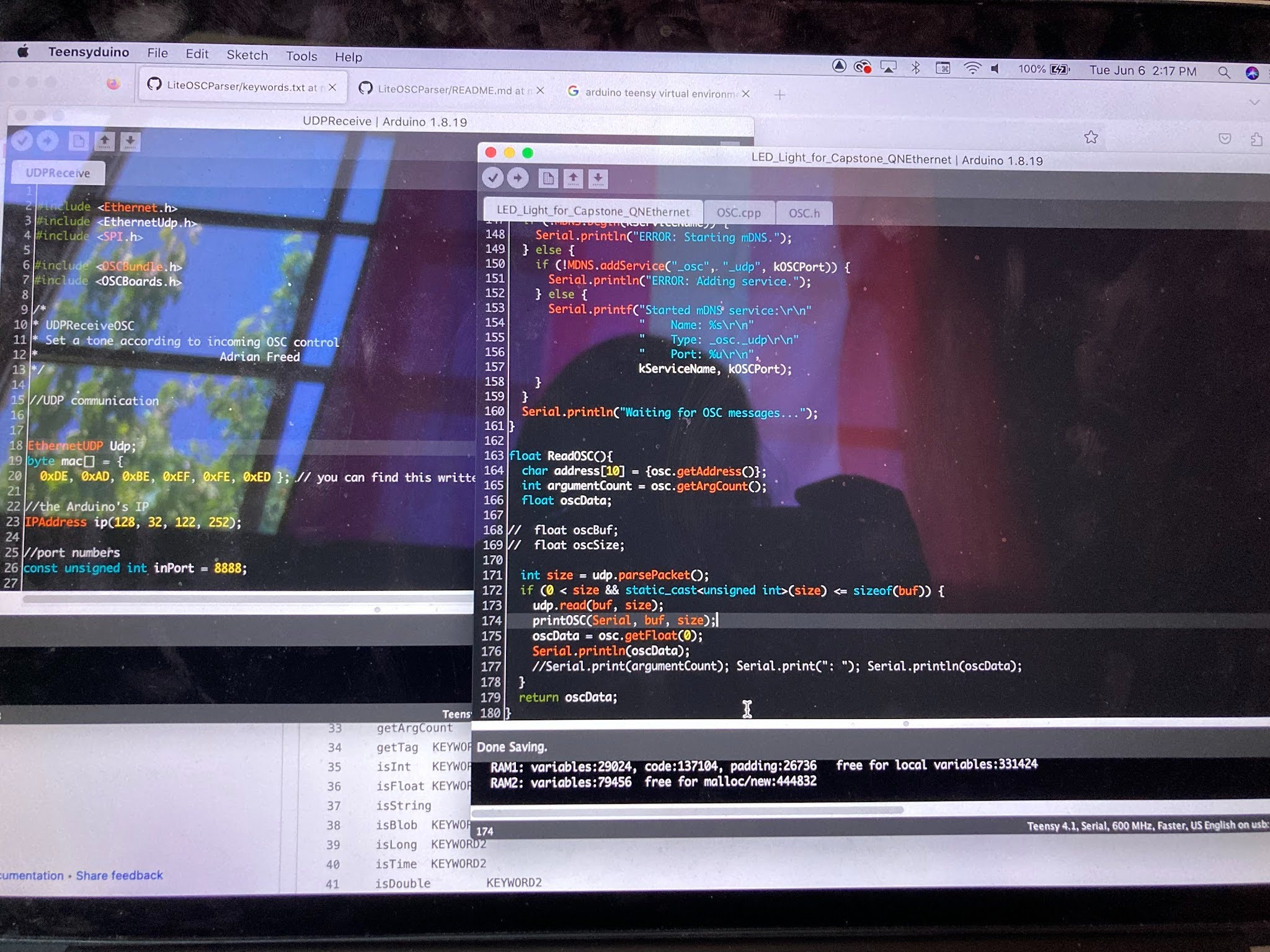
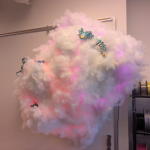
the others in my cohort used the Create Space to its full potential, to create something that looked like this:
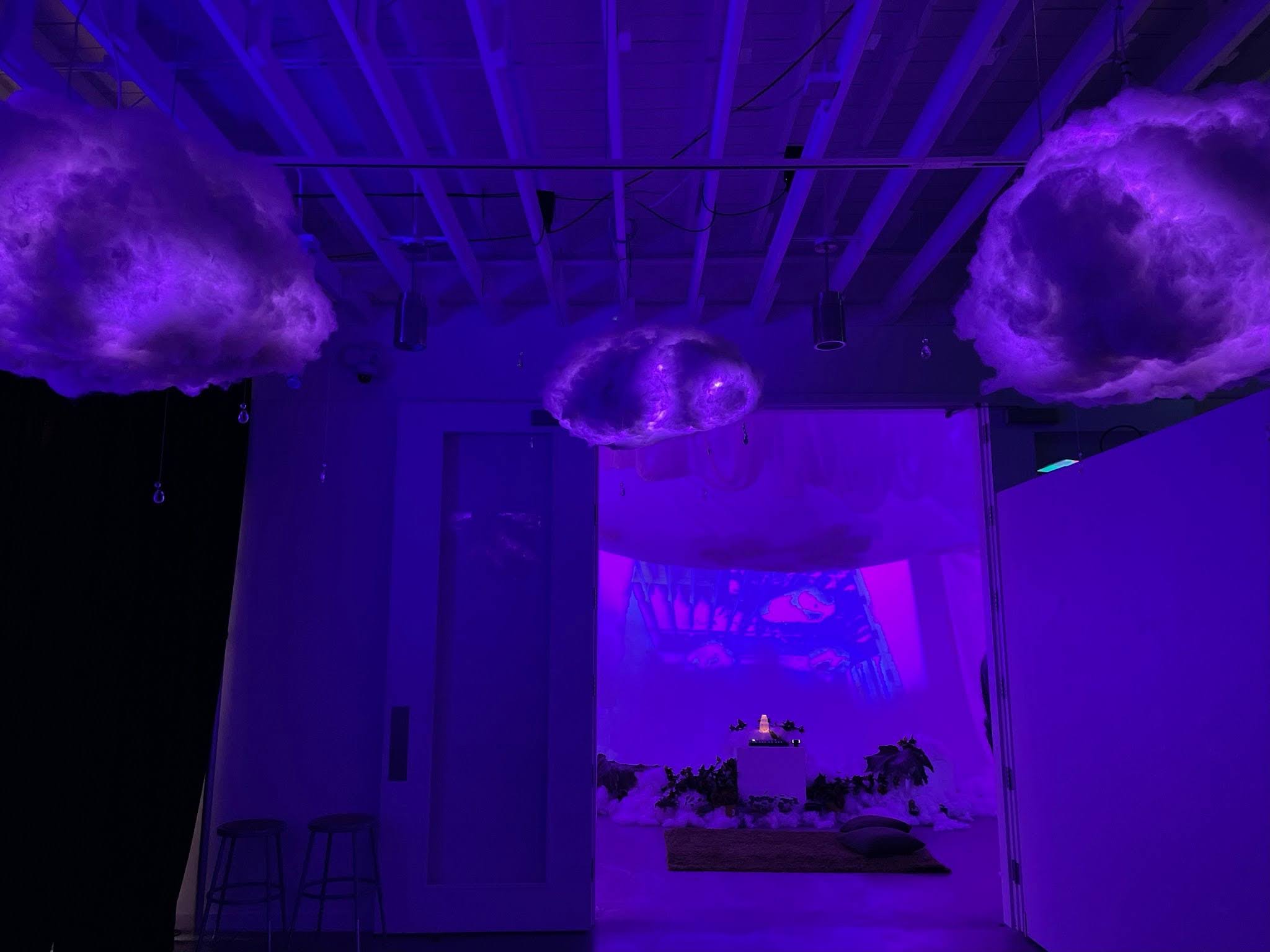
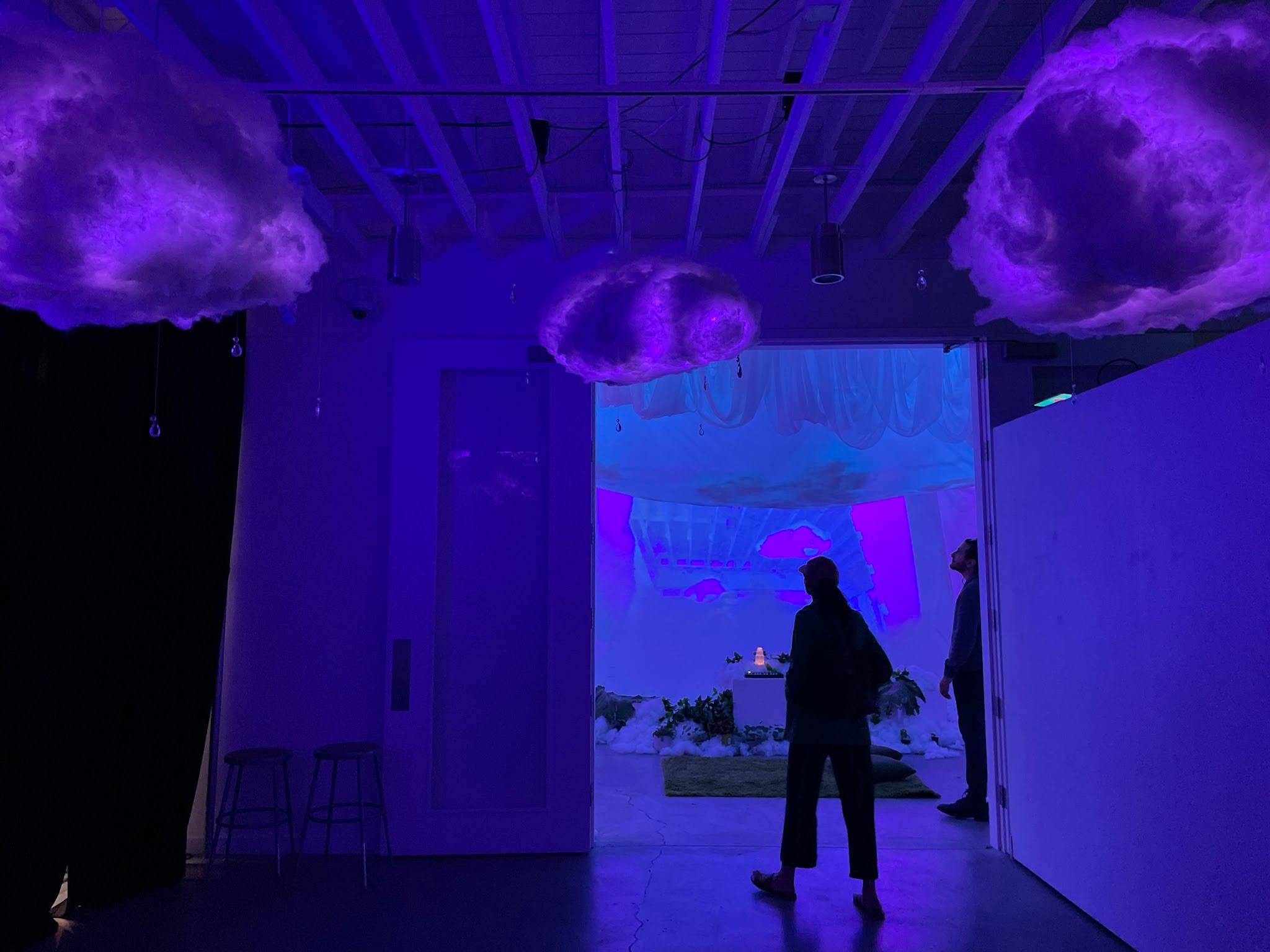
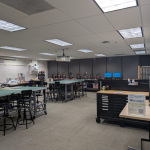
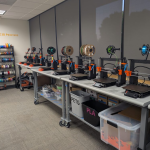
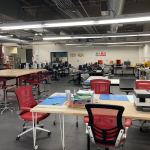
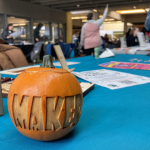
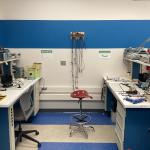
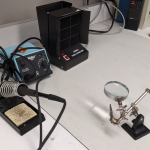
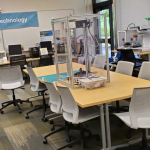
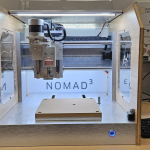
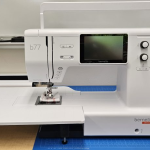
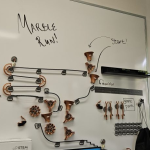
Here are a few photos of the STEAM Centers across the PCC campuses, as well as links to their pages to keep you up-to-date on what’s going on at each one!
Cascade Create Space
Sylvania MakerLab
Southeast Jade District Learning Center
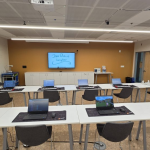
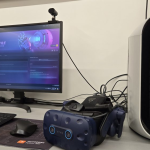
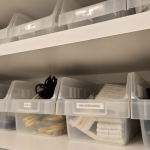
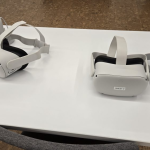
Rock Creek STEAM Lab
Sonic Summer photos courtesy of James Newman Photography, all other photos taken from the PCC Website