Let’s Talk! Body Doubling in Virtual Spaces
Hosted by Miri Newman. Featuring Xander Addams. Produced by the Let's Talk! Podcast Collective. Audio editing by Miri Newman. Transcript editing by Hannah "Asher" Sham. Web hosting by Eugene Holden.
Let’s Talk! Body Doubling in Virtual Spaces
Summary: Miri talks to Xander Addams, founder of the Disability Cultural Alliance’s Discord server, about body doubling, virtual spaces for students, and what it takes to have a school community in 2026.
- Hosted By: Miri Newman
- Featuring: Xander Addams
- Produced By: Let’s Talk! Podcast Collective
- Audio Editing: Miri Newman
- Transcript Editing: Hannah “Asher” Sham
- Web Hosting: Eugene Holden
- Released on: 10/16/2026
- More resources at our home website.
Episode Transcript
Transcript edited by Hannah “Asher” Sham
Disclaimer
Kylo: You’re listening to Let’s Talk! Let’s Talk! Is a digital space for students at PCC experiencing disabilities to share their perspectives, ideas, and worldviews in an inclusive and accessible environment. The views and opinions expressed in this program are those of the speakers, and do not necessarily reflect the opinions or positions of Portland Community College, PCC Foundation, or our community partners. We broadcast on our home website, pcc.edu/dca, on Spotify, on XRAY, 91.1 FM and 107.1 FM, and KBOO Community Radio, 90.7 FM.
Introduction
Miri: Thank you for taking the time to talk with me today. Would you like to introduce yourself and just tell our listeners about your background and your position here at PCC?
Xander: My name is Xander Addams. I have been a PCC student for the last two and a half years. I also work in three different positions at PCC. I work as a math mentor with the math department, as a captioner with the Accessible Ed and Disability Resources portion, and, as a student advocate. Specifically, I was put into the Accessibility Hub at Southeast, also with Accessible Ed and Disability Resources. I am getting my associate’s degree, which I just recently got this last spring.
Miri: Ooh, congrats!
Xander: I’m transferring to PSU to get my bachelor of creative writing —
Miri: Nice!
Xander: — before going on to get my master’s in library sciences.
Miri: Ooh, okay! Awesome. Is that also gonna be PSU, you’re thinking?
Xander: PSU doesn’t have a, uh, ALA accredited. I don’t think any college in Oregon does. The closest one that has an Associates of Librarians of America, I think, something like that, ALA – it’s a library association– that is accredited, is University of Washington has an information school up in Seattle. But you can take all of the classes online, I believe. So I will hopefully get my Master’s there. But I have also thought about going overseas for it.
Miri: Ooh, nice! That would be a pretty good way to get a master’s degree, I think. So what we’re talking about today is the Discord server that you’ve set up for people within the Disability Cultural Alliance, and specifically the body doubling stuff that you’ve been facilitating. Tell us about that. What is body doubling? How did you start that? And what’s the idea behind body doubling?
What is Body Doubling?
Xander: Body doubling, also known, I believe, as parallel play, is a way for you to occupy a space with another person, and focus on working on tasks, doing homework, doing chores, doing that task that has been — that you’ve been dreading doing, but you’re able to do it because you’re in the presence of someone else who is also actively working. It’s generally used by people of different neurodivergences, um, neurodiversities, mainly because of the, like, communal aspect of doing the thing. It’s very heavily associated with ADHD – which is something I am familiar with since I have that – and I have found it’s extremely helpful for me, and I kinda live by an ethos that if it’s helpful for me, it’s not only gonna be helpful for me. There will be other people that benefit from bringing it into a space.
Miri: Nice! So you started the server on your own accord?
Xander: Essentially.
Miri: Or was that something you set up through the school?
Xander: I started it as one of the projects that I did as a student advocate. I will say it’s great that we have things like the ADHD Peer Resource Group, and we have the Chronic Illness Group, and we have the Deaf and Hard of Hearing Network, and those are all really great, and they have more consistent times. But if you don’t know about them, it’s kind of difficult to find them, and also they’re on Zoom. And I don’t know about you, but if something’s on Zoom, it’s so easy for me to forget. I started the Discord partially because we were all about student engagement in the Accessibility Hub. The Accessibility Hub is the first disability resource center on campus on any of our PCC campuses, so it’s like a big feat in and of itself, but it’s very difficult to get engagement there because of its location in the building. It’s in the back. And I also started to, like, realize that maybe some of the people that we could be serving to create a community space aren’t coming to campus, aren’t coming to Southeast campus specifically, can’t come to campus for whatever reason. And just because the Zoom times that are being offered aren’t during their schedule doesn’t mean that they shouldn’t have access to a community that they can interact with. And, you know, one of the things that I benefited from was Discord. Discord’s already part of my life, and I know that there are other students out there who Discord is part of their life already. So joining another server and building another community is a lot easier when it’s already part of your daily routine.
Miri: Yeah, that sounds like a really good thing to have for people, especially with the switch to most things having at least some sort of online option, whether that’s courses in general or tutoring, like I know you do. So how can body doubling aid students who have disabilities or just are struggling with course workload?
Xander: Body doubling gives you a designated time to work on something, and also it gives you the accountability of you’re with another person who is also, like, working on something actively. At least one other person. Sometimes it’s a larger group. I believe that as we’re talking there are two people body doubling in the server right now.
Miri: Nice.
Xander: And it really, helps break down the monotony of, like, I have gone to class, now I have to go home and do all of this myself, and it, it has the… it alleviates the stress of, the grinding the grindset. That’s not, that’s not a word. The mindset of the grind.
Miri: I think grindset has become common parlance enough that people, people will probably know what you’re talking about.
Xander: Yeah.
Miri: It’s in, you know, like a third of all of New Yorker headlines these days, so.
Virtual Spaces for Students
Xander: Yeah. I honestly, I can’t take all of the credit for the body doubling because it is something that I believe in. I started doing it in person in the Accessibility Hub, but, uh, no one ever showed up to that. And a part of the thing that I realized was, you know, no one comes to that campus, and no one comes to visit us, and it was a set time, whereas having it be in the Discord made it a little bit more flexible. And people wanted it in the Discord, and they asked about it. And Michelle, who runs the ADHD Peer Resource Group, has been great enough to also start running, like, designated body doubling hours in both Zoom and Discord simultaneously, which is a huge feat. But I was just like, “We need to… We have the lounge here, people should feel free to use it.” One of the big things we talked about was how Discord isn’t as accessible as Zoom when it comes to voice calls. It’s not a perfect solution, but we did get a bot that was recommended by one of our Deaf student advocates that does transcribe what is going on in a voice call so that Deaf students can also participate, like, in a call with hearing folk. And, if they want to have their, like, ASL body double time, that’s also something we’ve talked about, is doing more language specific body doubling. Part of what is great about body doubling and how it aids students is that it encourages those kinds of connections but it also allows students that, like, structure that is lacking from an adult life, you know?
Miri: Yeah, for sure. That’s something I think about a lot is: when I was in my ASL classes, I ran an in-person study group that met for two hours twice every week before each class. And the difference in progress of people who were in that study group, and it was, you know, a very rough study group. It was mostly just hangout, but you didn’t talk. You only used ASL. But people would come and talk about their week, they’d talk about other classes, they’d ask for some help on homework assignments. The difference in improvement for the people who came to that was remarkable and noticeable, even just to other students. And I am curious, how much do you think, especially since the pandemic, the shift to an online-first structure has affected that kind of culture, that kind of ability for students to actually go onto campus and meet up for coffee or something like that before a class and help each other out? And what you are providing is a new way for students to do that?
Xander: I think that… Hmm. I don’t think that the push for only online is necessarily good, but I don’t think it’s all bad either. I think that the more modalities that are offered is always gonna be good because there are different types of learning.
Miri: Oh yeah, I agree.
Xander: I prioritize taking classes in person, because that’s the way I learn. And the people that want the, like, on-campus experience and want to engage are gonna go to campus and engage. But the people who can’t go to campus but still want to, like, engage with other students, there wasn’t really a way to do that before. Like, there’s Panther Hub, and there are remote options for events. But Panther Hub doesn’t really have, like, a, “Hey, let’s all hang out on the fly and send each other messages,” and that kind of stuff. You don’t really get the bonding experience. It’s just like these are the events that you have. Choose one that fits into your schedule that you’re interested in and go, which is — it’s not bad. It’s still options. We like those. But it could be improved.
Miri: Yeah. I mean, one of the big things about designing for accessibility overall, is not finding one answer that works for absolutely everybody, but maximizing as many things that work for as many different people as possible.
Xander: Exactly.
Miri: What are advantages you can think of about having a dedicated online space like your server, as opposed to something, that is in person or something that is more segmented, I suppose, like a Panther Hub would be?
Xander: I think that what Discord has that other online services don’t, specifically like the other social medias, is it’s an opt-in. You have to want to be there in order to see the thing. You have to want to be in the server, which makes it less like a social media, like, “Here’s all the things that we have going on,” and more of like a, “Here is a space that is made for you.” One of the benefits of it is that it is asynchronous. You can stop it, go to class, do class, do homework, have life, and come back at the end of the day and catch up on everything that’s going on, and you can make connections with people that you may otherwise not have because, you know, you stay up until 2:00 AM and they wake up at 4:00 AM. And so those kinds of connections where it’s not time restrictive, where it’s not, this is the time to interact right now in this moment, otherwise you miss out. Whereas having it be asynchronous and having it be something that’s always going, always evolving, is so important to people that don’t have that traditional 9:00 to 5:00 lifestyle, which I feel like has been so prioritized. Where everything is open between set hours, these are the engagement opportunities. If you don’t conform to this specific timeframe, you don’t get to interact. And I think that having something that is 24/7, anyone can vent, can engage, can post a silly whatever that they found, makes it a lot more community-based.
Miri: Your — And I noticed , your server as well has a dedicated channel for pet pictures, which is always a must in any good Discord server that I’ve ever been a part of. Yeah, I think that asynchronicity is super important. Well, the combination of asynchronicity and having a real time option like a voice chat, even video call like Discord has, versus something like D2L, which has forums and forum-like options. But that’s entirely asynchronous, you know? There’s no, no real time feedback even if you’re sitting there spamming Control-R.
Xander: Yeah. Also, with things that are like Panther Hub and D2L, you come in with no knowledge of it. You come in with no experience of it. You don’t know what to do with it. I didn’t even know some of these things existed until I was, like, well into a year into my degree. Whereas Discord is… Technically it’s kind of outside the college, where it’s like the server is in the college, but Discord itself you can have experience. You can know some culture things, and you can come in with that knowledge of, “This is how I add alt text. This is how I do this. This is the, like, vibe that I can see of Discord as a whole.”
Miri: I do love that it supports alt text.
Xander: Yes.
Miri: It’s, it’s… Like, why? Why doesn’t everything do that? Why doesn’t Google do that?
Xander: I do wish that their alt text wasn’t as hidden as it is. Like, if there was a way to view it. But that’s mainly because I want to, like, check and see if it exists.
Conclusion
Miri: Yeah, absolutely. I agree. I’ll wrap it up shortly here and let you have a little bit of a break before the rest of your workday. But, I know that Discord is, you know, common, just an everyday part of our lives for people around our age, and who grew up into the internet. But I know a lot of people have no idea what Discord is or how to use it. So what is Discord? And also, how do you find these things that you’re talking about, like either this in-person schedule, or get an invite to the Discord server?
Xander: I’ll end on our invite to the discord server. And I’ll start with Discord is a community space. I believe it was originally kind of focused on gaming specifically. It is composed of, you have a server, which is essentially a place that you can go that you have to be invited to. It’s a closed club. Some of them are open. Ours is closed, where you have to have an invite to get in. It’s a collection of text channels, some of them that you can write in. A lot of them have their title is, like, the topic, where if it’s general, you can talk about whatever. If it’s resources, that’s mainly for resources. A lot of them are very self-explanatory. We keep the event stuff closed so that we can make sure that the events that are being posted are events that are approved.
Miri: And by ‘ we’ you mean the moderators, the people running the server?
Xander: Yes, mainly me. Mainly me and a couple of the other student advocates. And then there are voice channels. I did speak with someone at one point who thought that Discord was one voice channel, and when you joined Discord, you just dropped into a voice channel, and I was horrified by the prospect.
Miri: Oh, yeah. No, that’s what Zoom is for.
Xander: Everything that is in a Discord server is opt-in. You choose to engage with it. You choose how you engage with it. If you don’t wanna be in voice channels, you don’t have to be. We keep track of all of the resources in forum posts so that people can share their experiences with resources. So if someone has a bad experience, you know about it. If someone has a great experience, you know about it. Our Discord has flyers all around campus where you can scan the QR code and join. The permanent link to our Discord is also on the pcc.edu webpage for the accessibility hub specifically. It’s underneath the picture of the coordinator where it says, “Join our Discord,” and then there’s a link. And that’s how you might —
Miri: Which I’ll, I’ll put in the episode description as well.
Xander: Yeah. And that is where you can, you can join us. We’re pretty chill. Like we say, we got a bunch of body doubling going on. There’s some reworking. I am getting ready to put a bunch of documentation together for the next person who’s gonna run it because, as I’m no longer a PCC student, I’m not a student advocate anymore, so I’m just wrapping up that loose end before transferring out.
Miri: Nice. This is a good service that you provide, that I think will help a lot of people. And hopefully after hearing about it here, help even more people, so.
Xander: Hopefully.
Miri: Thank you very much for talking with me today, and good luck getting your overseas librarian applications in.
Xander: Thank you.
Miri: And I hope you get to spend a nice two years kicking back in, like, Dublin, or Oslo, or…
Xander: Yeah, that would be really nice. I’ve looked at the University of Librarianship in Sweden, so you never know, you know?
Miri: Ooh. Yeah, that would be a good choice, too. All right. Yeah. Thank you very much, and have a great rest of your day.
Xander: You too.
Outro Disclaimer
Kylo: Thank you for listening to Let’s Talk!, Portland Community College’s broadcast about disability culture. Find more information and resources concerning this episode and others at pcc.edu/dca. This episode was produced by the Let’s Talk! Podcast Collective as a collaborative effort between students, the Accessible Education and Disability Resources Department, and the PCC Multimedia Department. We air new episodes on our home website, our Spotify channel, XRAY, 91.1 FM and 107.1 FM, and KBOO Radio 90.7 FM.
Links From The Episode
- Join The Discord!
- PCC ADHD Peer Resources Group
- PCC Chronic Illness Group (PantherHub)
- PCC Deaf and Hard of Hearing Resource Network Group
Body Doubling Buddies
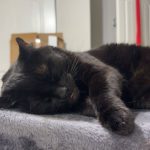
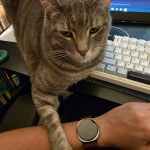
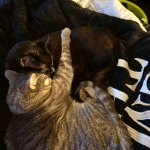
It’d be wrong of me to tease pictures of pets in the episode without sharing, so here are some pictures of my cat, Freyja: