Contracting equity
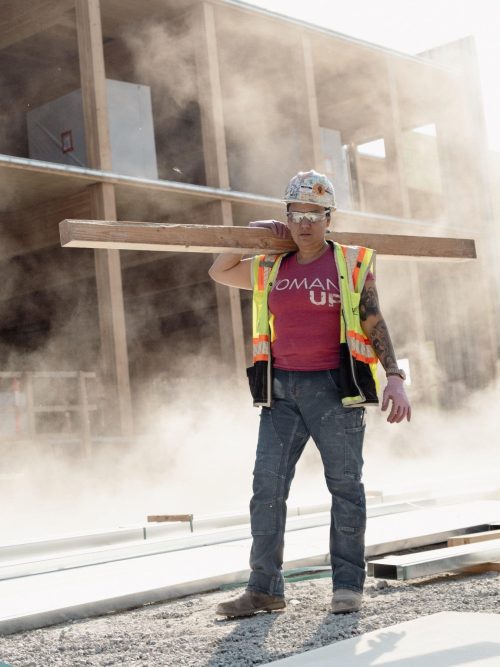 PCC is committed to managing construction projects and infrastructure investments in a manner that explicitly considers beneficiaries, addresses disparities, and supports equitable outcomes. For this reason, OPC aspires to meet contracting equity objectives grounded in evidence-based research on disparities in access, opportunity, and retention of women, non-binary, and minority craftworkers.
Project commitments
Through the development of “teaming arrangements,” OPC collaborates with contracting partners to address utilization disparities in subcontracting. Established firms are paired with emerging certified firms to manage aspects of larger projects to share skills, develop capacity, build relationships, and expand access. These arrangements have been transformative in bringing new partners to PCC projects and bolster development.
General contracting equity objectives:
Partnering businesses are identified according to their certification by Oregon’s Certification Office for Business Inclusion and Diversity (COBID) or Washington’s Office of Minority and Women’s Business Enterprises (OWMBE). On contracts over $100,000, the college aspires to meet the following contracting equity objectives*:
20%
of project contract value will be performed by MWESB/V firms certified by either Oregon’s COBID office or Washington’s OWMBE office
12%
of the above 20% of project contract value should be performed by any combination of MBE/DBE-certified firms
*Project-specific contracting equity objectives will be set by market and scope. Find more information on the contractor equity dashboard.
OPC’s equity objectives apply equally to the design side of construction projects. Partnering design contracting is tracked using consistent data monitoring methods. Find more information on the sub-consultant equity dashboard.
OPC uses the following tool to intentionally address contracting equity:
- Contracting Equity Program (CEP)
The goal of the CEP is to ensure PCC projects provide meaningful professional, supplier, and construction contracting opportunities for certified firms, improving outcomes for local emerging small businesses (ESB) and supporting the growth of construction firms owned by People of Color (MBE), women (WBE), veterans (V), and other marginalized groups.