
Regional Housing Services Workforce Training
Get in touch
- Honor Jackson, Program Coordinator
- phone 971-722-6646
- envelope Email
Portland Community College’s Professional Development & Training department is proud to partner with Metro to deliver Oregon’s first Regional Housing Workforce Training Program, a first of its kind initiative designed to strengthen the housing services workforce through practical, industry informed professional development.
Created as a pilot program, this partnership equips frontline housing professionals with the knowledge, skills, and confidence to better serve individuals and families experiencing housing instability. Bringing together case managers, housing navigators, outreach staff, and community-serving professionals from across the region, the program creates opportunities to learn, collaborate, and strengthen the systems that support Oregon communities.
Following the success of the inaugural cohort, PCC and Metro are committed to continuing and expanding this partnership to meet the growing workforce needs of the housing and homelessness services sector.

Why This Program Matters
Housing professionals navigate complex systems every day while supporting individuals and families through some of life’s most challenging circumstances. As Oregon continues to address housing instability, homelessness, and behavioral health needs, investing in a skilled and supported workforce has never been more important.
The Regional Housing Workforce Training Program was developed to provide practical, real-world education grounded in:
- Housing First principles
- Trauma-informed care
- Regional housing systems and navigation
- Equity-centered service delivery
- Client engagement strategies
- Documentation best practices
- Landlord communication
- Professional leadership and collaboration
Participants leave with practical tools they can immediately apply in their work while building stronger connections with professionals across the region.
Courses
CEU 4078 Housing Service Worker Case Management Fundamentals
Introduces housing-focused, person-centered case management. Participants build skills in client engagement, documentation, barrier reduction, and systems navigation, grounded in Housing First, trauma-informed care, equity, dignity, and ethics.
Course Outcomes
-
- Explain how systemic racism and economic inequities shape homelessness trends in Multnomah,
Washington, and Clackamas counties. - Identify structures, access points, and programs within the regional housing system.
- Demonstrate the ability to connect clients to housing resources, reduce barriers, and document
progress accurately. - Integrate trauma-informed, harm reduction, and motivational interviewing principles into daily
practice.
- Explain how systemic racism and economic inequities shape homelessness trends in Multnomah,
CEU 4079 Housing System Navigation Essentials: Principles & Practice
Equips learners with practical skills to navigate the Metro region’s housing systems for clients. Covers access points, referrals, culturally responsive resources, landlord engagement, documentation, and barriers impacting BIPOC, LGBTQIA2S+, immigrant, disabled, and survivor communities.
Course Outcomes
-
-
- Map housing navigation pathways within each of the three Metro counties and
identify county-specific nuances. - Conduct eEective housing searches and support clients through rental applications
and screening processes. - Identify discriminatory practices within housing systems and intervene using fair
housing principles and advocacy. - Navigate documentation processes (ID, income verification, disability verification,
etc.). - Apply culturally responsive and identity-aEirming strategies to support specialized
populations. - Collaborate with property managers, culturally specific organizations, and partner
agencies to reduce barriers. - Build retention-focused navigation plans that prevent displacement and support
long-term housing stability.
- Map housing navigation pathways within each of the three Metro counties and
-
Fundamentals of Housing Service Work Micro-Credential
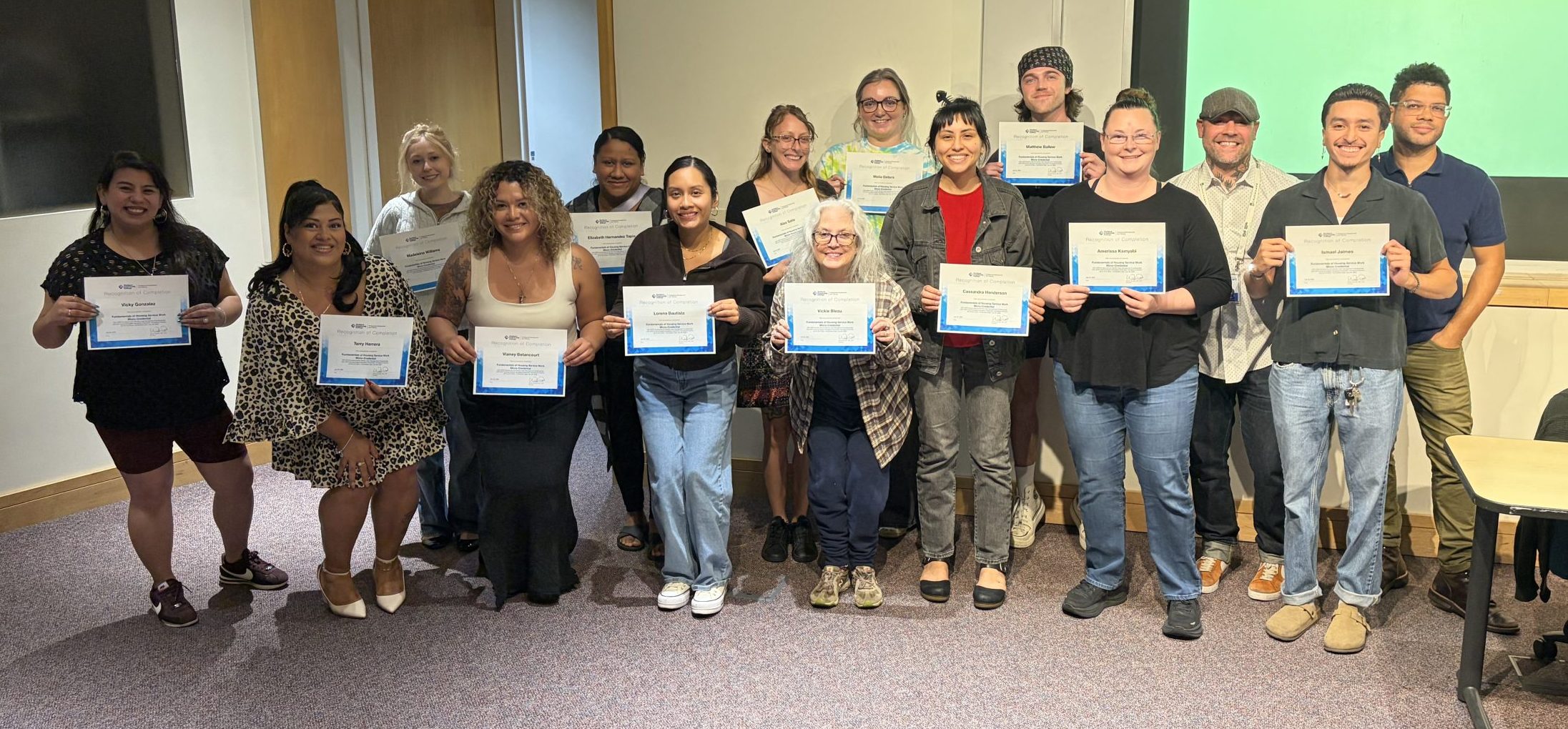
Participants who successfully complete the required coursework in both housing courses earn PCC’s Housing Services Micro-Credential, recognizing their commitment to professional excellence and continued learning.
The program also supports career advancement by connecting participants with workforce development resources, including Oregon’s Eligible Training Provider List (ETPL), Worksource Oregon, and additional PCC Career Pathways opportunities.
Meet the instructors

Chris Aiosa
Dedicated and accomplished executive housing leader with experience in public administration, and nonprofit management, specializing in affordable housing and homelessness initiatives. Demonstrated leadership in developing and implementing strategic programs to address community needs with a proven ability to collaborate with diverse stakeholders, including government agencies, nonprofit organizations, and community leaders, to achieve impactful outcomes. Expertise in policy advocacy, organizational & program development, program management, and team leadership, complemented by a strong research and data analysis background.

Sean Ferraro
Sean is a licensed paralegal and operations manager for the CLEAR Clinic. Sean, is one of the first three landlord-tenant licensed paralegals in the State of Oregon. They run the tenant advocacy program which provides free legal assistance to tenants facing housing issues. Prior to working as a paralegal, they worked in the restaurant industry for ten years.

Rich Flamm
Rich is a passionate and authentic soul with a decade of experience in the non-profit housing sector. With creativity and kindness at the core, he has developed and led programs and policies that are human-centered and effective. Rich has acted as a liaison between members of the community to demystify how the houseless population intersects with supportive services while also advocating strongly for historically marginalized voices. He is consistently recognized for leading with integrity, problem-solving, and driving real quantifiable results. With this experience, he has learned to engage with people in a way that makes them feel truly seen and heard.