Studies and Restoration
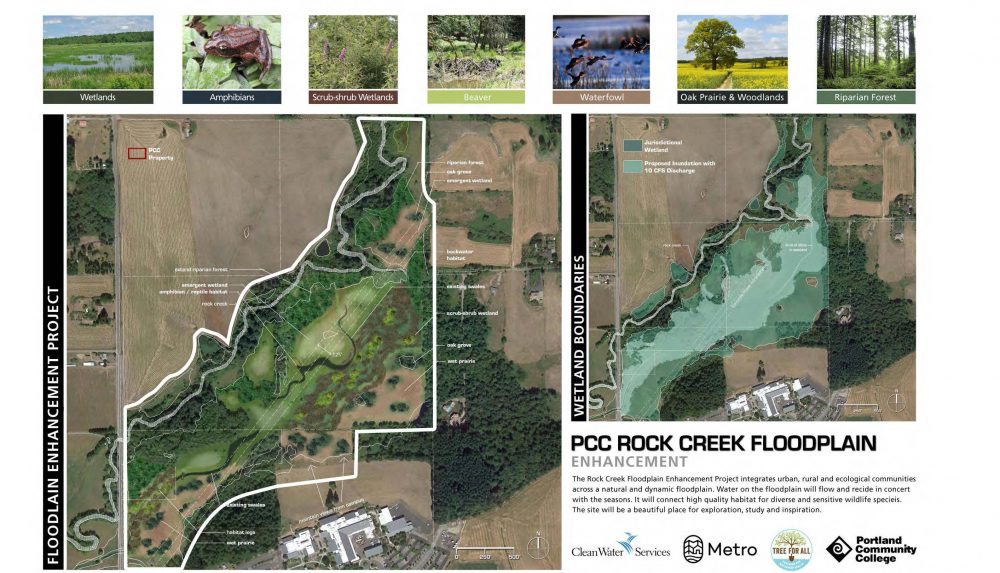
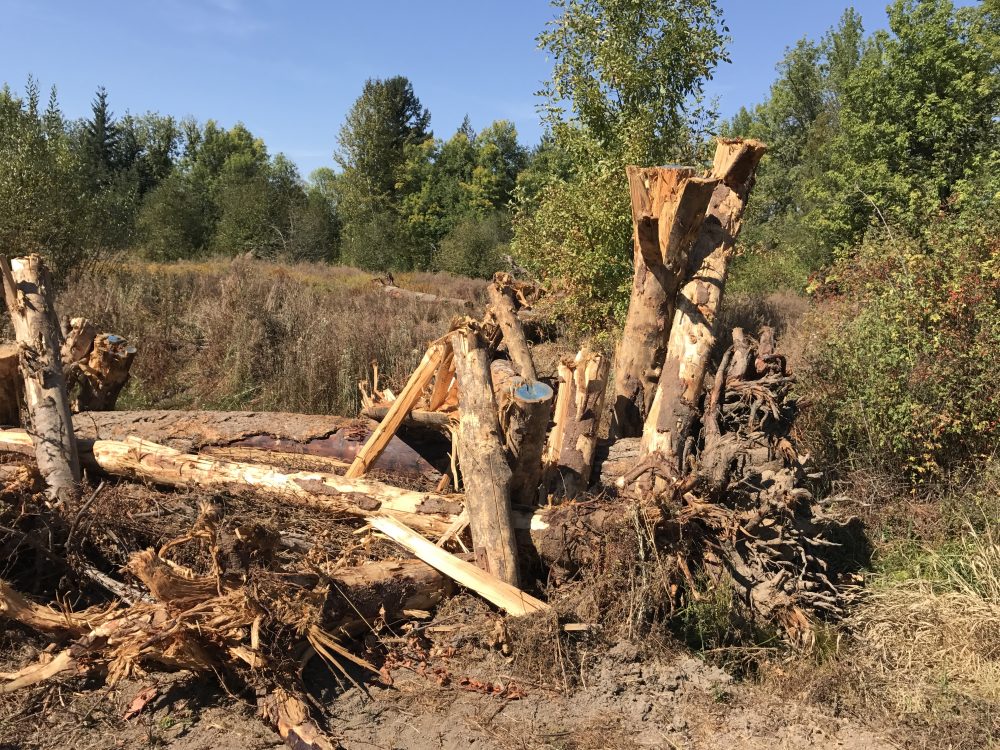
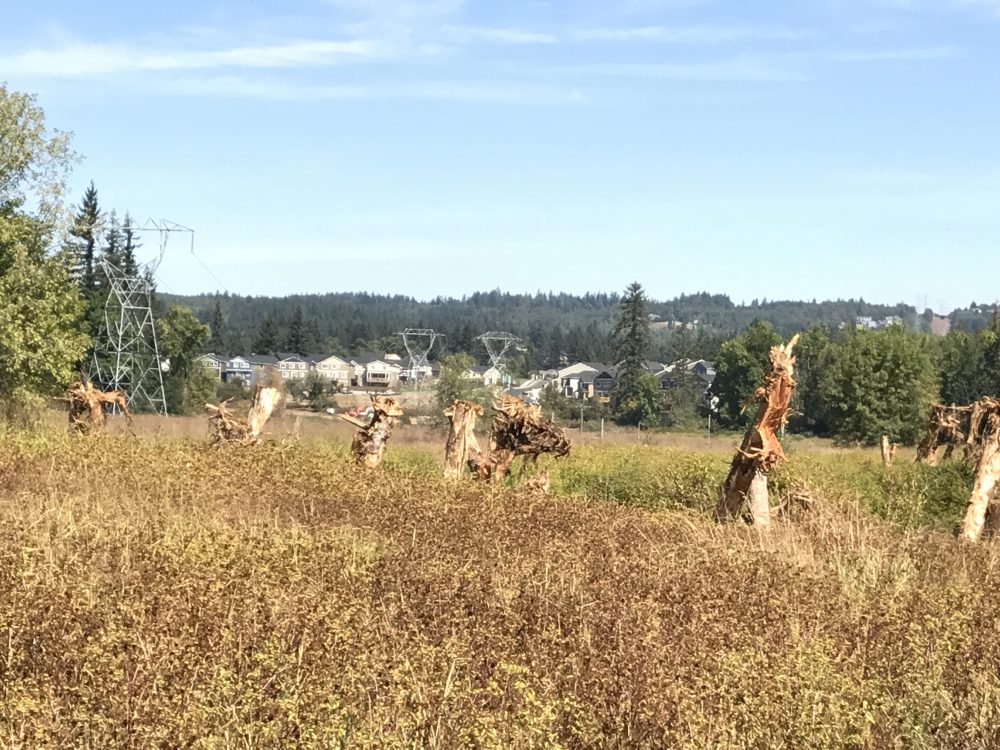
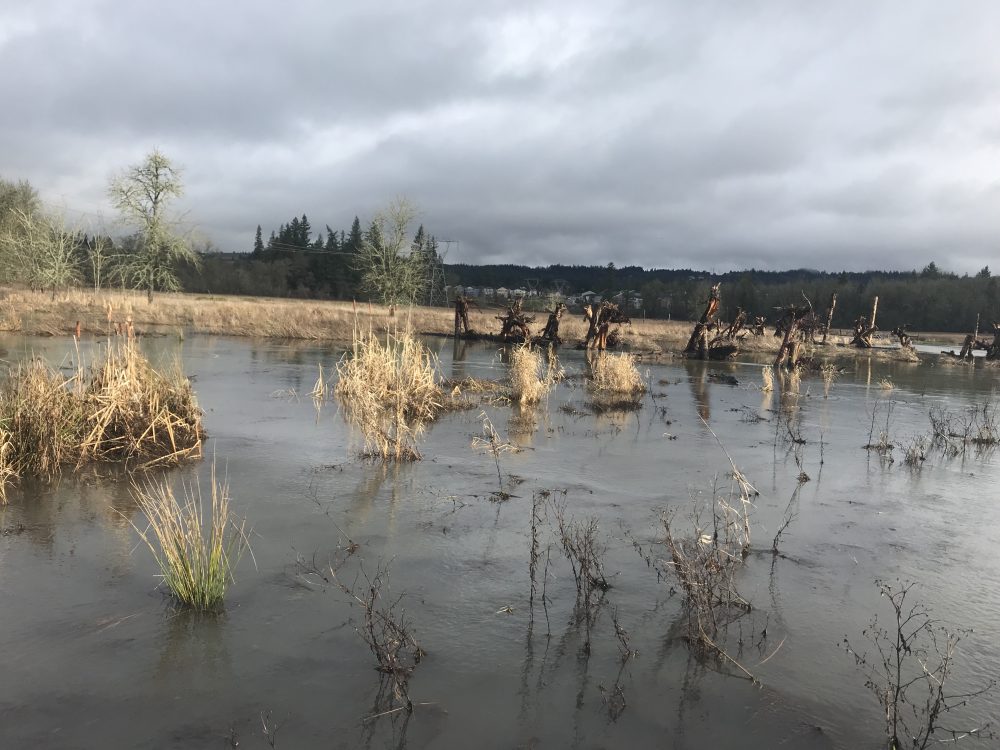
Rock Creek's Environmental Studies Center is a vital and diverse grouping of habitats that occur on Portland Community College's Rock Creek Campus. While human endeavors such as farming (in addition to the construction of nearby housing, roads and parking lots) have modified parts of this habitat and hydrology; through outside grants, previously farmed and overgrazed land is being returned to a more natural state. During this process of habitat restoration, which includes invasive plants removal and plantings of native vegetation; we are monitoring the changes in the quality of the habitat before, during and after implementation of these restoration projects. Changes are being monitored through: monitoring of local fauna and flora, water quality sampling, microclimate studies, photography, and herbarium collections of plants and lichens.
Aerial Photos
Aerial photos taken between 1936 to the present document the changes that have occurred to the land which the Portland Community College's Rock Creek campus resides. The original campus opened in 1976 and has had several expansions including the openings of the Science and Technology Center (Bldg. 7) in 1995 and Building 9 in 2004, which houses the library, administrative offices, and the campus book store.

Restoration Projects
In any given years there are a number of student studies going on. Two funded projects are ongoing :
- Wetland Restoration Project-Phase I: replanting riparian zone of Rock Creek Spur is funded by the Oregon Partners for Fish and Wildlife.
- Wetland Restoration Project- Phase II: at emergent wetland is funded by the Tualatin Valley Water Quality Endowment Fund.
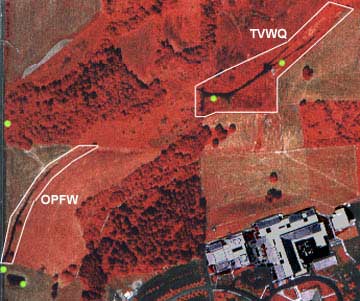
- TVWQ
- Tualatin Valley Water Quality Endowment Fund
- OPFW
- Oregon Partners for Fish and Wildlife
- green spots
- water sampling points (5)
Photo Points
We wanted to create a pictorial record of both seasonal and yearly transitions that occur at the Rock Creek Environmental Studies Center. This is being accomplished with seasonal photos taken at nineteen photo points located throughout the site. Photos are available for the following years.
The above photos document the changes that have occurred at the RCESC over the years. The photo on the left was taken from the south side of the pond during the summer of 1998; while the photo on the right was taken from the same location during the summer of 2006. More comparisons between these years can be seen at the "then & now" link.
Plant and Animal Species
The plant and animal lists below are an ongoing effort to document the many species that occur within the Environmental Studies Center. Data collection has taken place over the last ten years, and has been a collaborative effort involving faculty, students, volunteers and the Metro Greenspaces Program. Clicking on some plant names (as well as numbers listed after species name) will lead to available photos taken on campus.
Invasive and Non-Native Plants
Invasive plants are generally considered non-native plants that have been introduced into the region (often by gardeners and landscapers) that have the capacity to thrive and spread aggressively into nearby natural areas, often because of the lack of natural predators such as insects and other foraging animals. When introduced into these new habitats, invasive plants may become problematic as they are able to out compete the local native plants, resulting in the reduction of biodiversity of native flora and loss of habitat for fauna such as bird and mammals. Listed below are some of the plants that have become an issue in the RCESC and other natural areas in the Pacific Northwest. Clicking on a listed species will display the plants photo (please note: some links lead to outside web sites). Volunteers are always welcome to help in the removal of invasive plants. For more information, please visit our volunteer section.
Common invasive plants:
- English Holly (Ilex sp.)
- English Ivy (Hedera helix L.)
- Evergreen Blackberry (Rubus laciniatus)
- Himalayan Blackberry (Rubus discolor)
- Japanese Knotweed (Polygonum cuspidatum)
Lichen Study
Lichen are very cool! A lichen is a combination of algae and fungus living together. We are studying the lichen in Rock Creek's Westside Forest - identifying and quantifying the lichen species in 10 areas of the forest. Each area studied is approximately 2 meters square, beginning at ground level and going up to a height of 5 feet. The purpose of our ongoing study is to ultimately track the sensitive species of lichen. Lichen are excellent indicators of air quality. We are hypothesizing that the sensitive species will decline in number as the impacts of urban growth become apparent. We hope you enjoy viewing our photos and learning more about these interesting organisms. Visit our lichen page to see photos of each area as well as species photos.
Sincerely, The Lichen Nerds - Jennifer Grant & Yvonne Norman
Water Quality Sampling
Water quality is currently being sampled at our pond, Rock Creek Spur and the emergent wetland. A Hydrolab is used for sampling the following:
- dissolved oxygen
- conductivity
- salinity
- total dissolved solids
- pH
- oxidation-reduction potential
- temperatures
Water Quality Data
Listed below are links for water quality data taken each year within the RCESC and Bronson Creek areas by students in the ESR 160 - Intro to Environmental Systems, ESR 202 - Applied Environmental Studies: Prep for Problem Solving, and BI 143 - Habitats: Fresh Water Biology courses offered through Portland Community College.
The following links provide water sampling data for the Rock Creek Environmental Studies Center for the given date:
The following links provide water sampling data for the Bronson Creek watershed for the given dates:
RCESC Microclimate Data
Listed below are links for microclimate data taken each year within the RCESC by students in the ESR 160 - Intro to Environmental Systems and BI 141 - Habitats: Life of the Forest courses offered through Portland Community College.
Grants
| Historical, current and pending grant funds for the Rock Creek Environmental Studies Center | ||
|---|---|---|
| Crater Lake Natural History Association | $ 1,406 | Survey of Wetland Characteristics |
| Tualatin Valley Water Quality Endowment Fund through Oregon Community Foundation | $ 11,000 | Wetland Restoration, Phase I |
| Unified Sewerage Agency | $ 1,000 | Web-Site Development |
| Oregon Youth Conservation Corps Fund | $ 17,000 | Labor and Training for Trail Building |
| Oregon Parks Foundation Fund | $ 1,000 | Seed Money |
| Roberts Brothers | $ 1,000 | Wetlands Plants |
| Oregon Partners for Fish and Wildlife | $ 22,900 | Wetland Restoration, Phase II |
| Arco Foundation | $46,000 | Trail Construction |